Anjar (عنجر)
© Roy Digital Design
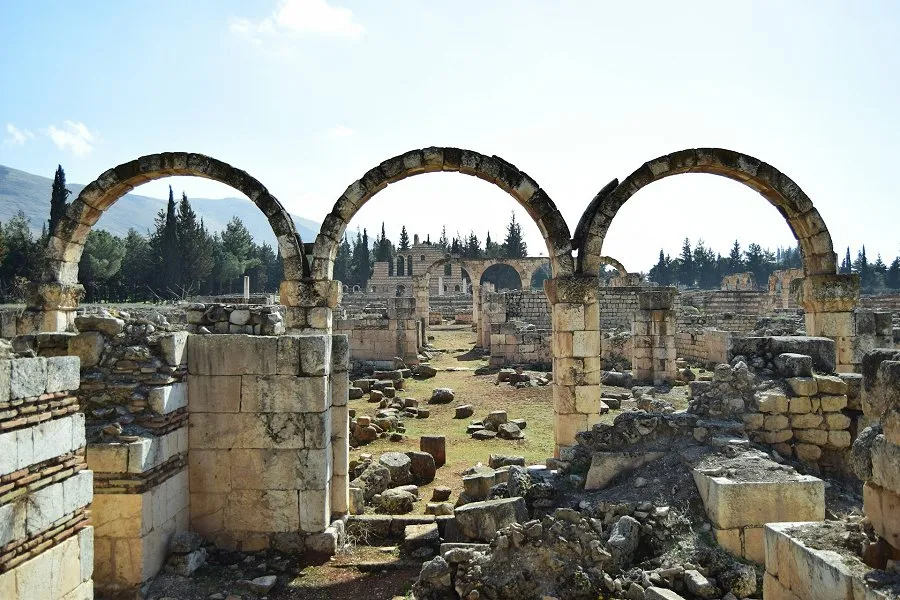
Anjar is also known as Hawsh Mousa. It is a town in Lebanon's Beqaa Valley. Most people visit it for its ruined Umayyad settlement. The ruins are a UNESCO world heritage site.
The Umayyad city ruins are surrounded by fortified stone walls that are more than 2 m thick and 7 m tall. The site measures 370 x 310 m and has two avenues, the Cardo maximum running north to south and the Decumanus Maximus running east to west. Thus the site is divided into four sections. The avenues were decorated with colonnades and lined with shops.
The most important ruins in Anjar are:
- The Grand Palace measures 59 x 70 m and was partially rebuilt. It includes a wall and some arcades. Its central hosh (courtyard) is surrounded by a peristyle.
- The Small Palace is 46 x 47 m. It is known for its ornamental fragments and its beautifully decorated central entrance.
- Between the two palaces is a mosque. Its size is 45 x 32 m.
- The Thermal baths were built according to Roman models.
The site is littered with fragments of friezes that show motifs of plants, figures and geometric shapes. They are testimony of the richly decorated buildings that once stood there.
Anjar is 50 km west of Beirut.

Images
The cardo of the Umayyad city of Anjar ©Tim Broadbent
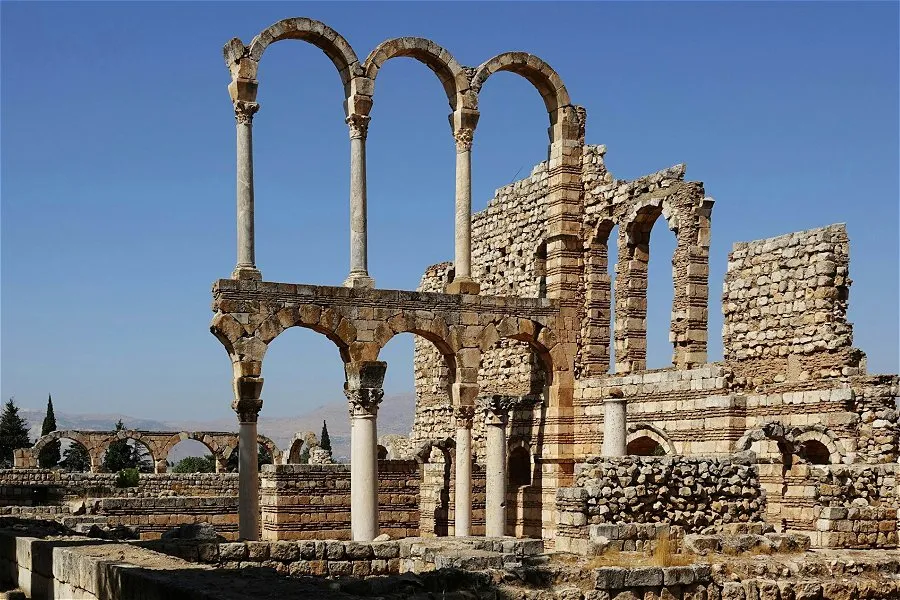
The cardo of the Umayyad city of Anjar ©Rudy Issa