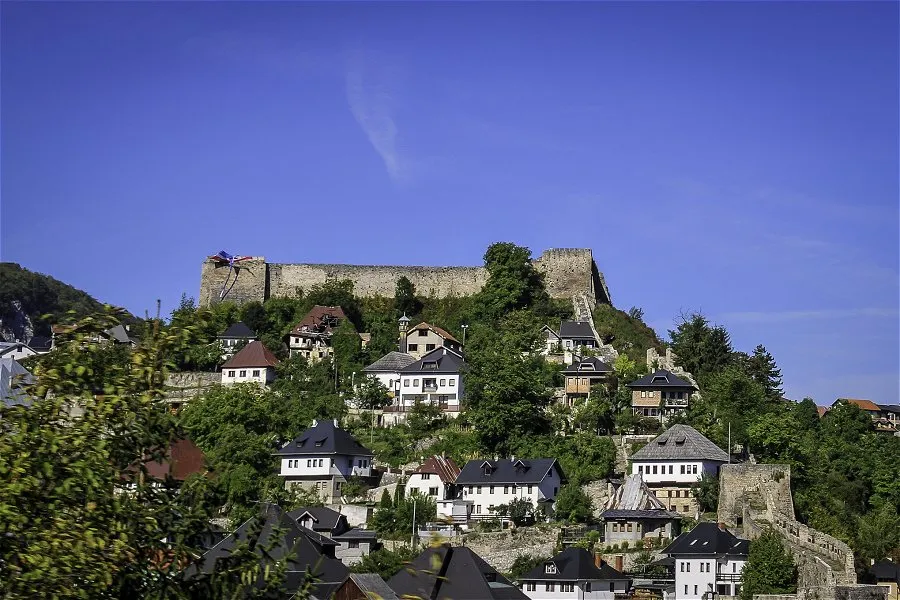
Jajce (Јајце)
© Milo van Kovacevic
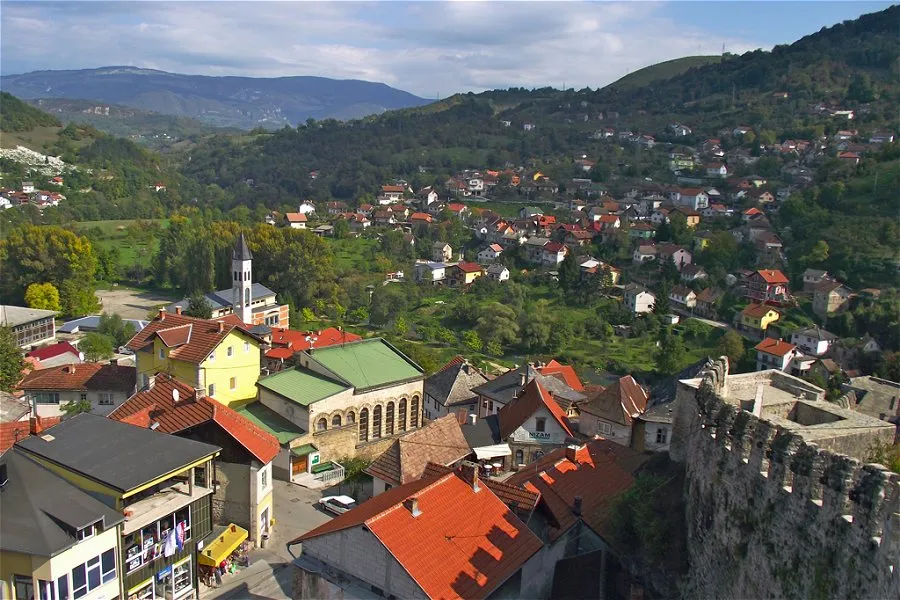
Jajce is a beautiful, walled city. The medieval core boasts cobble-stoned streets, lined with old buildings and the city is surrounded by lovely hills.
Jajce used to be the seat of the Christian kings of Bosnia, but in the 15th century the Turks conquered it.
In 1943 it became the capital of liberated Yugoslavia for a short while. In that year, delegates to the second session of the Antifascist Council for the National Liberation of Yugoslavia met in Jajce and proclaimed a new constitution. It outlined the principles of a new federal Yugoslavia and Marshal Tito officially replaced King Peter II as Yugoslavia's legitimate leader.
In October 1992, Serbian separatists expelled some 35,000 Muslims from Jajce. Up until then the Muslims had been the largest ethnic group there, but nowadays they are a minority.
Points of interest
- There is a nice waterfall at the confluence of the Pliva and Vrbas rivers on the fringes of town. The water drops 22 m (72 ft) and there is a viewing platform right in front of it. The travertine body of the waterfall was damaged during the Bosnian War in the 1990s. As a result of the fighting, the Jajce-1 Hydroelectric Power Station upstream was out of order and water had to be released. The sudden rush of water caused damage downstream.
- The city is dominated by the fortress that towers on a hill above it.
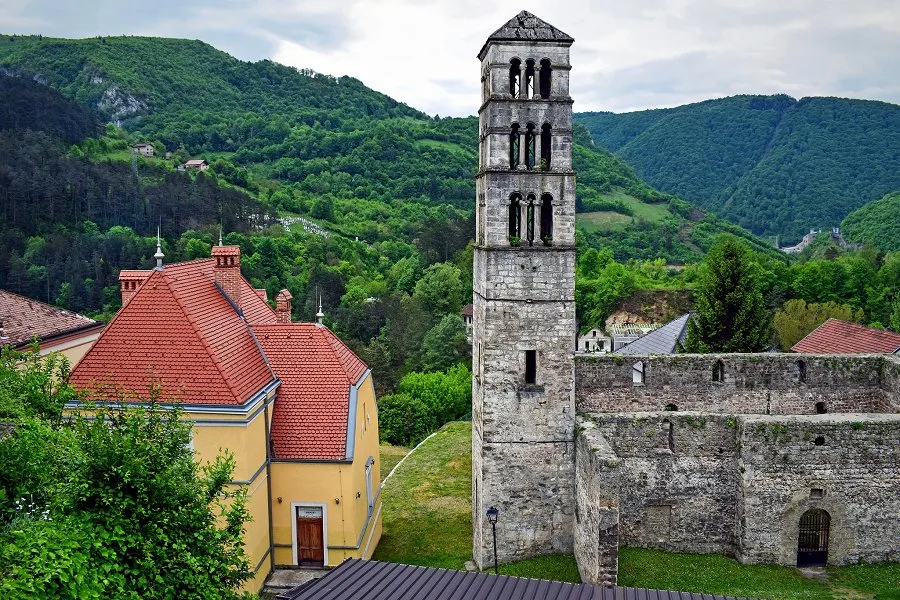
- The remains of St. Luke Church.
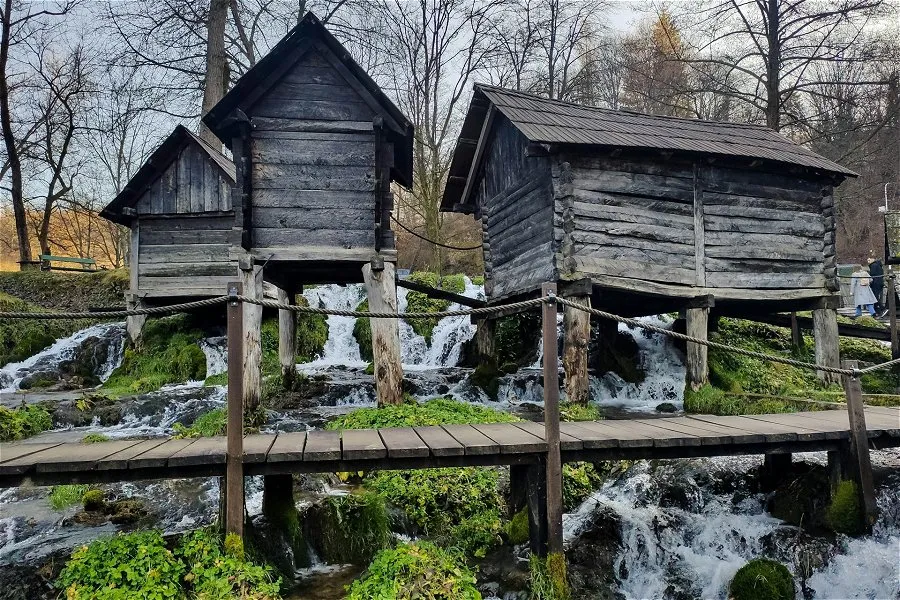
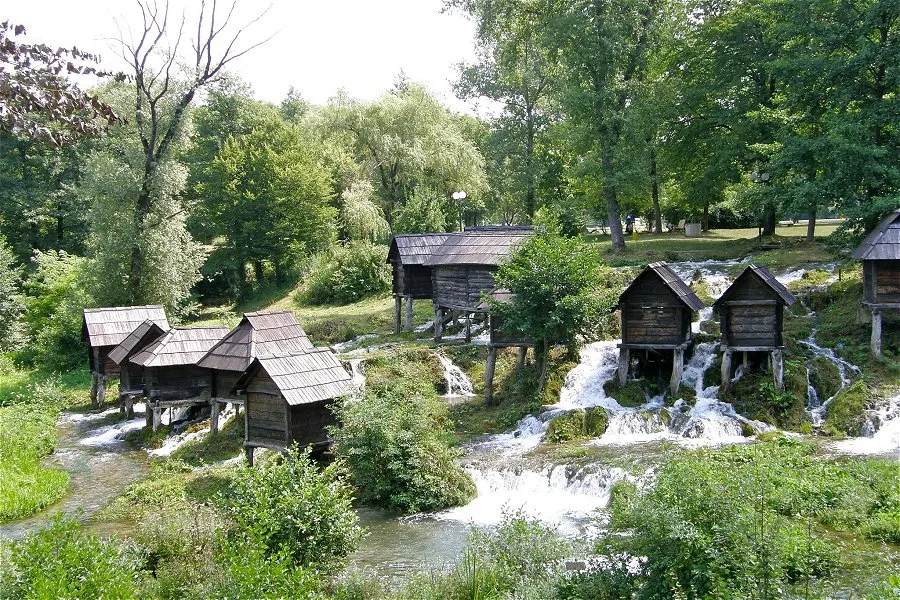
- Plivsko Lake is not far from town and a popular destination for both locals and visitors. It features some picturesque old mills.
- The surrounding mountains are excellent for hiking and their peaks offer stunning views over the area.
There are several hotels and restaurants in Jajce. The city is 110 km northwest of Sarajevo.

Images
Jajce ©Milo van Kovacevic
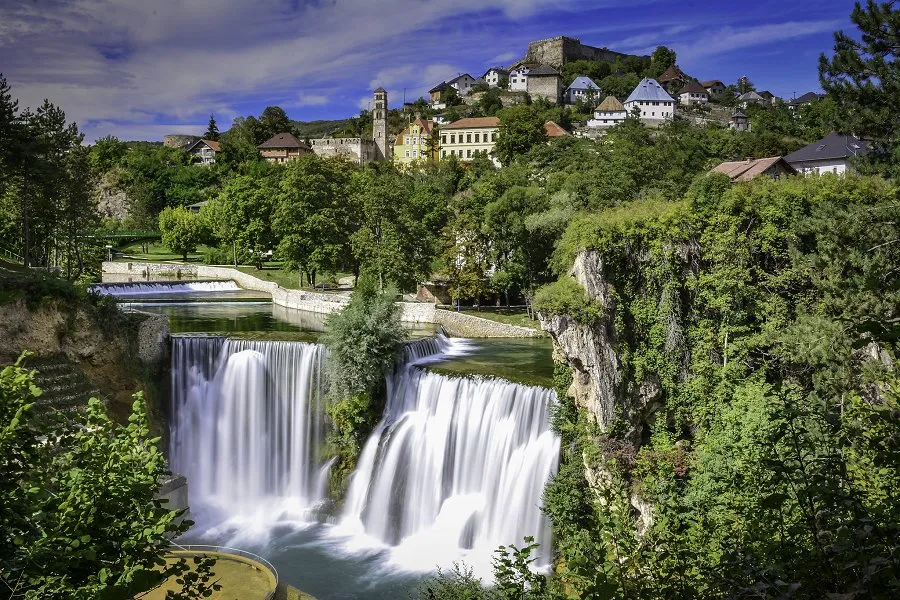
Jajce ©Damien Dan
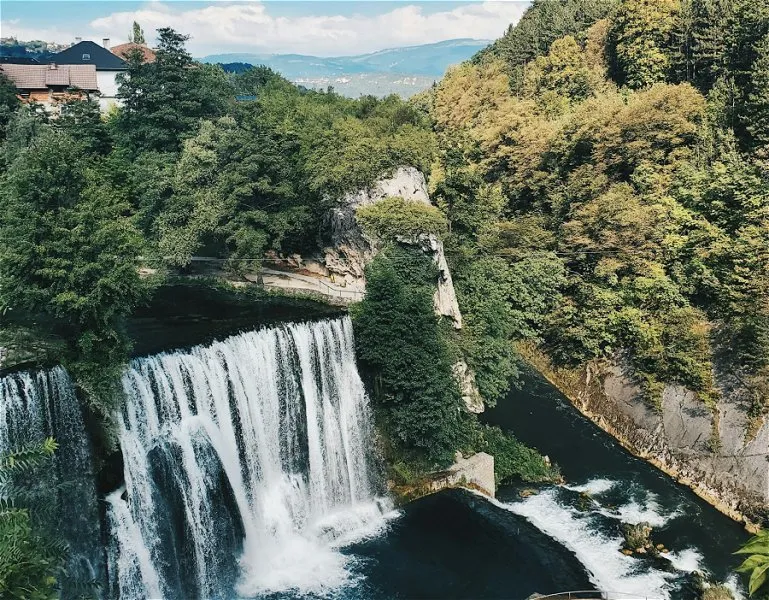
Old mills at Plivsko Lake ©Mujo Hasanovic
St. Luke's Bell Tower ©Jocelyn Erskine-Kellie
Old mills ©Darij Zadnikar
View from the castle ©Jocelyn Erskine-Kellie
Jajce ©Milo van Kovacevic