Statistics Gabon 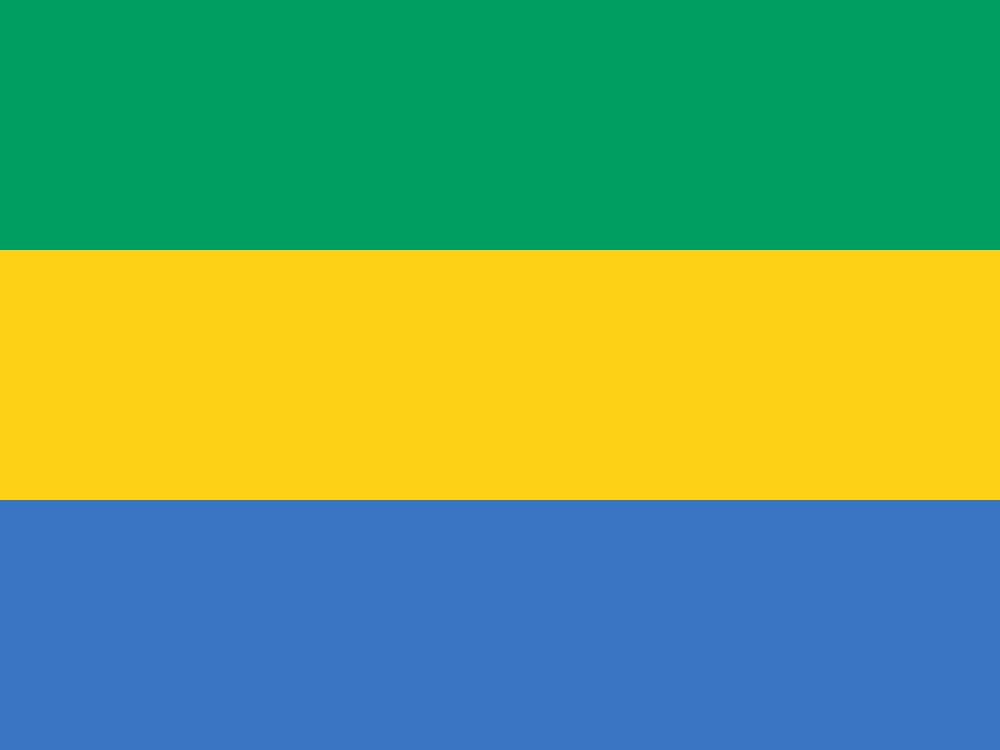

Gabon in the World

Gabon - Introduction 1989
top of pageLand use: 1% arable land; 1% permanent crops; 18% meadows and pastures; 78% forest and woodland; 2% other
Gabon - People 1989
top of pageEthnic groups: about 40 Bantu tribes, including four major tribal groupings (Fang, Eshira, Bapounou, Bateke; about 100,000 expatriate Africans and Europeans, including 27,000 French
Gabon - Government 1989
top of pageAdministrative divisions: 9 provinces; Estuaire, Haut-Ogooue, Moyen-Ogooue, Ngounie, Nyanga, Ogooue-Ivindo, Ogooue-Lolo, Ogooue-Maritime, Woleu-Ntem
Legal system: based on French civil law system and customary law; judicial review of legislative acts in Constitutional Chamber of the Supreme Court; compulsory ICJ jurisdiction not accepted
Executive branch: Chief of State - President El Hadj Omar BONGO (since 2 December 1967; Head of Government - Prime Minister Leon MEBIAME (since 16 April 1975)
International organization participation: AfDB, African Wood Organization, BDECA (Central African Development Bank), CCC, Conference of East and Central African States, EAMA, EIB (associate), FAO, G-77, GATT, IAEA, IBRD, ICAO, ICCO, ICO, IDA, IDB - Islamic Development Bank, IFAD, IFC, ILO, IMF, IMO, INTELSAT, INTERPOL, IPU, ITU, NAM, OAU, OIC, OPEC, UDEAC, UN, UNESCO, UPU, WHO, WIPO, WMO, WTO
Diplomatic representation
In the us: Ambassador Jean Robert ODZAGA; Chancery at 2,034 20th Street NW, Washington DC 20,009; telephone (202) 797-1000; US - Ambassador Peter SECCHIA; Embassy at Boulevard de la Mer, Libreville (mailing address is B. P. 4,000, Libreville; telephone 762,003 or 762,004, 761,337, 721,348, 740,248
Gabon - Economy 1989
top of pageEconomy overview: The economy, dependent on timber and manganese until the early 1970s, is now dominated by the oil sector. During the period 1981-85 oil accounted for about 46% of GDP, 83% of export earnings, and 65% of government revenues on average. The high oil prices of the early 1980s contributed to a substantial increase in per capita income, stimulated domestic demand, reinforced migration from rural to urban areas, and raised the level of real wages to among the highest in Sub-Saharan Africa. Beginning in late 1985, however, world oil prices began to fall and in 1986 GDP declined for the first time in a decade. The agricultural and industrial sectors are relatively underdeveloped, accounting for only 8% and 10%, respectively, of GDP in 1986.
Agriculture products: commercial - cocoa, coffee, wood, palm oil, rice; main food crops - pineapples, bananas, manioc, peanuts, root crops; imports food
Industries: sawmills, petroleum, food and beverages; mining of increasing importance (especially manganese and uranium)
Labor force:
120,000 salaried; 65.0% agriculture, 30.0%
industry and commerce, 2.5%
services, 2.5% government; 58% of population of working age (1983)
industry and commerce, 2.5%
services, 2.5% government; 58% of population of working age (1983)
Budget: revenues $927 million; expenditures $1.2 billion, including capital expenditures of $33 million (1988)
Exports: $1.95 billion (f.o.b., 1986 est.)
Commodities: crude oil 67%, manganese 11%, wood 11%, uranium 6%
Partners: France 53%, US 22%, FRG, Japan
Imports: $0.95 billion (c.i.f., 1986)
Commodities: foodstuffs, chemical products, petroleum products, construction materials, manufactures, machinery
Partners: France 48%, US 2.6%, FRG, Japan, UK
Exchange rates: Communaute Financiere Africaine francs (CFAF) per US$1 - 312.52 (January 1989), 297.85 (1988), 300.54 (1987), 346.30 (1986), 449.26 (1985)
Gabon - Energy 1989
top of pageGabon - Communication 1989
top of pageGabon - Military 1989
top of pageGabon - Transportation 1989
top of pageAirports: 82 total, 72 usable; 10 with permanent-surface runways; 2 with runways 2,440-3,659 m; 21 with runways 1,220-2,439 m
Gabon - Transnational issues 1989
top of page
🅶🅷🅴🅾🆂.🅲🅾🅼