Statistics France 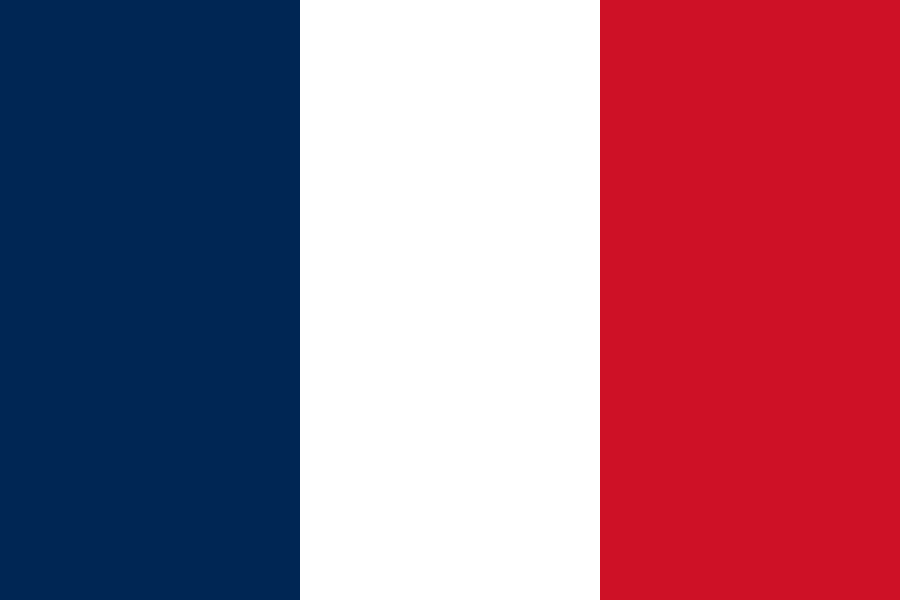

France in the World

France - Introduction 1992
top of pageBackground: Although ultimately a victor in World Wars I and II, France lost many men, much wealth, its extensive empire, and its rank as a dominant nation-state. France has struggled since 1958_arguably with success_to construct a presidential democracy resistant to the severe instabilities inherent in the parliamentary democracy of early 20th century France. In recent years, its reconciliation and cooperation with Germany have proved central to the economic integration of Europe.
Area
Total: 547,030 km²
Land:
545,630 km²; includes Corsica and the rest of metropolitan
France, but excludes the overseas administrative divisions
France, but excludes the overseas administrative divisions
Comparative: slightly more than twice the size of Colorado
Land boundaries: 2,892.4 km; Andorra 60 km, Belgium 620 km, Germany 451 km, Italy 488 km, Luxembourg 73 km, Monaco 4.4 km, Spain 623 km, Switzerland 573 km
Maritime claims
Contiguous zone: 12-24 nm
Exclusive economic zone: 200 nm
Territorial sea: 12 nm
Disputes:
Madagascar claims Bassas da India, Europa Island, Glorioso
Islands, Juan de Nova Island, and Tromelin Island; Comoros claims Mayotte;
Mauritius claims Tromelin Island; Seychelles claims Tromelin Island;
Suriname claims part of French Guiana; Mexico claims Clipperton Island; territorial claim in Antarctica (Adelie Land)
Islands, Juan de Nova Island, and Tromelin Island; Comoros claims Mayotte;
Mauritius claims Tromelin Island; Seychelles claims Tromelin Island;
Suriname claims part of French Guiana; Mexico claims Clipperton Island; territorial claim in Antarctica (Adelie Land)
Climate: generally cool winters and mild summers, but mild winters and hot summers along the Mediterranean
Terrain: mostly flat plains or gently rolling hills in north and west; remainder is mountainous, especially Pyrenees in south, Alps in east
Land use: arable land: 32%; permanent crops: 2%; meadows and pastures 23%; forest and woodland 27%; other 16%; includes irrigated 2%
France - People 1992
top of pageEthnic groups:
Celtic and Latin with Teutonic, Slavic, North African,
Indochinese, and Basque minorities
Indochinese, and Basque minorities
Languages: French (100% of population; rapidly declining regional dialects (Provencal, Breton, Alsatian, Corsican, Catalan, Basque, Flemish)
Religions:
Roman Catholic 90%, Protestant 2%, Jewish 1%, Muslim (North
African workers) 1%, unaffiliated 6%
African workers) 1%, unaffiliated 6%
Environment
Current issues:
most of large urban areas and industrial centers in Rhone,
Garonne, Seine, or Loire River basins; occasional warm tropical wind known as mistral
Garonne, Seine, or Loire River basins; occasional warm tropical wind known as mistral
Current issues note: largest West European nation
France - Government 1992
top of pageAdministrative divisions:
metropolitan France - 22 regions (regions, singular - region); Alsace, Aquitaine, Auvergne, Basse-Normandie, Bourgogne,
Bretagne, Centre, Champagne-Ardenne, Corse, Franche-Comte, Haute-Normandie,
Ile-de-France, Languedoc-Roussillon, Limousin, Lorraine, Midi-Pyrenees,
Nord-Pas-de-Calais, Pays de la Loire, Picardie, Poitou-Charentes,
Provence-Alpes-Cote d'Azur, Rhone-Alpes; note - the 22 regions are subdivided into 96 departments; see separate entries for the overseas departments (French Guiana, Guadeloupe, Martinique, Reunion) and the territorial collectivities (Mayotte, Saint Pierre and Miquelon)
Dependent areas:
Bassas da India, Clipperton Island, Europa Island,
French Polynesia, French Southern and Antarctic Lands, Glorioso Islands,
Juan de Nova Island, New Caledonia, Tromelin Island, Wallis and Futuna
French Polynesia, French Southern and Antarctic Lands, Glorioso Islands,
Juan de Nova Island, New Caledonia, Tromelin Island, Wallis and Futuna
Legal system: civil law system with indigenous concepts; review of administrative but not legislative acts
Suffrage: universal at age 18
National Assembly: last held 5 and 12 June 1988 (next to be held June 1993); results - Second Ballot PS-MRG 48. 7%, RPR 23.1%, UDF 21%, PCF 3.4%, other 3.8%; seats - (577 total) PS 272, RPR 127, UDF 91, UDC 40, PCF 26, independents 21
President:
last held 8 May 1988 (next to be held May 1995); results -
Second Ballot Francois MITTERRAND 54%, Jacques CHIRAC 46%
Second Ballot Francois MITTERRAND 54%, Jacques CHIRAC 46%
Senate:
last held 24 September 1989 (next to be held September 1992); results - percent of vote by party NA; seats - (321 total; 296 metropolitan
France, 13 for overseas departments and territories, and 12 for French nationals abroad) RPR 91, UDF 143 (PR 52, CDS 68, RAD 23), PS 66, PCF 16, independents 2, unknown 3
France, 13 for overseas departments and territories, and 12 for French nationals abroad) RPR 91, UDF 143 (PR 52, CDS 68, RAD 23), PS 66, PCF 16, independents 2, unknown 3
Communists: 700,000 claimed but probably closer to 150,000; Communist voters, 2.8 million in 1988 election
Legislative branch: bicameral Parliament (Parlement) consists of an upper house or Senate (Senat) and a lower house or National Assembly (Assemblee Nationale)
International organization participation:
ACCT, AfDB, AG (observer), AsDB, Australia Group, BDEAC, BIS,
CCC, CDB, CE, CERN, COCOM, CSCE, EBRD, EC, ECE, ECLAC, EIB, ESA, ESCAP, FAO,
FZ, GATT, G-5, G-7, G-10, IABD, IAEA, IBRD, ICAO, ICC, ICFTU, IDA, IFAD,
IFC, ILO, IMF, IMO, INMARSAT, INTELSAT, INTERPOL, IOC, IOM (observer), ISO,
ITU, LORCS, MTCR, NACC, NATO, NEA, NSG, OAS (observer), OECD, PCA, SPC, UN,
UNCTAD, UNESCO, UNHCR, UNIDO, UNIFIL, UNRWA, UN Security Council, UN
Trusteeship Council, UNTSO, UPU, WCL, WEU, WFTU, WHO, WIPO, WMO, WTO
Diplomatic representation:
Ambassador Jacques ANDREANI; Chancery at 4,101
Reservoir Road NW, Washington, DC 20,007; telephone (202) 944-6,000; there are
French Consulates General in Boston, Chicago, Detroit, Houston, Los Angeles,
New Orleans, Miami, New York, San Francisco, and San Juan (Puerto Rico)
Reservoir Road NW, Washington, DC 20,007; telephone (202) 944-6,000; there are
French Consulates General in Boston, Chicago, Detroit, Houston, Los Angeles,
New Orleans, Miami, New York, San Francisco, and San Juan (Puerto Rico)
US:
Ambassador Walter J. P. CURLEY; Embassy at 2 Avenue Gabriel, 75,382
Paris Cedex 08, Unit 21,551 (mailing address is APO AE 9,777); telephone 33 (1) 42-96-12-02 or 42-61-80-75; FAX 33 (1) 42-66-97-83; there are US
Consulates General in Bordeaux, Marseille, and Strasbourg
Paris Cedex 08, Unit 21,551 (mailing address is APO AE 9,777); telephone 33 (1) 42-96-12-02 or 42-61-80-75; FAX 33 (1) 42-66-97-83; there are US
Consulates General in Bordeaux, Marseille, and Strasbourg
Flag description:
three equal vertical bands of blue (hoist side), white, and red; known as the French Tricouleur (Tricolor); the design and colors have been the basis for a number of other flags, including those of Belgium, Chad,
Ireland, Ivory Coast, and Luxembourg; the official flag for all French dependent areas
Ireland, Ivory Coast, and Luxembourg; the official flag for all French dependent areas
France - Economy 1992
top of pageEconomy overview:
One of the world's most developed economies, France has substantial agricultural resources and a highly diversified modern industrial sector. Large tracts of fertile land, the application of modern technology, and subsidies have combined to make it the leading agricultural producer in Western Europe. France is largely self-sufficient in agricultural products and is a major exporter of wheat and dairy products.
The industrial sector generates about one-quarter of GDP, and the growing services sector has become crucial to the economy. After expanding at a rapid 3.8% pace during the period 1988-89, the economy slowed down in 1990, with growth of 1.5% in 1990 and 1.4% in 1991; growth in 1992 is expected to be about 2%. The economy has had difficulty generating enough jobs for new entrants into the labor force, resulting in a high unemployment rate, which rose to almost 10% in 1991. The steadily advancing economic integration within the European Community is a major force affecting the fortunes of the various economic sectors.
The industrial sector generates about one-quarter of GDP, and the growing services sector has become crucial to the economy. After expanding at a rapid 3.8% pace during the period 1988-89, the economy slowed down in 1990, with growth of 1.5% in 1990 and 1.4% in 1991; growth in 1992 is expected to be about 2%. The economy has had difficulty generating enough jobs for new entrants into the labor force, resulting in a high unemployment rate, which rose to almost 10% in 1991. The steadily advancing economic integration within the European Community is a major force affecting the fortunes of the various economic sectors.
GDP: purchasing power equivalent - $1,033.7 billion, per capita $18,300; real growth rate 1.4% (1991 est.)
Agriculture products: accounts for 4% of GDP (including fishing and forestry; one of the world's top five wheat producers; other principal products - beef, dairy products, cereals, sugar beets, potatoes, wine grapes; self-sufficient for most temperate-zone foods; shortages include fats and oils and tropical produce, but overall net exporter of farm products; fish catch of 850,000 metric tons ranks among world's top 20 countries and is all used domestically
Industries: steel, machinery, chemicals, automobiles, metallurgy, aircraft, electronics, mining, textiles, food processing, and tourism
Labor force: 24,170,000; services 61.5%, industry 31.3%, agriculture 7.3% (1987)
Organized labor: 20% of labor force (est.)
Budget: revenues $229.8 billion; expenditures $246.4 billion, including capital expenditures of $36 billion (1992 budget)
Exports: $209.5 billion (f.o.b., 1990)
Commodoties: machinery and transportation equipment, chemicals, foodstuffs, agricultural products, iron and steel products, textiles and clothing
Partners:
FRG 17.3%, Italy 11.4%, UK 9.2%, Spain 10.3%, Netherlands 9.0%,
Belgium-Luxembourg 9.4%, US 6.1%, Japan 1.9%, former USSR 0.7% (1989 est.)
Belgium-Luxembourg 9.4%, US 6.1%, Japan 1.9%, former USSR 0.7% (1989 est.)
Imports: $232.5 billion (c.i.f., 1990)
Commodoties: crude oil, machinery and equipment, agricultural products, chemicals, iron and steel products
Partners: FRG 18.9%, Italy 11.6%, Belgium-Luxembourg 8.8%, Netherlands 8.6%, US 8.0%, Spain 7.9%, UK 7.2%, Japan 4.0%, former USSR 1.4% (1989 est.)
Exchange rates: French francs (F) per US$1 - 5.3801 (January 1992), 5.6421 (1991), 5.4453 (1990), 6.3801 (1989), 5.9569 (1988), 6.0107 (1987)
France - Energy 1992
top of pageElectricity
Production: 109,972,000 kW capacity; 399,318 million kWh produced, 7,200 kWh per capita (1991)
France - Communication 1992
top of pageFrance - Military 1992
top of pageFrance - Transportation 1992
top of pageAirports:
472 total, 460 usable; 251 with permanent-surface runways; 3
with runways over 3,659 m; 36
with runways 2,440-3,659 m; 136
with runways 1,220-2,439 m
with runways over 3,659 m; 36
with runways 2,440-3,659 m; 136
with runways 1,220-2,439 m
Merchant marine:
128 ships (1,000 GRT or over) totaling 3,222,539
GRT/5,117,091 DWT; includes 6 short-sea passenger, 11 cargo, 18 container, 1 multifunction large-load carrier, 30 roll-on/roll-off, 34 petroleum tanker, 8 chemical tanker, 6 liquefied gas, 2 specialized tanker, 11 bulk, 1 refrigerated cargo; note - France also maintains a captive register for
French-owned ships in the Kerguelen Islands (French Southern and Antarctic
Lands) and French Polynesia
Civil air: 195 major transport aircraft (1989 est.)
France - Transnational issues 1992
top of page
🅶🅷🅴🅾🆂.🅲🅾🅼