Statistics Pakistan 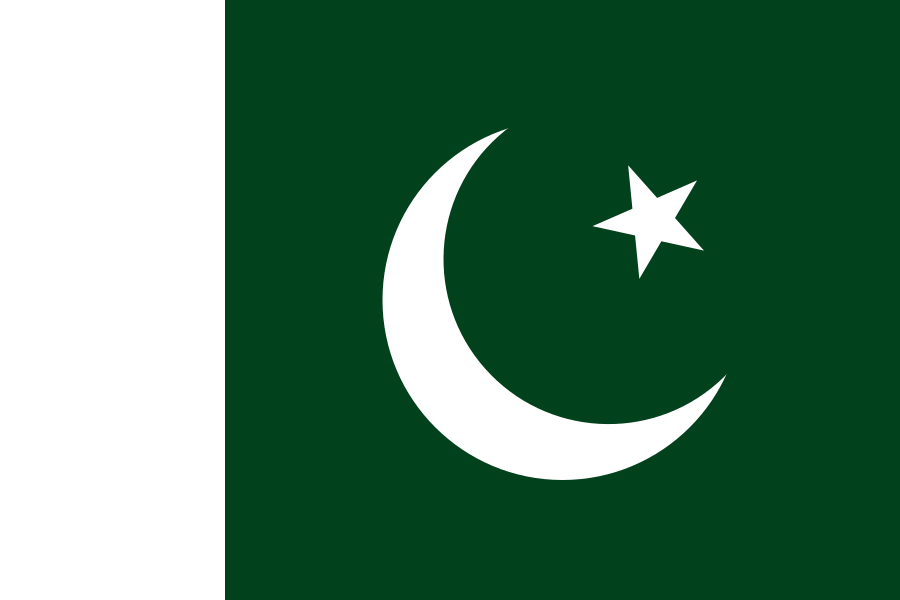

Pakistan in the World

Pakistan - Introduction 1995
top of pageBackground: The separation in 1947 of British India into the Muslim state of Pakistan (with two sections West and East) and largely Hindu India was never satisfactorily resolved. A third war between these countries in 1971 resulted in East Pakistan seceding and becoming the separate nation of Bangladesh. A dispute over the state of Kashmir is ongoing.
Area
Total area total: 803,940 km²
Land: 778,720 km²
Comparative: slightly less than twice the size of California
Maritime claims
Contiguous zone: 24 nm
Continental shelf: 200 nm or to the edge of the continental margin
Exclusive economic zone: 200 nm
Territorial sea: 12 nm
Natural resources: land, extensive natural gas reserves, limited petroleum, poor quality coal, iron ore, copper, salt, limestone
Land use
Arable land: 23%
Permanent crops: 0%
Meadows and pastures: 6%
Forest and woodland: 4%
Other: 67% (1993)
Geography
Note: controls Khyber Pass and Bolan Pass, traditional invasion routes between Central Asia and the Indian Subcontinent
Pakistan - People 1995
top of pageEthnic groups: Punjabi, Sindhi, Pashtun (Pathan), Baloch, Muhajir (immigrants from India and their descendents)
Languages: Urdu (official), English (official; lingua franca of Pakistani elite and most government ministries), Punjabi 64%, Sindhi 12%, Pashtu 8%, Urdu 7%, Balochi and other 9%
Age structure
0-14 years: 44% (female 28,033,354; male 29,777,818)
15-64 years: 52% (female 33,456,410; male 35,109,482)
65 years and over: 4% (female 2,556,846; male 2,608,010) (July 1995 est.)
Environment
Current issues: water pollution from raw sewage, industrial wastes, and agricultural runoff; limited natural fresh water resources; a majority of the population does not have access to potable water; deforestation; soil erosion; desertification
Current issues natural hazards: frequent earthquakes, occasionally severe especially in north and west; flooding along the Indus after heavy rains (July and August)
Current issues international agreements: party to - Biodiversity, Climate Change, Endangered Species, Environmental Modification, Hazardous Wastes, Nuclear Test Ban, Ozone Layer Protection, Ship Pollution, Wetlands; signed, but not ratified - Desertification, Law of the Sea, Marine Life Conservation
Life expectancy at birth
Total population: 57.86 years
Male: 57.18 years
Female: 58.56 years (1995 est.)
Pakistan - Government 1995
top of pageCountry name
Conventional long form: Islamic Republic of Pakistan
Conventional short form: Pakistan
Former: West Pakistan
Administrative divisions: 4 provinces, 1 territory*, and 1 capital territory**; Balochistan, Federally Administered Tribal Areas*, Islamabad Capital Territory**, North-West Frontier, Punjab, Sindh
Note: the Pakistani-administered portion of the disputed Jammu and Kashmir region includes Azad Kashmir and the Northern Areas
Legal system: based on English common law with provisions to accommodate Pakistan's stature as an Islamic state; accepts compulsory ICJ jurisdiction, with reservations
Suffrage: 21 years of age; universal; separate electorates and reserved parliamentary seats for non-Muslims
Executive branch
Chief of state: President Sardar Farooq LEGHARI; election last held 13 November 1993 (next to be held no later than 14 October 1998); results - LEGHARI was elected by Parliament and the four provincial assemblies
Head of government: Prime Minister Benazir BHUTTO
Cabinet: Cabinet
Legislative branch: bicameral Parliament (Majlis-e-Shoora)
Senate: elections last held NA March 1994 (next to be held NA March 1997); results - percent of vote by party NA; seats - (87 total) PPP 22, PML/N 17; Tribal Area Representatives (nonparty) 8, ANP 6, PML/J 5, JWP 5, MQM/A 5, JUI/F 2, PKMAP 2, JI 2, NPP 2, BNM/H 1, BNM/M 1, JUP/NI 1, JUP/NO 1, JAH 1, JUI/S 1, PML/F 1, PNP 1, independents 2, vacant 1
National Assembly: elections last held 6 October 1993 (next to be held by October 1998); results - percent of vote by party NA; seats - (217 total) PPP 92, PML/N 75, PML/J 6, IJM-Islamic Democratic Front 4, ANP 3, PKMAP 4, PIF 3, JWP 2, MDM 2, BNM/H 1, BNM/M 1, NDA 1, NPP 1, PKQP 1, Religious minorities 10 reserved seats, independents 9, results pending 2
International organization participation: AsDB, C, CCC, CP, ECO, ESCAP, FAO, G-19, G-24, G-77, GATT, IAEA, IBRD, ICAO, ICC, ICFTU, ICRM, IDA, IDB, IFAD, IFC, IFRCS, ILO, IMF, IMO, INMARSAT, INTELSAT, INTERPOL, IOC, IOM, ISO, ITU, MINURSO, NAM, OAS (observer), OIC, PCA, SAARC, UN, UNCTAD, UNESCO, UNHCR, UNIDO, UNIKOM, UNITAR, UNOMIL, UNOSOM, UNPROFOR, UPU, WCL, WFTU, WHO, WIPO, WMO, WTO
Diplomatic representation
In the us chief of mission: Ambassador Maleeha LODHI
In the us chancery: 2,315 Massachusetts Avenue NW, Washington, DC 20,008
In the us telephone: [1] (202) 939-6,200
In the us FAX: [1] (202) 387-0484
In the us consulates general: Los Angeles and New York
From the us chief of mission: Ambassador John C. MONJO
From the us embassy: Diplomatic Enclave, Ramna 5, Islamabad
From the us mailing address: P. O. Box 1048, PSC 1212, Box 2000, Unit 6,220, Islamabad; APO AE 9,812-2000
From the us telephone: [92] (51) 826,161 through 826,179
From the us FAX: [92] (51) 214,222
From the us consulates general: Karachi, Lahore
From the us consulates: Peshawar
Flag description: green with a vertical white band (symbolizing the role of religious minorities) on the hoist side; a large white crescent and star are centered in the green field; the crescent, star, and color green are traditional symbols of Islam
Pakistan - Economy 1995
top of pageEconomy overview: The Pakistani economy has made progress in several key areas since Benazir BHUTTO became Prime Minister in October 1993. She has been under pressure from international donors and the IMF - which gave Pakistan a $1.3 billion structural adjustment credit in February 1994 - to continue the economic reforms and austerity measures begun by her predecessor, caretaker Prime Minister Moeen QURESHI (July-October 1993). Foreign exchange reserves climbed to more than $3 billion in 1994, and the budget deficit was substantially reduced. Real GDP growth was 4% in FY93/94, up from 2.3% in FY92/93. Foreign direct and portfolio investment also have increased. Privatization of large public sector utilities began in 1994 with the sale of 12% of the Pakistan Telecommunications Corporation (PTC) and the Water and Power Development Authority (WAPDA; the sale of state-owned banks and other large units are planned for 1995. Still, the government must cope with long-standing economic vulnerabilities - high levels of debt service and defense spending, a small tax base, a huge population, and dependence on cotton-based exports - which hamper its ability to create a stable economic environment. In addition, Pakistan's infrastructure is inadequate and deteriorating, low levels of literacy constrain industrial growth, and increasing sectarian, ethnic, and tribal violence disrupt production.
Agriculture products: 24% of GDP; world's largest contiguous irrigation system; major crops - cotton, wheat, rice, sugarcane, fruits, vegetables; livestock products - milk, beef, mutton, eggs
Industries: textiles, food processing, beverages, construction materials, clothing, paper products, shrimp
Labor force: 36 million
By occupation agriculture: 46%
By occupation mining and manufacturing: 18%
By occupation services: 17%
By occupation other: 19%
Note: extensive export of labor
Budget
Revenues: $10.5 billion
Expenditures: $11.2 billion, including capital expenditures of $3.1 billion (FY93/94)
Exports: $6.7 billion (1993)
Commodoties: cotton, textiles, clothing, rice, leather, carpets
Partners: US, Japan, Hong Kong, Germany, UK, UAE, France
Imports: $9.5 billion (1993)
Commodoties: petroleum, petroleum products, machinery, transportation equipment, vegetable oils, animal fats, chemicals
Partners: Japan, US, Germany, UK, Saudi Arabia, Malaysia, South Korea
Exchange rates: Pakistani rupees (PRs) per US$1 - 30.860 (January 1995), 30.570 (1994), 28.107 (1993), 25.083 (1992), 23.801 (1991), 21.707 (1990)
Pakistan - Energy 1995
top of pageElectricity
Capacity: 10,800,000 kW (1994)
Capacity production: 52.4 billion kWh
Capacity consumption per capita: 389 kWh (1993)
Pakistan - Communication 1995
top of pageTelephone system: NA telephones; about 7 telephones/1000 persons; the domestic telephone system is poor, adequate only for government and business use; the system for international traffic is better
Local: NA
Intercity: microwave radio relay
International: 3 INTELSAT (1 Atlantic Ocean and 2 Indian Ocean) earth stations; microwave radio relay
Pakistan - Military 1995
top of pagePakistan - Transportation 1995
top of pageAirports: 119
With paved runways over 3047 m: 12
With paved runways 2438 to 3047 m: 21
With paved runways 15-24 to 2437 m: 33
With paved runways 914 to 1523 m: 14
With paved runways under 914 m: 24
With unpaved runways 15-24 to 2438 m: 7
With unpaved runways 914 to 1523 m: 8
Merchant marine
Total: 30 ships (1,000 GRT or over) totaling 352,189 GRT/532,782 DWT
Ships by type: bulk 1, cargo 25, oil tanker 1, passenger-cargo 3
Pakistan - Transnational issues 1995
top of pageDisputes international: status of Kashmir with India; border question with Afghanistan (Durand Line; water-sharing problems (Wular Barrage) over the Indus with upstream riparian India
Illicit drugs: major illicit producer of opium and hashish for the international drug trade; remains world's third largest opium producer (160 metric tons in 1994; major center for processing Afghan heroin and key transit area for Southwest Asian heroin moving to Western market

🅶🅷🅴🅾🆂.🅲🅾🅼