Statistics Ukraine 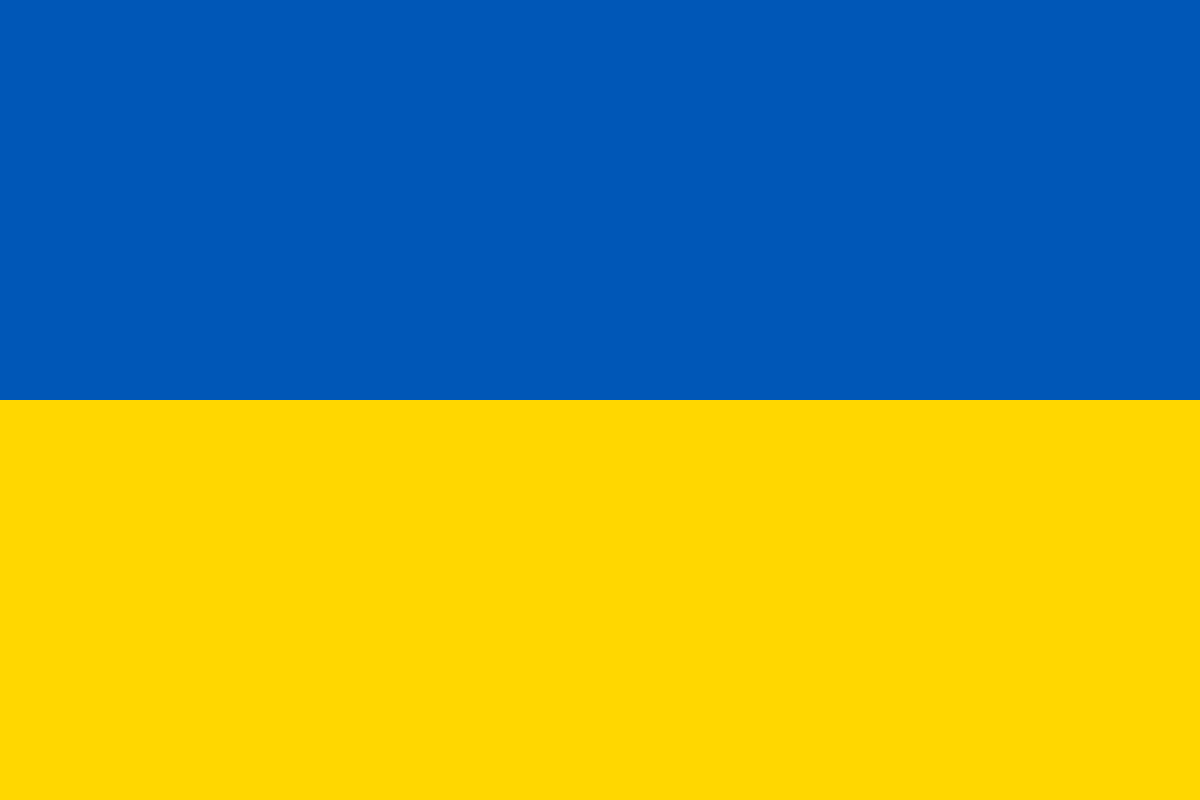

Ukraine in the World

Ukraine - Introduction 1995
top of pageBackground: Richly endowed in natural resources Ukraine has been fought over and subjugated for centuries; its 20th-century struggle for liberty is not yet complete. A short-lived independence from Russia (1917-1920) was followed by brutal Soviet rule that engineered two artificial famines (1921-22 and 1932-33) in which over 8 million died and World War II in which German and Soviet armies were responsible for some 7 million more deaths. Although independence was attained in 1991 with the dissolution of the USSR true freedom remains elusive as many of the former Soviet elite remain entrenched stalling efforts at economic reform privatization and civic liberties.
Land boundaries: total 4,558 km, Belarus 891 km, Hungary 103 km, Moldova 939 km, Poland 428 km, Romania (southwest) 169 km, Romania (west) 362 km, Russia 1,576 km, Slovakia 90 km
Maritime claims
Continental shelf: 200-m or to the depth of exploitation
Exclusive economic zone: undefined
Territorial sea: 12 nm
Climate: temperate continental; Mediterranean only on the southern Crimean coast; precipitation disproportionately distributed, highest in west and north, lesser in east and southeast; winters vary from cool along the Black Sea to cold farther inland; summers are warm across the greater part of the country, hot in the south
Terrain: most of Ukraine consists of fertile plains (steppes) and plateaux, mountains being found only in the west (the Carpathians), and in the Crimean Peninsula in the extreme south
Natural resources: iron ore, coal, manganese, natural gas, oil, salt, sulphur, graphite, titanium, magnesium, kaolin, nickel, mercury, timber
Land use
Arable land: 56%
Permanent crops: 2%
Meadows and pastures: 12%
Forest and woodland: 0%
Other: 30%
Geography
Note: strategic position at the crossroads between Europe and Asia; second largest country in Europe
Ukraine - People 1995
top of pageReligions: Ukrainian Orthodox - Moscow Patriarchate, Ukrainian Orthodox - Kiev Patriarchate, Ukrainian Autocephalous Orthodox, Ukrainian Catholic (Uniate), Protestant, Jewish
Age structure
0-14 years: 21% (female 5,217,850; male 5,407,450)
15-64 years: 65% (female 17,563,924; male 16,334,299)
65 years and over: 14% (female 4,976,893; male 2,367,412) (July 1995 est.)
Environment
Current issues: inadequate supplies of potable water; air and water pollution; deforestation; radiation contamination in the northeast from 1986 accident at Chornobyl' Nuclear Power Plant
Current issues natural hazards: NA
Current issues international agreements: party to - Air Pollution, Air Pollution-Nitrogen Oxides, Air Pollution-Sulphur 85, Antarctic Treaty, Environmental Modification, Marine Dumping, Nuclear Test Ban, Ozone Layer Protection, Ship Pollution; signed, but not ratified - Air Pollution-Sulphur 94, Air Pollution-Volatile Organic Compounds, Biodiversity, Climate Change, Law of the Sea
Life expectancy at birth
Total population: 70.11 years
Male: 65.59 years
Female: 74.87 years (1995 est.)
Ukraine - Government 1995
top of pageCountry name
Conventional long form: none
Conventional short form: Ukraine
Local long form: none
Local short form: Ukrayina
Former: Ukrainian Soviet Socialist Republic
Administrative divisions: 24 oblasti (singular - oblast'), 1 autonomous republic* (avtomnaya respublika), and 2 municipalites (mista, singular - misto) with oblast status**; Cherkas'ka (Cherkasy), Chernihivs'ka (Chernihiv), Chernivets'ka (Chernivtsi), Dnipropetrovs'ka (Dnipropetrovs'k), Donets'ka (Donets'k), Ivano-Frankivs'ka (Ivano-Frankivs'k), Kharkivs'ka (Kharkiv), Khersons'ka (Kherson), Khmel'nyts'ka (Khmel'nyts'kyy), Kirovohrads'ka (Kirovohrad), Kyyiv**, Kyyivs'ka (Kiev), Luhans'ka (Luhans'k), L'vivs'ka (L'viv), Mykolayivs'ka (Mykolayiv), Odes'ka (Odesa), Poltavs'ka (Poltava), Respublika Krym* (Simferopol'), Rivnens'ka (Rivne), Sevastopol'**, Sums'ka (Sevastopol'), Ternopil's'ka (Ternopil'), Vinnyts'ka (Vinnytsya), Volyns'ka (Luts'k), Zakarpats'ka (Uzhhorod), Zaporiz'ka (Zaporizhzhya), Zhytomyrs'ka (Zhytomyr)
Note: names in parentheses are administrative centers when name differs from oblast' name
Executive branch
Chief of state: President Leonid D. KUCHMA (since 19 July 1994); election last held 26 June and 10 July 1994 (next to be held NA 1999); results - Leonid KUCHMA 52.15%, Leonid KRAVCHUK 45.06%
Head of government: Acting Prime Minister Yeuben MARCHUK (since 3 March 1995); First Deputy Prime Ministers Yevhen MARCHUK and Viktor PYNZENYK (since 31 October 1994) and six deputy prime ministers
Cabinet: Council of Ministers; appointed by the president and approved by the Supreme Council
National Security Council: originally created in 1992, but signficantly revamped and strengthened under President KUCHMA; members include the president, prime minister, Ministers of Finance, Environment, Justice, Internal Affairs, Foreign Economic Relations, Economic and Foreign Affairs; the NSC staff is tasked with developing national security policy on domestic and international matters and advising the president
Presidential Administration: helps draft presidential edicts and provides policy support to the president
Council of Regions: advisory body created by President KUCHMA in September 1994; includes the Chairmen of Oblast and Kiev and Sevastopol City Supreme Councils
Legislative branch: unicameral
Supreme Council: elections last held 27 March 1994 with repeat elections continuing through December 1998 to fill empty seats (next to be held NA); results - percent of vote by party NA; seats - (450 total) Communists 91, Rukh 22, Agrarians 18, Socialists 15, Republicans 11, Congress of Ukrainian Nationalists 5, Labor 5, Party of Democratic Revival 4, Democrats 2, Social Democrats 2, Civil Congress 2, Conservative Republicans 1, Party of Economic Revival of Crimea 1, Christian Democrats 1, independents 225; note - 405 deputies have been elected; run-off elections for the remaining 45 seats to be held by December 1998
Judicial branch: joint commission formed in April 1995 to define a program of judicial reform by year-end
International organization participation: BSEC, CCC, CE (guest), CEI (associate members), CIS, EBRD, ECE, IAEA, IBRD, ICAO, ICRM, IFC, ILO, IMF, IMO, INMARSAT, INTELSAT (nonsignatory user), INTERPOL, IOC, IOM (observer), ISO, ITU, NACC, OSCE, PCA, PFP, UN, UNCTAD, UNESCO, UNIDO, UNPROFOR, UPU, WHO, WIPO, WMO
Diplomatic representation
In the us chief of mission: Ambassador Yuriy SHCHERBAK
In the us chancery: 3,350 M Street NW, Washington, DC 20,007
In the us telephone: [1] (202) 333-0606
In the us FAX: [1] (202) 333-0817
In the us consulates general: Chicago and New York
From the us chief of mission: Ambassador William Green MILLER
From the us embassy: 10 Yuria Kotsyubinskovo, 252,053 Kiev 53
From the us mailing address: use embassy street address
From the us telephone: [7] (044) 244-73-49, 244-37-45
From the us FAX: [7] (044) 244-73-50
Flag description: two equal horizontal bands of azure (top) and golden yellow represent grainfields under a blue sky
Ukraine - Economy 1995
top of pageEconomy overview: After Russia, the Ukrainian republic was far and away the most important economic component of the former Soviet Union, producing more than three times the output of the next-ranking republic. Its fertile black soil generated more than one-fourth of Soviet agricultural output, and its farms provided substantial quantities of meat, milk, grain, and vegetables to other republics. Likewise, its diversified heavy industry supplied equipment and raw materials to industrial and mining sites in other regions of the former USSR. In early 1992, the Ukrainian government liberalized most prices and erected a legal framework for privatization, but widespread resistance to reform within the government and the legislature soon stalled reform efforts and led to some backtracking. Loose monetary and fiscal policies pushed inflation to hyperinflationary levels in late 1993. Greater monetary and fiscal restraint lowered inflation in 1994, but also contributed to an accelerated decline in industrial output. Since his election in July 1994, President KUCHMA has developed - and parliament has approved - a comprehensive economic reform program, maintained financial discipline, and reduced state controls over prices, the exchange rate, and foreign trade. Implementation of KUCHMA's economic agenda will encounter considerable resistance from parliament, entrenched bureaucrats, and industrial interests and will contribute to further declines in output and rising unemployment which will sorely test the government's ability to stay the course on reform in 1995.
Industries: coal, electric power, ferrous and nonferrous metals, machinery and transport equipment, chemicals, food-processing (especially sugar)
Labor force: 23.55 million (January 1994)
By occupation industry and construction: 33%
By occupation agriculture and forestry: 21%
By occupation health education andculture: 16%
By occupation tradeanddistribution: 7%
By occupation transportandcommunication: 7%
By occupation other: 16% (1992)
Unemployment rate: 0.4% officially registered; large number of unregistered or underemployed workers
Exports: $11.8 billion (1994)
Commodoties: coal, electric power, ferrous and nonferrous metals, chemicals, machinery and transport equipment, grain, meat
Partners: FSU countries, China, Italy, Switzerland
Imports: $14.2 billion (1994)
Commodoties: energy, machinery and parts, transportation equipment, chemicals, textiles
Partners: FSU countries, Germany, Poland, Czech Republic
Ukraine - Energy 1995
top of pageElectricity
Capacity: 54,380,000 kW
Production: 182 billion kWh
Production consumption per capita: 3,200 kWh (1994)
Ukraine - Communication 1995
top of pageTelephone system: 7,886,000 telephone circuits; about 151.4 telephone circuits/1000 persons (1991); the telephone system is inadequate both for business and for personal use; 3.56 million applications for telephones had not been satisfied as of January 1991; electronic mail services have been established in Kiev, Odesa, and Luhans'k by Sprint
Local: an NMT-450 analog cellular telephone network operates in Kiev (Kyyiv) and allows direct dialing of international calls through Kiev's EWSD digital exchange
Intercity: NA
International: calls to other CIS countries are carried by land line or microwave; other international calls to 167 countries are carried by satellite or by the 150 leased lines through the Moscow gateway switch; INTELSAT, INMARSAT, and Intersputnik earth stations
Ukraine - Military 1995
top of pageMilitary expenditures: 544.3 billion karbovantsi, less than 4% of GDP (forecast for 1993; note - conversion of defense expenditures into US dollars using the current exchange rate could produce misleading results
Ukraine - Transportation 1995
top of pageAirports: 706
With paved runways over 3047 m: 14
With paved runways 2438 to 3047 m: 55
With paved runways 15-24 to 2437 m: 34
With paved runways 914 to 1523 m: 3
With paved runways under 914 m: 57
With unpaved runways over 3047 m: 7
With unpaved runways 2438 to 3047 m: 7
With unpaved runways 15-24 to 2438 m: 16
With unpaved runways 914 to 1523 m: 37
With unpaved runways under 914 m: 476
Merchant marine
Total: 379 ships (1,000 GRT or over) totaling 3,799,253 GRT/5,071,175 DWT
Ships by type: barge carrier 7, bulk 55, cargo 221, chemical tanker 2, container 20, multifunction large-load carrier 1, oil tanker 10, passenger 12, passenger-cargo 5, railcar carrier 2, refrigerated cargo 5, roll-on/roll-off cargo 32, short-sea passenger 7
Ukraine - Transnational issues 1995
top of pageDisputes international: certain territory of Moldova and Ukraine - including Bessarabia and Northern Bukovina - are considered by Bucharest as historically a part of Romania; this territory was incorporated into the former Soviet Union following the Molotov-Ribbentrop Pact in 1940; potential dispute with Russia over Crimea; has made no territorial claim in Antarctica (but has reserved the right to do so) and does not recognize the claims of any other nation
Illicit drugs: illicit cultivator of cannabis and opium poppy; mostly for CIS consumption; limited government eradication program; used as transshipment point for illicit drugs to Western Europe

🅶🅷🅴🅾🆂.🅲🅾🅼