Statistics France 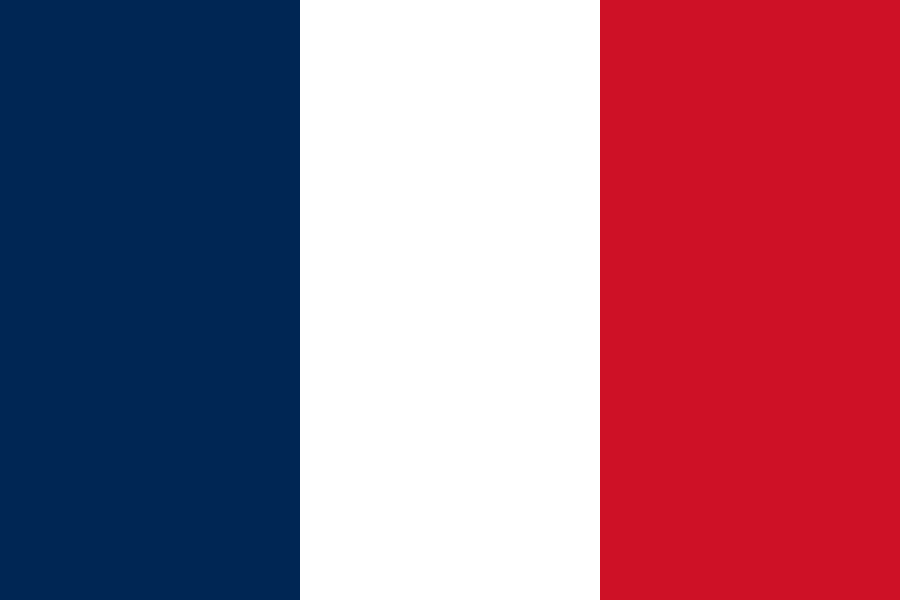

France in the World

France - Introduction 2000
top of pageBackground: Although ultimately a victor in World Wars I and II France suffered extensive losses in its empire wealth manpower and rank as a dominant nation-state. Since 1958 it has constructed a presidential democracy resistant to the instabilities experienced in earlier parliamentary democracies. In recent years its reconciliation and cooperation with Germany have proved central to the economic integration of Europe including the advent of the euro in January 1999. Today France is at the forefront of European states seeking to exploit the momentum of monetary union to advance the creation of a more unified and capable European defense and security apparatus.
Climate: generally cool winters and mild summers but mild winters and hot summers along the Mediterranean
Terrain: mostly flat plains or gently rolling hills in north and west; remainder is mountainous especially Pyrenees in south Alps in east
Geography
Note: largest West European nation; occasional strong cold dry north-to-northwesterly wind known as mistral
France - People 2000
top of pageLanguages: French 100% rapidly declining regional dialects and languages (Provencal Breton Alsatian Corsican Catalan Basque Flemish)
Religions: Roman Catholic 90% Protestant 2% Jewish 1% Muslim (North African workers) 1% unaffiliated 6%
Environment
Current issues: some forest damage from acid rain (major forest damage occurred as a result of severe December 1999 windstorm); air pollution from industrial and vehicle emissions; water pollution from urban wastes agricultural runoff
France - Government 2000
top of pageAdministrative divisions: 22 regions (regions singular - region); Alsace Aquitaine Auvergne Basse-Normandie Bourgogne Bretagne Centre Champagne-Ardenne Corse Franche-Comte Haute-Normandie Ile-de-France Languedoc-Roussillon Limousin Lorraine Midi-Pyrenees Nord-Pas-de-Calais Pays de la Loire Picardie Poitou-Charentes Provence-Alpes-Cote d'Azur Rhone-Alpes
Dependent areas: (1) Bassas da India Clipperton Island Europa Island French Polynesia French Southern and Antarctic Lands Glorioso Islands Juan de Nova Island New Caledonia Tromelin Island Wallis and Futuna
Constitution: 28 September 1958 amended concerning election of president in 1962 amended to comply with provisions of EC Maastricht Treaty in 1992; amended to tighten immigration laws 1993
Legal system: civil law system with indigenous concepts; review of administrative but not legislative acts
Legislative branch: bicameral Parliament or Parlement consists of the Senate or Senat (321 seats - 296 for metropolitan France 13 for overseas departments and territories and 12 for French nationals abroad; members are indirectly elected by an electoral college to serve nine-year terms; elected by thirds every three years) and the National Assembly or Assemblee Nationale (577 seats; members are elected by popular vote under a single-member majoritarian system to serve five-year terms)
Judicial branch: Supreme Court of Appeals or Cour de Cassation judges are appointed by the president from nominations of the High Council of the Judiciary; Constitutional Council or Conseil Constitutionnel three members appointed by the president three members appointed by the president of the National Assembly and three appointed by the president of the Senate; Council of State or Conseil d'Etat
Political parties and leaders: Citizens Movement or MdC [Jean Pierre CHEVENEMENT]; Democratic Force or FD [leader NA]; Ecology Gereration or GE [Brice LALONDE]; French Communist Party or PCF [Robert HUE]; Independent Ecological Movement or MEI [Jenevieve ANDUEZA]; Left Radical Party or PRG (previously Radical Socialist Party or PRS and the Left Radical Movement or MRG) [Jean-Michel BAYLET]; Liberal Democracy or DL (originally Republican Party or PR) [Alain MADELIN]; Movement for France or LDI-MPF [Philippe DEVILLIERS]; National Center of Independents and Peasants or CNIP [Jean PERRIN]; National Front or FN [Jean-Marie LE PEN]; National Front-National Movement [Bruno MEGRET]; Popular Party for French Democracy or PPDF [Herve de CHARETTE]; Radical Party or RRRS [Thierry CORNILLET]; Rally for the Republic or RPR [Michelle ALLIOT-MARIE]; Reformers' Movement or MR [Jean-Pierre SOISSON]; Socialist Party or PS [Francois HOLLANDE]; The Greens (Les Verts) [Jean-Luc BENNAHMIAS]; The Right (La Droite) [Charles MILLON]; Union for French Democracy or UDF (coalition of UDC FD RRRS PPDF) [Francois LEOTARD]; Union of the Center or UDC [leader NA]
International organization participation: ACCT AfDB AsDB Australia Group BDEAC BIS CCC CDB (non-regional) CE CERN EAPC EBRD ECA (associate) ECE ECLAC EIB EMU ESA ESCAP EU FAO FZ G- 5 G- 7 G-10 IADB IAEA IBRD ICAO ICC ICFTU ICRM IDA IEA IFAD IFC IFRCS IHO ILO IMF IMO Inmarsat InOC Intelsat Interpol IOC IOM ISO ITU MINURSO MIPONUH MONUC NAM (guest) NATO NEA NSG OAS (observer) OECD OPCW OSCE PCA SPC UN UN Security Council UNCTAD UNESCO UNHCR UNIDO UNIFIL UNIKOM UNITAR UNMIBH UNMIK UNOMIG UNRWA UNTSO UNU UPU WADB (nonregional) WCL WEU WFTU WHO WIPO WMO WToO WTrO ZC
Flag description: three equal vertical bands of blue (hoist side) white and red; known as the French Tricouleur (Tricolor); the design and colors are similar to a number of other flags including those of Belgium Chad Ireland Cote d'Ivoire and Luxembourg; the official flag for all French dependent areas
France - Economy 2000
top of pageEconomy overview: France's economy combines modern capitalistic methods with extensive but declining government intervention. The government retains considerable influence over key segments of each sector with majority ownership of railway electricity aircraft and telecommunication firms. It has been gradually relaxing its control over these sectors since the early 1990s. The government is slowly selling off holdings in France Telecom in Air France and in the insurance banking and defense industries. Meanwhile large tracts of fertile land the application of modern technology and subsidies have combined to make France the leading agricultural producer in Western Europe. Persistently high unemployment will continue to pose a major problem for the government; a 35-hour work week is being introduced. France has shied away from cutting exceptionally generous social welfare benefits or the enormous state bureaucracy preferring to pare defense spending and raise taxes to keep the deficit down. France joined 10 other EU members to launch the euro on 1 January 1999.
Industries: steel machinery chemicals automobiles metallurgy aircraft electronics mining; textiles food processing; tourism
Labor force: 25.4 million (1994)
By occupation services: 69%
By occupation industry: 26%
By occupation agriculture: 5% (1995)
Exports: $304.7 billion (f.o.b. 1999)
Commodities: machinery and transportation equipment chemicals iron and steel products; agricultural products textiles and clothing
Partners: EU 63% (Germany 16% UK 10% Italy 9% Spain 9% Belgium-Luxembourg 8%) US 7% (1998)
Imports: $280.8 billion (f.o.b. 1999)
Commodities: crude oil machinery and equipment chemicals; agricultural products
Partners: EU 62% (Germany 17% Italy 10% Belgium-Luxembourg 8% UK 8% Spain 7%) US 9% (1998)
Exchange rates: euros per US$1 - 0.9867 (January 2000) 0.9386 (1999); French francs (F) per US$1 - 5.65 (January 1999) 5.8995 (1998) 5.8367 (1997) 5.1155 (1996) 4.9915 (1995)
France - Energy 2000
top of pageElectricity
Production: 480.972 billion kWh (1998)
Consumption: 389.254 billion kWh (1998)
Exports: 62 billion kWh (1998)
Imports: 3.95 billion kWh (1998)
France - Communication 2000
top of pageTelephones
Main lines in use: 34.86 million (yearend 1998)
Mobile cellular: 11.078 million (yearend 1998)
France - Military 2000
top of pageFrance - Transportation 2000
top of pageFrance - Transnational issues 2000
top of pageDisputes international: Madagascar claims Bassas da India Europa Island Glorioso Islands Juan de Nova Island and Tromelin Island; Comoros claims Mayotte; Mauritius claims Tromelin Island; territorial dispute between Suriname and French Guiana; territorial claim in Antarctica (Adelie Land); Matthew and Hunter Islands east of New Caledonia claimed by France and Vanuatu
Illicit drugs: transshipment point for and consumer of South American cocaine and Southwest Asian heroin

🅶🅷🅴🅾🆂.🅲🅾🅼