Statistics Mauritius 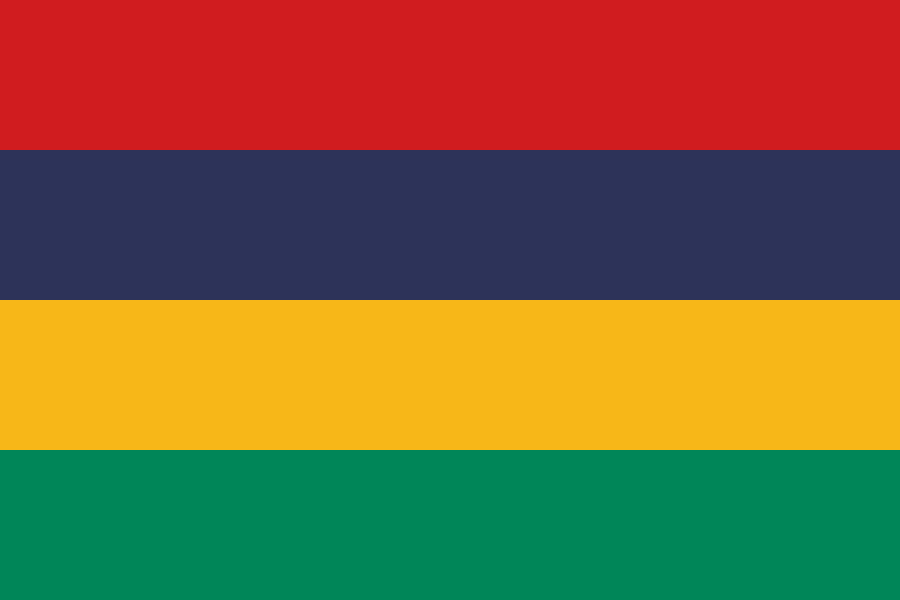

Mauritius in the World

Mauritius - Introduction 2007
top of pageBackground: Although known to Arab and Malay sailors as early as the 10th century Mauritius was first explored by the Portuguese in 1505; it was subsequently held by the Dutch French and British before independence was attained in 1968. A stable democracy with regular free elections and a positive human rights record the country has attracted considerable foreign investment and has earned one of Africa's highest per capita incomes. Recent poor weather and declining sugar prices have slowed economic growth leading to some protests over standards of living in the Creole community.
Area
Total: 2,040 km²
Land: 2,030 km²
Water: 10 km²
Note: includes Agalega Islands, Cargados Carajos Shoals (Saint Brandon), and Rodrigues
Comparative: almost 11 times the size of Washington DC
Maritime claims
Territorial sea: 12 nm
Exclusive economic zone: 200 nm
Continental shelf: 200 nm or to the edge of the continental margin
Climate: tropical modified by southeast trade winds; warm dry winter (May to November); hot wet humid summer (November to May)
Natural hazards: cyclones (November to April); almost completely surrounded by reefs that may pose maritime hazards
Geography
Note: the main island from which the country derives its name is of volcanic origin and is almost entirely surrounded by coral reefs
Mauritius - People 2007
top of pagePopulation: 1,250,882 (July 2007 est.)
Growth rate: 0.798% (2007 est.)
Below poverty line: 10% (2001 est.)
Languages: Creole 80.5% Bhojpuri 12.1% French 3.4% English (official; spoken by less than 1% of the population) other 3.7% unspecified 0.3% (2000 census)
Religions: Hindu 48% Roman Catholic 23.6% Muslim 16.6% other Christian 8.6% other 2.5% unspecified 0.3% none 0.4% (2000 census)
Age structure
0-14 years: 23.5% (male 147,808/female 146,270)
15-64 years: 69.8% (male 436,043/female 437,441)
65 years and over: 6.7% (male 32,475/female 50,845) (2007 est.)
Environment
Current issues: water pollution degradation of coral reefs
International agreements party to: Antarctic-Marine Living Resources, Biodiversity, Climate Change, Climate Change-Kyoto Protocol, Desertification, Endangered Species, Environmental Modification, Hazardous Wastes, Law of the Sea, Marine Life Conservation, Ozone Layer Protection, Ship Pollution, Wetlands
International agreements signed but not ratified: none of the selected agreements
Sex ratio
At birth: 1.02 male/female
Under 15 years: 1.011 male/female
15-64 years: 0.997 male/female
65 years and over: 0.639 male/female
Total population: 0.971 male/female (2007 est.)
Infant mortality rate
Total: 14.14 deaths/1000 live births
Male: 16.72 deaths/1000 live births
Female: 11.53 deaths/1000 live births (2007 est.)
Life expectancy at birth
Total population: 72.88 years
Male: 68.92 years
Female: 76.9 years (2007 est.)
Hivaids
Adult prevalence rate: 0.1% (2001 est.)
People living with hivaids: 700 (2001 est.)
Deaths: less than 100 (2001 est.)
Literacy
Definition: age 15 and over can read and write
Total population: 84.4%
Male: 88.4%
Female: 80.5% (2000 census)
Mauritius - Government 2007
top of pageCountry name
Conventional long form: Republic of Mauritius
Conventional short form: Mauritius
Local long form: Republic of Mauritius
Local short form: Mauritius
Capital
Name: Port Louis
Geographic coordinates: 20 09 S, 57 29 E
Time difference: UTC+4 (9 hours ahead of Washington, DC during Standard Time)
Administrative divisions: 9 districts and 3 dependencies*; Agalega Islands* Black River Cargados Carajos Shoals* Flacq Grand Port Moka Pamplemousses Plaines Wilhems Port Louis Riviere du Rempart Rodrigues* Savanne
Legal system: based on French civil law system with elements of English common law in certain areas; accepts compulsory ICJ jurisdiction with reservations
Executive branch
Chief of state: President Sir Anerood JUGNAUTH (since 7 October 2003); Vice President Abdool Raouf BUNDHUN (since 25 February 2002)
Head of government: Prime Minister Navinchandra RAMGOOLAM (since 5 July 2005)
Cabinet: Council of Ministers appointed by the president on the recommendation of the prime minister
Elections: president and vice president elected by the National Assembly for five-year terms (eligible for a second term); election last held 25 February 2002 (next to be held in 2007); prime minister and deputy prime minister appointed by the president, responsible to the National Assembly
Election results: Karl OFFMANN elected president and Raouf BUNDHUN elected vice president; percent of vote by the National Assembly - NA%; note - Karl OFFMANN stepped down on 30 September 2003
Legislative branch
Elections: last held on 3 July 2005 (next to be held in 2010)
Election results: percent of vote by party - NA; seats by party - AS 38, MSM/MMM 22, OPR 2; appointed seats - AS 4, MSM/MMM 2, OPR 2
Political parties and leaders: Alliance Sociale or AS; Hizbullah [Cehl Mohamed FAKEEMEEAH]; Mauritian Labor Party or MLP [Navinchandra RAMGOOLAM]; Mauritian Militant Movement or MMM [Paul BERENGER] (in coalition with MSM); Mauritian Social Democrat Party or PMSD [Charles Xavier-Luc DUVAL]; Militant Socialist Movement or MSM (the governing party) [Pravind JUGNAUTH]; Rodrigues Movement or MR [Joseph (Nicholas) Von MALLY]; Rodrigues Peoples Organization or OPR [Serge CLAIR]
International organization participation: ACCT ACP AfDB AU C COMESA FAO G-77 IAEA IBRD ICAO ICCt ICRM IDA IFAD IFC IFRCS IHO ILO IMF IMO IMSO InOC Interpol IOC IOM IPU ISO ITSO ITU ITUC MIGA NAM OIF OPCW PCA SADC UN UNCTAD UNESCO UNIDO UNWTO UPU WCL WCO WFTU WHO WIPO WMO WTO
Diplomatic representation
In the us chief of mission: Ambassador Usha JEETAH
In the us chancery: 4,301 Connecticut Avenue NW, Suite 441, Washington, DC 20,008
In the us telephone: [1] (202) 244-1491, 1492
In the us fax: [1] (202) 966-0983
From the us chief of mission: Ambassador John PRICE
From the us embassy: 4th Floor, Rogers House, John Kennedy Street, Port Louis
From the us mailing address: international mail: P. O. Box 544, Port Louis; US mail: American Embassy, Port Louis, US Department of State, Washington, DC 20,521-2,450
From the us telephone: [230] 202-4,400
From the us fax: [230] 208-9,534
Mauritius - Economy 2007
top of pageEconomy overview: Since independence in 1968 Mauritius has developed from a low-income agriculturally based economy to a middle-income diversified economy with growing industrial financial and tourist sectors. For most of the period annual growth has been in the order of 5% to 6%. This remarkable achievement has been reflected in more equitable income distribution increased life expectancy lowered infant mortality and a much-improved infrastructure. Sugarcane is grown on about 90% of the cultivated land area and accounts for 25% of export earnings. The government's development strategy centers on expanding local financial institutions and building a domestic information telecommunications industry. Mauritius has attracted more than 9,000 offshore entities many aimed at commerce in India and South Africa and investment in the banking sector alone has reached over $1 billion. Mauritius with its strong textile sector has been well poised to take advantage of the Africa Growth and Opportunity Act (AGOA).
Industries: food processing (largely sugar milling) textiles clothing mining chemicals metal products transport equipment nonelectrical machinery tourism
Labor force: 541,000 (2006 est.)
By occupation: agriculture and fishing 14% construction and industry 36% transportation and communication 7% trade restaurants hotels 16% finance 3% other services 24% (1995)
Budget
Revenues: $1.236 billion
Expenditures: $1.562 billion; including capital expenditures of $NA (2006 est.)
Exports: $2.339 billion f.o.b. (2006 est.)
Commodities: clothing and textiles sugar cut flowers molasses
Partners: UK 32.5% France 15.1% UAE 11.4% US 8.3% Madagascar 4.8% (2006)
Imports: $3.427 billion f.o.b. (2006 est.)
Commodities: manufactured goods capital equipment foodstuffs petroleum products chemicals
Partners: France 14.3% India 13.6% China 8.6% South Africa 7.3% (2006)
Exchange rates: Mauritian rupees per US dollar - 31.656 (2006) 29.496 (2005) 27.499 (2004) 27.902 (2003) 29.962 (2002)
Mauritius - Energy 2007
top of pageElectricity
Production: 2.122 billion kWh (2005)
Consumption: 1.973 billion kWh (2005)
Exports: 0 kWh (2005)
Imports: 0 kWh (2005)
Mauritius - Communication 2007
top of pageTelephone system
General assessment: small system with good service
Domestic: primarily microwave radio relay trunk system
International: country code - 230; satellite earth station - 1 Intelsat (Indian Ocean); new microwave link to Reunion; HF radiotelephone links to several countries; fiber optic submarine cable (SAT-3/WASC/SAFE) provides connectivity to Europe and Asia
Mauritius - Military 2007
top of pageMauritius - Transportation 2007
top of pageAirports: 5 (2007)
With paved runways total: 2
With paved runways over 3047 m: 1
With paved runways 914 to 1523 m: 1 (2007)
With unpaved runways total: 3
With unpaved runways 914 to 1523 m: 2
With unpaved runways under 914 m: 1 (2007)
Merchant marine
Total: 5 ships (1000 GRT or over) 19,417 GRT/19,700 DWT
By type: bulk carrier 2, passenger/cargo 2, refrigerated cargo 1
Foreign owned: 2 (India 2) (2007)
Mauritius - Transnational issues 2007
top of pageDisputes international: Mauritius claims the Chagos Archipelago (UK-administered British Indian Ocean Territory) and its former inhabitants who reside chiefly in Mauritius; claims French-administered Tromelin Island
Illicit drugs: consumer and transshipment point for heroin from South Asia; small amounts of cannabis produced and consumed locally; significant offshore financial industry creates potential for money laundering but corruption levels are relatively low and the government appears generally to be committed to regulating its banking industry

🅶🅷🅴🅾🆂.🅲🅾🅼