Statistics France 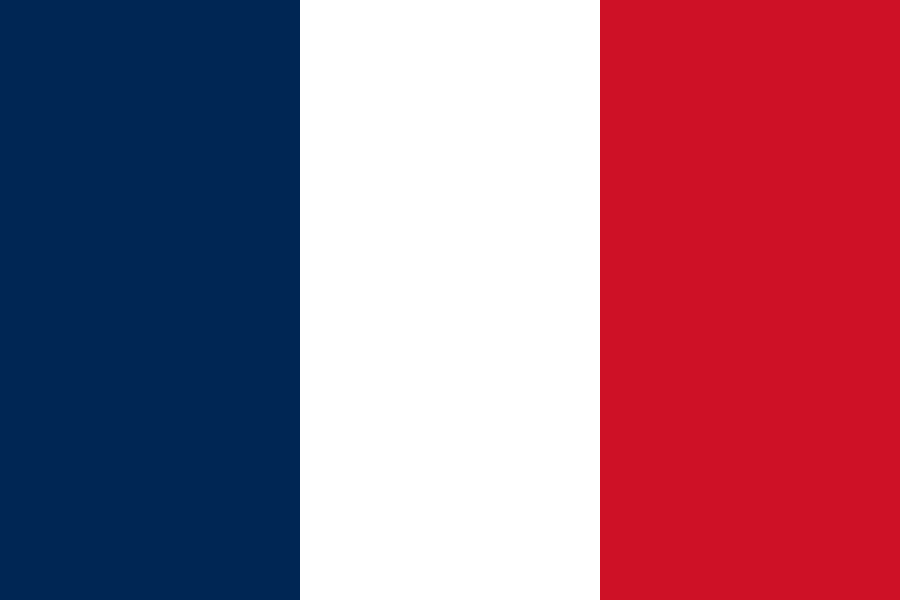

France in the World

France - Introduction 2012
top of pageBackground: France today is one of the most modern countries in the world and is a leader among European nations. It plays an influential global role as a permanent member of the United Nations Security Council NATO the G-8 the G-20 the EU and other multilateral organizations. France rejoined NATO's integrated military command structure in 2009 reversing de Gaulle's 1966 decision to take French forces out of NATO. Since 1958 it has constructed a hybrid presidential-parliamentary governing system resistant to the instabilities experienced in earlier more purely parliamentary administrations. In recent decades its reconciliation and cooperation with Germany have proved central to the economic integration of Europe including the introduction of a common exchange currency the euro in January 1999. In the early 21st century five French overseas entities - French Guiana Guadeloupe Martinique Mayotte and Reunion - became French regions and were made part of France proper.
France - People 2012
top of pagePopulation: 65,630,692 (July 2012 est.)
Rank: 21
Growth rate: 0.5% (2012 est.)
Growth rate rank: 150
Below poverty line: 6.2% (2004)
Languages: French (official) 100% rapidly declining regional dialects and languages (Provencal Breton Alsatian Corsican Catalan Basque Flemish)
Environment
Current issues: some forest damage from acid rain; air pollution from industrial and vehicle emissions; water pollution from urban wastes agricultural runoff
Sanitation facility access:
urban: 100% of population
rural: 100% of population
total: 100% of population
rural: 100% of population
total: 100% of population
Hivaids
Adult prevalence rate: 0.4% (2009 est.)
Adult prevalence rate rank: 75
People living with hivaids: 150,000 (2009 est.)
People living with hivaids rank: 33
Deaths: 1700 (2009 est.)
Deaths rank: 57
France - Government 2012
top of pageAdministrative divisions: 27 regions (regions singular - region); Alsace Aquitaine Auvergne Basse-Normandie (Lower Normandy) Bourgogne (Burgundy) Bretagne (Brittany) Centre Champagne-Ardenne Corse (Corsica) Franche-Comte Guadeloupe Guyane (French Guiana) Haute-Normandie (Upper Normandy) Ile-de-France Languedoc-Roussillon Limousin Lorraine Martinique Mayotte Midi-Pyrenees Nord-Pas-de-Calais Pays de la Loire Picardie Poitou-Charentes Provence-Alpes-Cote d'Azur Reunion Rhone-Alpes
Dependent areas: (1) Clipperton Island French Polynesia French Southern and Antarctic Lands New Caledonia Saint Barthelemy Saint Martin Saint Pierre and Miquelon Wallis and Futuna
Independence: no official date of independence: 486 (Frankish tribes unified under Merovingian kingship); 10 August 843 (Western Francia established from the division of the Carolingian Empire); 14 July 1789 (French monarchy overthrown); 22 September 1792 (First French Republic founded); 4 October 1958 (Fifth French Republic established)
National holiday: Fete de la Federation 14 July (1790); note - although often incorrectly referred to as Bastille Day the celebration actually commemorates the holiday held on the first anniversary of the storming of the Bastille (on 14 July 1789) and the establishment of a constitutional monarchy; other names for the holiday are Fete Nationale (National Holiday) and quatorze juillet (14th of July)
International law organization participation: has not submitted an ICJ jurisdiction declaration; accepts ICCt jurisdiction
Legislative branch: bicameral Parliament or Parlement consists of the Senate or Senat (348 seats; 328 for metropolitan France and overseas departments 2 for New Caledonia 2 for French Polynesia 1 for Saint-Pierre and Miquelon 1 for Saint-Barthelemy 1 for Saint-Martin 1 for Wallis and Futuna and 12 for French nationals abroad; members indirectly elected by an electoral college to serve six-year terms; one third elected every three years); and the National Assembly or Assemblee Nationale (577 seats; 555 for metropolitan France 15 for overseas departments 7 for overseas dependencies; members elected by popular vote under a single-member majority system to serve five-year terms)
Judicial branch: Supreme Court of Appeals or Cour de Cassation (judges are appointed by the president from nominations of the High Council of the Judiciary); Constitutional Council or Conseil Constitutionnel (three members appointed by the president three appointed by the president of the National Assembly and three appointed by the president of the Senate); Council of State or Conseil d'Etat
Political parties and leaders: Centrist Union or UDF [Nicolas ABOUT]; Democratic Movement or MoDem [Francois BAYROU] (previously Union for French Democracy or UDF); French Communist Party or PCF [Pierre LAURENT]; Greens [Dominique VOYNET]; Left Front or FDG [Jean-Luc MELENCHON]; Left Party or PG [Jean-Luc MELENCHON]; Left Radical Party or PRG [Jean-Michel BAYLET] (previously Radical Socialist Party or PRS and the Left Radical Movement or MRG); Movement for France or MPF [Philippe DE VILLIERS]; National Front or FN [Marine LE PEN]; New Anticapitalist Party or NPA [Myriam MARTIN and Christine POUPIN]; New Center or NC [Herve MORIN]; Radical Party [Jean-Louis BORLOO]; Rally for France or RPF [Charles PASQUA]; Republican and Citizen Movement or MRC [Jean-Luc LAURENT]; Socialist Party or PS [Herlem DESIR]; United Republic or RS [Dominique DE VILLEPIN]; Union for a Popular Movement or UMP [Jean-Francois COPE]; Worker's Struggle or LO [Nathalie ARTHAUD]
International organization participation: ADB (nonregional member) AfDB (nonregional member) Arctic Council (observer) Australia Group BDEAC BIS BSEC (observer) CBSS (observer) CE CERN EAPC EBRD ECB EIB EITI (implementing country) EMU ESA EU FAO FATF FZ G-20 G-5 G-7 G-8 G-10 IADB IAEA IBRD ICAO ICC (national committees) ICRM IDA IEA IFAD IFC IFRCS IGAD (partners) IHO ILO IMF IMO IMSO InOC Interpol IOC IOM IPU ISO ITSO ITU ITUC (NGOs) MIGA MINURSO MINUSTAH MONUSCO NATO NEA NSG OAS (observer) OECD OIF OPCW OSCE Paris Club PCA PIF (partner) Schengen Convention SELEC (observer) SPC UN UN Security Council UNCTAD UNESCO UNHCR UNIDO UNIFIL Union Latina UNMIL UNOCI UNRWA UNSC (permanent) UNTSO UNWTO UPU WCO WFTU (NGOs) WHO WIPO WMO WTO ZC
Flag description: three equal vertical bands of blue (hoist side) white and red; known as the 'Le drapeau tricolore' (French Tricolor) the origin of the flag dates to 1790 and the French Revolution when the 'ancient French color' of white was combined with the blue and red colors of the Parisian militia; the official flag for all French dependent areas
France - Economy 2012
top of pageEconomy overview: The French economy is diversified across all sectors. The government has partially or fully privatized many large companies including Air France France Telecom Renault and Thales. However the government maintains a strong presence in some sectors particularly power public transport and defense industries. With at least 79 million foreign tourists per year France is the most visited country in the world and maintains the third largest income in the world from tourism. France's leaders remain committed to a capitalism in which they maintain social equity by means of laws tax policies and social spending that reduce income disparity and the impact of free markets on public health and welfare. France's real GDP contracted 2.6% in 2009 but recovered somewhat in 2010 and 2011 before stagnating in 2012. The unemployment rate increased from 7.4% in 2008 and has remained above 9% per year since then. Lower-than-expected growth and increased unemployment have strained France's public finances. The budget deficit rose sharply from 3.4% of GDP in 2008 to 7.5% of GDP in 2009 before improving to 4.5% of GDP in 2012 while France's public debt rose from 68% of GDP to 89% over the same period. Under President SARKOZY Paris implemented some austerity measures to bring the budget deficit under the 3% euro-zone ceiling by 2013 and to highlight France's commitment to fiscal discipline at a time of intense financial market scrutiny of euro-zone debt. Socialist Party candidate Francois HOLLANDE won the May 2012 presidential election after advocating pro-growth economic policies the separation of banks' traditional deposit taking and lending activities from more speculative businesses increasing the top corporate and personal tax rates and hiring an additional 60,000 teachers during his five-year term. France ratified the EU fiscal stability treaty in October 2012 and HOLLANDE's government has maintained France's commitment to meeting the budget deficit target of 3% of GDP during 2013 even amid signs that economic growth will be lower than the government's forecast of 0.8%. Despite stagnant growth and fiscal challenges France's borrowing costs declined during the second half of 2012 to euro-era lows.
Market value of publicly traded shares:
$1.926 trillion (31 December 2010)
$1.972 trillion (31 December 2009)
$1.972 trillion (31 December 2009)
Rank: 8
Exports: $589.7 billion (2011 est.)
Rank: 6
Commodities: machinery and transportation equipment aircraft plastics chemicals pharmaceutical products iron and steel beverages
Partners: Germany 16.7% Italy 8.3% Spain 7.4% Belgium 7.4% UK 6.7% US 5% Netherlands 4.3% (2011)
Imports: $692 billion (2011 est.)
Rank: 6
Commodities: machinery and equipment vehicles crude oil aircraft plastics chemicals
Partners: Germany 19.1% Belgium 11.3% Italy 7.7% Netherlands 7.5% Spain 6.6% UK 5.1% China 4.8% (2011)
Exchange rates:
euros (EUR) per US dollar -
0.7838 (2012 est.)
0.7185 (2011 est.)
755 (2010 est.)
0.7198 (2009 est.)
0.6827 (2008 est.)
0.7838 (2012 est.)
0.7185 (2011 est.)
755 (2010 est.)
0.7198 (2009 est.)
0.6827 (2008 est.)
France - Energy 2012
top of pageElectricity
Production: 539 billion kWh (2010 est.)
Production rank: 10
Consumption: 451.4 billion kWh (2009 est.)
Consumption rank: 11
Exports: 66.6 billion kWh (2010 est.)
Exports rank: 2
Imports: 37.1 billion kWh (2010 est.)
Imports rank: 6
Installed generating capacity: 119.1 million kW (2009 est.)
Installed generating capacity rank: 10
Generation sources fossil fuels: 20.5% of total installed capacity (2009 est.)
Generation sources fossil fuels rank: 188
Generation sources nuclear: 53% of total installed capacity (2009 est.)
Generation sources nuclear rank: 1
Generation sources hydroelectricity: 17.6% of total installed capacity (2009 est.)
Generation sources hydroelectricity rank: 100
Generation sources other renewable sources: 5.3% of total installed capacity (2009 est.)
Generation sources other renewable sources rank: 33
Petroleum
Petroleum total petroleum production: 49,530 bbl/day (2011 est.)
Petroleum total petroleum production rank: 59
Crude oil exports: 0 bbl/day (2009 est.)
Crude oil exports rank: 116
Crude oil imports: 1.428 million bbl/day (2009 est.)
Crude oil imports rank: 9
Crude oil proven reserves: 90.01 million bbl (1 January 2012 est.)
Crude oil proven reserves rank: 74
Refined petroleum
Products production: 1.694 million bbl/day (2009 est.)
Products production rank: 15
Products consumption: 1.792 million bbl/day (2011 est.)
Products consumption rank: 14
Products exports: 487,200 bbl/day (2009 est.)
Products exports rank: 15
Products imports: 778,400 bbl/day (2009 est.)
Products imports rank: 8
Natural gas
Production: 587 million m³ (2011 est.)
Production rank: 70
Consumption: 41.52 billion m³ (2011 est.)
Consumption rank: 25
Exports: 5.378 billion m³ (2011 est.)
Exports rank: 30
Imports: 47.04 billion m³ (2011 est.)
Imports rank: 8
Proven reserves: 5.522 billion m³ (1 January 2012 est.)
Proven reserves rank: 93
Carbon dioxide emissions
From consumption of energy: 395.2 million Mt (2010 est.)
From consumption of energy rank: 18
France - Communication 2012
top of pageTelephones
Main lines in use: 39.883 million (2011)
Main lines in use rank: 7
Mobile cellular: 59.84 million (2011)
Mobile cellular rank: 21
Broadcast media: a mix of both publicly-operated and privately-owned TV stations; state-owned France Televisions operates 4 networks one of which is a network of regional stations and has part-interest in several thematic cable/satellite channels and international channels; a large number of privately-owned regional and local TV stations; multi-channel satellite and cable services provide a large number of channels; public broadcaster Radio France operates 7 national networks a series of regional networks and operates services for overseas territories and foreign audiences; Radio France Internationale (RFI) under the Ministry of Foreign Affairs is a leading international broadcaster; a large number of commercial FM stations with many of them consolidating into commercial networks (2008)
Internet
Country code: metropolitan France - .fr; French Guiana - .gf; Guadeloupe - .gp; Martinique - .mq; Mayotte - .yt; Reunion - .re
Hosts: 17.266 million (2012)
Hosts rank: 7
Users: 45.262 million; 44.625 million (metropolitan France) (2009)
Users rank: 8
France - Military 2012
top of pageMilitary service age and obligation: 17-40 years of age for male and female voluntary military service (with parental consent); no conscription; 1 year service obligation; women serve in noncombat posts (2012)
France - Transportation 2012
top of pageFrance - Transnational issues 2012
top of pageDisputes international: Madagascar claims the French territories of Bassas da India Europa Island Glorioso Islands and Juan de Nova Island; Comoros claims Mayotte; Mauritius claims Tromelin Island; territorial dispute between Suriname and the French overseas department of French Guiana; France asserts a territorial claim in Antarctica (Adelie Land); France and Vanuatu claim Matthew and Hunter Islands east of New Caledonia

🅶🅷🅴🅾🆂.🅲🅾🅼