Statistics Pakistan 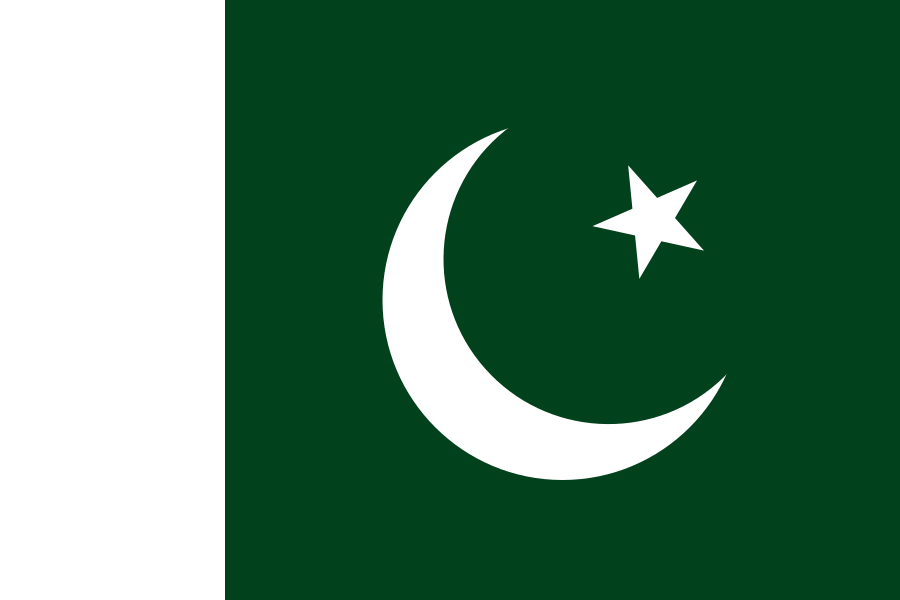

Pakistan in the World

Pakistan - Introduction 2015
top of pageBackground: The Indus Valley civilization one of the oldest in the world and dating back at least 5,000 years spread over much of what is presently Pakistan. During the second millennium B.C. remnants of this culture fused with the migrating Indo-Aryan peoples. The area underwent successive invasions in subsequent centuries from the Persians Greeks Scythians Arabs (who brought Islam) Afghans and Turks. The Mughal Empire flourished in the 16th and 17th centuries; the British came to dominate the region in the 18th century. The separation in 1947 of British India into the Muslim state of Pakistan (with West and East sections) and largely Hindu India was never satisfactorily resolved and India and Pakistan fought two wars - in 1947-48 and 1965 - over the disputed Kashmir territory. A third war between these countries in 1971 - in which India capitalized on Islamabad's marginalization of Bengalis in Pakistani politics - resulted in East Pakistan becoming the separate nation of Bangladesh. In response to Indian nuclear weapons testing Pakistan conducted its own tests in 1998. India-Pakistan relations have been rocky since the November 2008 Mumbai attacks but both countries are taking steps to put relations back on track. In February 2008 Pakistan held parliamentary elections and in September 2008 after the resignation of former President MUSHARRAF elected Asif Ali ZARDARI to the presidency. A constitutional amendment adopted in April 2010 limited many of the president’s executive powers effectively restoring the parliamentary system. Following parliamentary elections in May 2013 in which Nawaz SHARIF’s Pakistan Muslim League-Nawaz party won a majority of seats Pakistan witnessed its first peaceful transition from one democratically elected government to another.
Area
Total: 796,095 km²
Land: 770,875 km²
Water: 25,220 km²
Rank: 36
Comparative: slightly more than five times the size of Georgia; slightly less than twice the size of California
Land boundaries
Total: 7,257 km
Border countries: (4) Afghanistan 2,670 km; China 438 km; India 3,190 km; Iran 959 km
Maritime claims
Territorial sea: 12 nm
Contiguous zone: 24 nm
Exclusive economic zone: 200 nm
Continental shelf: 200 nm or to the edge of the continental margin
Natural resources: arable land: extensive natural gas reserves limited petroleum poor quality coal iron ore copper salt limestone
Land use
Agricultural land: 35.2%
arable land: 27.6%
permanent crops: 1.1%
permanent pasture: 6.5%
permanent crops: 1.1%
permanent pasture: 6.5%
Forest: 2.1%
Other: 62.7%
Natural hazards: frequent earthquakes occasionally severe especially in north and west; flooding along the Indus after heavy rains (July and August)
Geography
Note: controls Khyber Pass and Bolan Pass traditional invasion routes between Central Asia and the Indian Subcontinent
Pakistan - People 2015
top of pagePopulation: 199,085,847 (July 2015 est.)
Rank: 7
Growth rate: 1.46% (2015 est.)
Growth rate rank: 80
Below poverty line: 12.4% (FY2011 est.)
Ethnic groups: Punjabi 44.68% Pashtun (Pathan) 15.42% Sindhi 14.1% Sariaki 8.38% Muhajirs 7.57% Balochi 3.57% other 6.28%
Languages: Punjabi 48% Sindhi 12% Saraiki (a Punjabi variant) 10% Pashto (alternate name Pashtu) 8% Urdu (official) 8% Balochi 3% Hindko 2% Brahui 1% English (official; lingua franca of Pakistani elite and most government ministries) Burushaski and other 8%
Religions: Muslim (official) 96.4% (Sunni 85-90% Shia 10-15%) other (includes Christian and Hindu) 3.6% (2010 est.)
Age structure
0-14 years: 32.65%
15-24 years: 21.44%
25-54 years: 36.28%
55-64 years: 5.28%
65 years and over: 4.35% (2015 est.)
Dependency ratios
Total dependency ratio: 65.3%
Youth dependency ratio: 57.9%
Elderly dependency ratio: 7.4%
Potential support ratio: 13.5%
Urbanization
Urban population: 38.8% of total population
Rate of urbanization: 2.81% annual rate of change
Major urban areas
Population: Karachi 16.618 million; Lahore 8.741 million; Faisalabad 3.567 million; Rawalpindi 2.506 million; Multan 1.921 million; ISLAMABAD (capital) 1.365 million (2015)
Environment
Current issues: water pollution from raw sewage industrial wastes and agricultural runoff; limited natural freshwater resources; most of the population does not have access to potable water; deforestation; soil erosion; desertification
International agreements party to: Biodiversity Climate Change Climate Change-Kyoto Protocol Desertification Endangered Species Environmental Modification Hazardous Wastes Law of the Sea Marine Dumping Ozone Layer Protection Ship Pollution Wetlands
International agreements signed but not ratified: Marine Life Conservation
Sex ratio
At birth: 1.05 male/female
0-14 years: 1.06 male/female
15-24 years: 1.06 male/female
25-54 years: 1.08 male/female
55-64 years: 1 male/female
65 years and over: 0.87 male/female
Total population: 1.06 male/female
Infant mortality rate
Total: 55.67 deaths/1000 live births
Male: 58.84 deaths/1000 live births
Female: 52.35 deaths/1000 live births
Rank: 25
Drinking water source:
urban: 93.9% of population
rural: 89.9% of population
total: 91.4% of population
urban: 6.1% of population
rural: 10.1% of population
total: 8.6% of population (2015 est.)
rural: 89.9% of population
total: 91.4% of population
urban: 6.1% of population
rural: 10.1% of population
total: 8.6% of population (2015 est.)
Sanitation facility access:
urban: 83.1% of population
rural: 51.1% of population
total: 63.5% of population
urban: 16.9% of population
rural: 48.9% of population
total: 36.5% of population (2015 est.)
rural: 51.1% of population
total: 63.5% of population
urban: 16.9% of population
rural: 48.9% of population
total: 36.5% of population (2015 est.)
Hivaids
Adult prevalence rate: 0.07% (2013 est.)
Adult prevalence rate rank: 110
People living with hivaids: 68,000 (2013 est.)
People living with hivaids rank: 51
Deaths: 2,200 (2013 est.)
Deaths rank: 55
Major infectious diseases
Degree of risk: high
Food or waterborne diseases: bacterial diarrhea hepatitis A and E and typhoid fever
Vectorborne diseases: dengue fever and malaria
Animal contact disease: rabies
Note: highly pathogenic H5N1 avian influenza has been identified in this country; it poses a negligible risk with extremely rare cases possible among US citizens who have close contact with birds
Literacy
Definition: age 15 and over can read and write
Total population: 57.9%
Male: 69.5%
Female: 45.8%
Pakistan - Government 2015
top of pageCountry name
Conventional long form: Islamic Republic of Pakistan
Conventional short form: Pakistan
Local long form: Jamhuryat Islami Pakistan
Local short form: Pakistan
Former: West Pakistan
Administrative divisions: 4 provinces 1 territory* and 1 capital territory**; Balochistan Federally Administered Tribal Areas* Islamabad Capital Territory** Khyber Pakhtunkhwa (formerly North-West Frontier Province) Punjab Sindh
Note: the Pakistani-administered portion of the disputed Jammu and Kashmir region consists of 2 administrative entities: Azad Kashmir and Gilgit-Baltistan
National holiday: Pakistan Day (also referred to as Pakistan Resolution Day or Republic Day) 23 March (1940); note - commemorates both the adoption of the Lahore Resolution by the All-India Muslim League during its 22-24 March 1940 session which called for the creation of independent Muslim states and the adoption of the first constitution of Pakistan on 23 March 1956 during the transition to the Islamic Republic of Pakistan
Constitution: several previous; latest endorsed 12 April 1973 passed 19 April 1973 entered into force 14 August 1973 (suspended and restored several times); amended many times last in 2015 (2015)
International law organization participation: accepts compulsory ICJ jurisdiction with reservations; non-party state to the ICCt
Suffrage: 18 years of age; universal; note - there are joint electorates and reserved parliamentary seats for women and non-Muslims
Executive branch
Chief of state: President Mamnoon HUSSAIN
Head of government: Prime Minister Mohammad Nawaz SHARIF
Cabinet: Cabinet appointed by the president upon the advice of the prime minister
Electionsappointments: president indirectly elected by the Electoral College consisting of members of the Senate National Assembly and provincial assemblies for a 5-year term ; election last held on 9 September 2013 (next to be held in 2018); prime minister selected by the National Assembly
Election results: Mamnoon HUSSAIN elected president; Mamnoon HUSSAIN 432 votes Wajihuddin AHMED (PTI) 77 votes
Legislative branch
Description: bicameral Parliament or Majlis-e-Shoora consists of the Senate and the National Assembly (342 seats; 272 members directly elected in single-seat constituencies by simple majority vote and 70 members - 60 women and 10 non-Muslims - directly elected by proportional representation vote; all members serve 5-year terms)
Elections: Senate - last held on 5 March 2015 ; National Assembly - last held on 11 May 2013 (next to be held by 2018)
Election results: Senate - percent of vote by party - NA; seats by party - PPPP 27 PML-N 26 MQM 8 ANP 7 PTI 6 JUI-F 5 PML-Q 4 BNP-A 3 NPP 1 PML-F 1 other 10 independent 6; National Assembly - percent of votes by party - NA; seats by party as of June 2013 - PML-N 126 PPPP 31 PTI 28 MQM 18 JUI-F 10 PML-F 5 other 22 independent 25 unfilled seats 7; 60 seats reserved for women 10 seats reserved for non-Muslims; seats by party as of April 2015 - PML-N 188 PPPP 46 PTI 33 MQM 23 JUI-F 13 PML-F 5 other 25 independent 9
Judicial branch
Highest court: Supreme Court of Pakistan
Judge selection and term of office: justices nominated by an 8-member parliamentary committee upon the recommendation of the Judicial Commission and appointed by the president of Pakistan; justices can serve until age 65
Subordinate courts: High Courts; Federal Shariat Court; provincial and district civil and criminal courts; specialized courts for issues such as taxation banking customs etc.
Political parties and leaders:
Pakistan Muslim League-Quaid-i Azam or PML-Q [Chaudhry Shujaat HUSSAIN]
Pakistan Peoples Party Parliamentarians or PPPP [Bilawal Bhutto ZARDARI chairman; Asif Ali ZARDARI president]
Pakistan Tehrik-e Insaaf or PTI [Imran KHAN]
Quami Watan Party or QWP [Aftab Ahmed Khan SHERPAO]
Pakistan Peoples Party Parliamentarians or PPPP [Bilawal Bhutto ZARDARI chairman; Asif Ali ZARDARI president]
Pakistan Tehrik-e Insaaf or PTI [Imran KHAN]
Quami Watan Party or QWP [Aftab Ahmed Khan SHERPAO]
Note: political alliances in Pakistan can shift frequently
International organization participation: ADB ARF ASEAN (dialogue partner) C CICA CP D-8 ECO FAO G-11 G-24 G-77 IAEA IBRD ICAO ICC (national committees) ICRM IDA IDB IFAD IFC IFRCS IHO ILO IMF IMO IMSO Interpol IOC IOM IPU ISO ITSO ITU ITUC (NGOs) MIGA MINURSO MONUSCO NAM OAS (observer) OIC OPCW PCA SAARC SACEP SCO (observer) UN UNAMID UNCTAD UNESCO UNHCR UNIDO UNMIL UNOCI UNWTO UPU WCO WFTU (NGOs) WHO WIPO WMO WTO
Diplomatic representation
In the us chief of mission: Ambassador Jalil Abbas JILANI
In the us chancery: 3,517 International Court Washington DC 20,008
In the us telephone: [1] 243-6,500
In the us FAX: [1] 686-1544
In the us consulate general: Chicago Houston Los Angeles
In the us consulate: Louisville San Francisco
From the us chief of mission: Ambassador Richard OLSON
From the us embassy: Diplomatic Enclave Ramna 5 Islamabad
From the us mailing address: 8,100 Islamabad Place Washington DC 20,521-8,100
From the us telephone: [92] 208-0000
From the us FAX: [92] 227-6,427
From the us consulate general: Karachi
From the us consulate: Lahore Peshawar
Flag description: green with a vertical white band (symbolizing the role of religious minorities) on the hoist side; a large white crescent and star are centered in the green field; the crescent star and color green are traditional symbols of Islam
National anthem
Name: 'Qaumi Tarana'
Lyrics and music: Abu-Al-Asar Hafeez JULLANDHURI/Ahmed Ghulamali CHAGLA
Note: adopted 1954; also known as 'Pak sarzamin shad bad'
Pakistan - Economy 2015
top of pageEconomy overview: Decades of internal political disputes and low levels of foreign investment have led to slow growth and underdevelopment in Pakistan. Agriculture accounts for more than one-fourth of output and two-fifths of employment. Textiles account for most of Pakistan's export earnings and Pakistan's failure to diversify its exportshas left the country vulnerable to shifts in world demand. Official unemployment was 6.9% in 2014 but this fails to capture the true picture because much of the economy is informal and underemployment remains high. Pakistan’s human development continues to lag behind most of the region.. As a result of political and macroeconomic instability the Pakistani rupee has depreciated more than 40% since 2007. The government agreed to an International Monetary Fund Standby Arrangement in November 2008 to preventa balance of payments crisis but the IMF ended the Arrangement early because of Pakistan’s failure to implement required reforms. The economy has stabilized it continues to underperform and foreign investment has not returned to levels seen during themid-2000’s due to investor concerns related to governance electricity shortages and a slow-down in the global economy. Remittances from overseas workers averaging more than$1 billion a month remain a bright spot for Pakistan. After a small current account surplus in fiscal year 2011 (July 2010/June 2011) Pakistan's current account turned to a deficit where it remained through 2014 spurred by higher prices for imported oil and lower prices for exported cotton. In September 2013 after facing balance of payments concerns Pakistan entered into a three-year $6.7 billion IMF Extended Fund Facility. The Sharif government has since made modest progress implementing fiscal and energy reforms and in December 2014 the IMF described Pakistan’s progress as “broadly on track.” Pakistan remains stuck in a low-income low-growth trap with growth averaging about 3.5% per year from 2008 to 2014. Pakistan must address long standing issues related to government revenues and the electricity and natural gas sectorsin order to spur the amount of economic growth that will be necessary to employ its growing and rapidly urbanizing population more than half of which is under 22. Other long term challenges include expanding investment in education and healthcare adapting to the effects of climate change and natural disasters and reducing dependence on foreign donors.
Real gdp purchasing power parity:
$882.3 billion (2014 est.)
$847.2 billion (2013 est.)
$817 billion (2012 est.)
$847.2 billion (2013 est.)
$817 billion (2012 est.)
Note: data are in 2014 US dollars
Rank: 27
Real gdp per capita:
$4,700 (2014 est.)
$4,500 (2013 est.)
$4,400 (2012 est.)
$4,500 (2013 est.)
$4,400 (2012 est.)
Note: data are in 2014 US dollars
Rank: 174
Gross national saving:
12.8% of GDP (2014 est.)
13.5% of GDP (2013 est.)
13% of GDP (2012 est.)
13.5% of GDP (2013 est.)
13% of GDP (2012 est.)
Rank: 132
Gdp composition by end use
Household consumption: 80.5%
Government consumption: 12%
Investment in fixed capital: 12.4%
Investment in inventories: 1.6%
Exports of goods and services: 12.3%
Imports of goods and services: -18.8%: (2014 est.)
Industries: textiles and apparel food processing pharmaceuticals construction materials paper products fertilizer shrimp
Labor force: 62.42 million
Note: extensive export of labor mostly to the Middle East and use of child labor
Rank: 10
By occupation agriculture: 44%
By occupation industry: 22%
By occupation services: 33%
Budget
Revenues: $36.92 billion
Expenditures: $51.02 billion
Surplus or deficit: -5.9% of GDP (FY2014 est.)
Surplus or deficit rank: 181
Stock of narrow money:
$76.42 billion (31 October 2014 est.)
$77.62 billion (30 June 2013 est.)
$77.62 billion (30 June 2013 est.)
Rank: 43
Stock of broad money:
$97.27 billion (31 October 2014 est.)
$98.77 billion (30 June 2013 est.)
$98.77 billion (30 June 2013 est.)
Rank: 55
Stock of domestic credit:
$102 billion (31 October 2014 est.)
$94.67 billion (30 June 2013 est.)
$94.67 billion (30 June 2013 est.)
Rank: 52
Market value of publicly traded shares:
$43.68 billion (31 December 2012 est.)
$32.76 billion (31 December 2011)
$38.17 billion (31 December 2010 est.)
$32.76 billion (31 December 2011)
$38.17 billion (31 December 2010 est.)
Rank: 54
Exports:
$25.11 billion (FY2014 est.)
$24.46 billion (FY2013 est.)
$24.46 billion (FY2013 est.)
Rank: 71
Commodities: textiles (garments bed linen cotton cloth yarn) rice leather goods sporting goods chemicals manufactures carpets and rugs
Partners: US 12.9% China 11% UAE 9.2% Afghanistan 8% UK 4.3% Germany 4.2% (2013)
Imports:
$45.07 billion (FY2014 est.)
$44.95 billion (FY2013 est.)
$44.95 billion (FY2013 est.)
Rank: 58
Commodities: petroleum petroleum products machinery plastics transportation equipment edible oils paper and paperboard iron and steel tea
Partners: China 22.5% Saudi Arabia 11.9% UAE 11.7% Kuwait 6.1% India 4.6% (2013)
Reserves of foreign exchange and gold:
$14.41 billion (30 June 2014 est.)
$10.83 billion (30 June 2013 est.)
$10.83 billion (30 June 2013 est.)
Rank: 72
Stock of direct foreign investment at home:
$31.25 billion (30 June 2014 est.)
$27.59 billion (31 December 2013 est.)
$27.59 billion (31 December 2013 est.)
Rank: 65
Stock of direct foreign investment abroad:
$1.805 billion (30 June 2014 est.)
$1.731 billion (31 December 2013 est.)
$1.731 billion (31 December 2013 est.)
Rank: 75
Exchange rates:
Pakistani rupees (PKR) per US dollar -
102.89 (FY2014 est.)
96.86 (FY2013 est.)
93.4 (2012 est.)
86.3434 (2011 est.)
85.194 (2010 est.)
102.89 (FY2014 est.)
96.86 (FY2013 est.)
93.4 (2012 est.)
86.3434 (2011 est.)
85.194 (2010 est.)
Pakistan - Energy 2015
top of pageElectricity
Production: 89.88 billion kWh (2011 est.)
Production rank: 36
Consumption: 80.3 billion kWh (FY2013 est.)
Consumption rank: 37
Exports: 0 kWh (2013 est.)
Exports rank: 184
Imports: 0 kWh (2013 est.)
Imports rank: 188
Installed generating capacity: 23.66 million kW (FY2013 est.)
Installed generating capacity rank: 35
Generation sources fossil fuels: 68% of total installed capacity (FY2013 est.)
Generation sources fossil fuels rank: 114
Generation sources nuclear: 3.3% of total installed capacity (FY2013 est.)
Generation sources nuclear rank: 25
Generation sources hydroelectricity: 28.9% of total installed capacity (FY2013 est.)
Generation sources hydroelectricity rank: 79
Generation sources other renewable sources: 0.2% of total installed capacity (FY2013 est.)
Generation sources other renewable sources rank: 102
Petroleum
Petroleum total petroleum production: 59,590 bbl/day (2013 est.)
Petroleum total petroleum production rank: 57
Crude oil exports: 0 bbl/day (2010 est.)
Crude oil exports rank: 168
Crude oil imports: 372,800 bbl/day (2013 est.)
Crude oil imports rank: 25
Crude oil proven reserves: 341.9 million bbl (1 January 2014 est.)
Crude oil proven reserves rank: 54
Refined petroleum
Products production: 210,100 bbl/day (2010 est.)
Products production rank: 53
Products consumption: 437,100 bbl/day (2013 est.)
Products consumption rank: 35
Products exports: 34,660 bbl/day (2010 est.)
Products exports rank: 67
Products imports: 227,100 bbl/day (2010 est.)
Products imports rank: 25
Natural gas
Production: 41.4 billion m³ (2012 est.)
Production rank: 21
Consumption: 41.4 billion m³ (2012 est.)
Consumption rank: 24
Exports: 0 m³ (2012 est.)
Exports rank: 161
Imports: 0 m³ (2012 est.)
Imports rank: 117
Proven reserves: 754.6 billion m³ (1 January 2014 est.)
Proven reserves rank: 29
Carbon dioxide emissions
From consumption of energy: 146.9 million Mt (2012 est.)
From consumption of energy rank: 34
Pakistan - Communication 2015
top of pageTelephones
Fixed lines total subscriptions: 4.9 million
Fixed lines subscriptions per 100 inhabitants: 2
Fixed lines rank: 31
Mobile cellular total: 135.8 million
Mobile cellular subscriptions per 100 inhabitants: 69
Mobile cellular rank: 11
Telephone system
General assessment: the telecommunications infrastructure is improving dramatically with foreign and domestic investments in fixed-line and mobile-cellular networks; system consists of microwave radio relay coaxial cable fiber-optic cable cellular and satellite networks;
Domestic: mobile-cellular subscribership has skyrocketed exceeding 110 million by the end of 2011 up from only about 300,000 in 2000; more than 90 percent of Pakistanis live within areas that have cell phone coverage and more than half of all Pakistanis have access to a cell phone; fiber systems are being constructed throughout the country to aid in network growth; fixed line availability has risen only marginally over the same period and there are still difficulties getting fixed-line service to rural areas
International: country code - 92; landing point for the SEA-ME-WE-3 and SEA-ME-WE-4 submarine cable systems that provide links to Asia the Middle East and Europe; satellite earth stations - 3 Intelsat ; 3 operational international gateway exchanges (1 at Karachi and 2 at Islamabad); microwave radio relay to neighboring countries (2011)
Broadcast media: media is government regulated; 1 dominant state-owned TV broadcaster Pakistan Television Corporation (PTV) operates a network consisting of 5 channels; private TV broadcasters are permitted; to date 69 foreign satellite channels are operational; the state-owned radio network operates more than 40 stations; nearly 100 commercially licensed privately owned radio stations provide programming mostly limited to music and talk shows (2007)
Pakistan - Military 2015
top of pageMilitary service age and obligation: 16-23 years of age for voluntary military service; soldiers cannot be deployed for combat until age 18; the Pakistani Air Force and Pakistani Navy have inducted their first female pilots and sailors; the Pakistan Air Force recruits aviation technicians at age 15; service obligation (Navy) 10-18 years; retirement required after 18-30 years service or age 40-52 (2012)
Pakistan - Transportation 2015
top of pageAirports: 151 (2013)
Rank: 37
With paved runways total: 108
With paved runways over 3047 m: 15
With paved runways 2438 to 3047 m: 20
With paved runways 15-24 to 2437 m: 43
With paved runways 914 to 1523 m: 20
With paved runways under 914 m: 10
With unpaved runways total: 43
With unpaved runways 2438 to 3047 m: 1
With unpaved runways 15-24 to 2437 m: 9
With unpaved runways 914 to 1523 m: 9
With unpaved runways: 24 (2013)
Railways
Total: 7,789 km
Broad gauge: 7,477 km 1.676-m gauge
Narrow gauge: 312 km 1.000-m gauge
Rank: 27
Merchant marine
Total: 11
By type: bulk carrier 5 cargo 3 petroleum tanker 3
Registered in other countries: 11 (2010)
Rank: 111
Ports and terminals
Major seaport: Karachi Port Muhammad Bin Qasim
Container port: Karachi (1,545,434)
LNG terminal: Port Qasim
Pakistan - Transnational issues 2015
top of pageDisputes international: various talks and confidence-building measures cautiously have begun to defuse tensions over Kashmir particularly since the October 2005 earthquake in the region; Kashmir nevertheless remains the site of the world's largest and most militarized territorial dispute with portions under the de facto administration of China (Aksai Chin) India (Jammu and Kashmir) and Pakistan (Azad Kashmir and Northern Areas); UN Military Observer Group in India and Pakistan has maintained a small group of peacekeepers since 1949; India does not recognize Pakistan's ceding historic Kashmir lands to China in 1964; India and Pakistan have maintained their 2004 cease-fire in Kashmir and initiated discussions on defusing the armed standoff in the Siachen glacier region; Pakistan protests India's fencing the highly militarized Line of Control and construction of the Baglihar Dam on the Chenab River in Jammu and Kashmir which is part of the larger dispute on water sharing of the Indus River and its tributaries; to defuse tensions and prepare for discussions on a maritime boundary India and Pakistan seek technical resolution of the disputed boundary in Sir Creek estuary at the mouth of the Rann of Kutch in the Arabian Sea; Pakistani maps continue to show the Junagadh claim in India's Gujarat State; since 2002 with UN assistance Pakistan has repatriated 3.8 million Afghan refugees leaving about 2.6 million; Pakistan has sent troops across and built fences along some remote tribal areas of its treaty-defined Durand Line border with Afghanistan which serve as bases for foreign terrorists and other illegal activities; Afghan Coalition and Pakistan military meet periodically to clarify the alignment of the boundary on the ground and on maps
Refugees and internally displaced persons
Refugees: 3 million (1.6 million registered 1.4 million undocumented) (Afghanistan) (2015)
IDPs: more than 1.8 million and Khyber-Paktunkwa Province; more than one million displaced in Northern Waziristan in 2014; individuals also have been displaced by repeated monsoon floods) (2015)
Illicit drugs: significant transit area for Afghan drugs including heroin opium morphine and hashish bound for Iran Western markets the Gulf States Africa and Asia; financial crimes related to drug trafficking terrorism corruption and smuggling remain problems; opium poppy cultivation estimated to be 2,300 hectares in 2007 with 600 of those hectares eradicated; federal and provincial authorities continue to conduct anti-poppy campaigns that utilizes forced eradication fines and arrests

🅶🅷🅴🅾🆂.🅲🅾🅼