Statistics Sudan 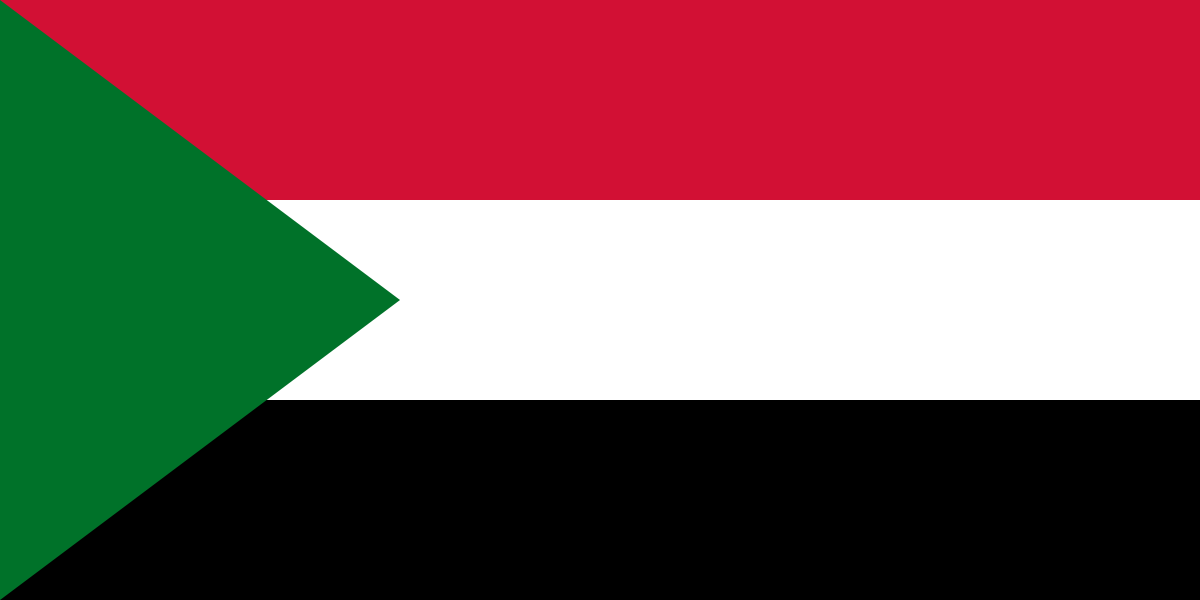

Sudan in the World

Sudan - Introduction 2015
top of pageBackground:
Military regimes favoring Islamic-oriented governments have dominated national politics since independence from Anglo-Egyptian co-rule in 1956. Sudan was embroiled in two prolonged civil wars during most of the remainder of the 20th century. These conflicts were rooted in northern economic political and social domination of largely non-Muslim non-Arab southern Sudanese. The first civil war ended in 1972 but another broke out in 1983. Peace talks gained momentum in 2002-04 with the signing of several accords. The final North/South Comprehensive Peace Agreement (CPA) signed in January 2005 granted the southern rebels autonomy for six years followed by a referendum on independence for Southern Sudan. The referendum was held in January 2011 and indicated overwhelming support for independence. South Sudan became independent on 9 July 2011. Sudan and South Sudan have yet to fully implement security and economic agreements signed in September 2012 relating to the normalization of relations between the two countries. The final disposition of the contested Abyei region has also to be decided.
Since South Sudan's independence conflict has broken out between the government and the Sudan People's Liberation Movement-North in Southern Kordofan and Blue Nile states which has resulted in 1.2 million internally displaced persons or severely affected persons needing humanitarian assistance. A separate conflict which broke out in the western region of Darfur in 2003 displaced nearly two million people and caused an estimated 200,000 to 400,000 deaths. Violence in Darfur in 2013 resulted in an additional estimated 6,000 civilians killed and 500,000 displaced. The UN and the African Union have jointly commanded a Darfur peacekeeping operation known as the African Union-United Nations Hybrid Mission in Darfur (UNAMID) since 2007. Peacekeeping troops have struggled to stabilize the situation and have increasingly become targets for attacks by armed groups. Sudan also has faced refugee influxes from neighboring countries primarily Ethiopia Eritrea Chad Central African Republic and South Sudan. Armed conflict poor transport infrastructure and government denial of access have impeded the provision of humanitarian assistance to affected populations.
Since South Sudan's independence conflict has broken out between the government and the Sudan People's Liberation Movement-North in Southern Kordofan and Blue Nile states which has resulted in 1.2 million internally displaced persons or severely affected persons needing humanitarian assistance. A separate conflict which broke out in the western region of Darfur in 2003 displaced nearly two million people and caused an estimated 200,000 to 400,000 deaths. Violence in Darfur in 2013 resulted in an additional estimated 6,000 civilians killed and 500,000 displaced. The UN and the African Union have jointly commanded a Darfur peacekeeping operation known as the African Union-United Nations Hybrid Mission in Darfur (UNAMID) since 2007. Peacekeeping troops have struggled to stabilize the situation and have increasingly become targets for attacks by armed groups. Sudan also has faced refugee influxes from neighboring countries primarily Ethiopia Eritrea Chad Central African Republic and South Sudan. Armed conflict poor transport infrastructure and government denial of access have impeded the provision of humanitarian assistance to affected populations.
Area
Total: 1,861,484 km²
Land: NA
Water: NA
Rank: 16
Comparative: slightly less than one-fifth the size of the US
Land boundaries
Total: 6,819 km
Border countries: (7) Central African Republic 174 km; Chad 1403 km; Egypt 1276 km; Eritrea 682 km; Ethiopia 744 km; Libya 382 km; South Sudan 2,158 km
Note: Sudan-South Sudan boundary represents 1 January 1956 alignment; final alignment pending negotiations and demarcation; final sovereignty status of Abyei region pending negotiations between Sudan and South Sudan
Maritime claims
Territorial sea: 12 nm
Contiguous zone: 18 nm
Continental shelf: 200-m depth or to the depth of exploitation
Natural resources: petroleum; small reserves of iron ore copper chromium ore zinc tungsten mica silver gold; hydropower
Land use
Agricultural land: 100%
arable land: 15.7%
permanent crops: 0.2%
permanent pasture: 84.2%
permanent crops: 0.2%
permanent pasture: 84.2%
Forest: 0%
Other: 0%
Sudan - People 2015
top of pagePopulation: 36,108,853 (July 2015 est.)
Rank: 38
Growth rate: 1.72% (2015 est.)
Growth rate rank: 68
Below poverty line: 46.5% (2009 est.)
Languages: Arabic (official) English (official) Nubian Ta Bedawie Fur
Note: program of 'Arabization' in process
Age structure
0-14 years: 40.15%
15-24 years: 20.5%
25-54 years: 32.08%
55-64 years: 4.02%
65 years and over: 3.25% (2015 est.)
Dependency ratios
Total dependency ratio: 78%
Youth dependency ratio: 72.1%
Elderly dependency ratio: 5.9%
Potential support ratio: 16.9%
Urbanization
Urban population: 33.8% of total population
Rate of urbanization: 2.54% annual rate of change
Environment
Current issues: inadequate supplies of potable water; wildlife populations threatened by excessive hunting; soil erosion; desertification; periodic drought
International agreements party to: Biodiversity Climate Change Climate Change-Kyoto Protocol Desertification Endangered Species Hazardous Wastes Law of the Sea Ozone Layer Protection Wetlands
International agreements signed but not ratified: none of the selected agreements
Sex ratio
At birth: 1.05 male/female
0-14 years: 1.03 male/female
15-24 years: 1.06 male/female
25-54 years: 0.94 male/female
55-64 years: 1.12 male/female
65 years and over: 1.19 male/female
Total population: 1.02 male/female
Infant mortality rate
Total: 51.52 deaths/1000 live births
Male: 56.87 deaths/1000 live births
Female: 45.9 deaths/1000 live births
Rank: 35
Drinking water source:
urban: 66% of population
rural: 50.2% of population
total: 55.5% of population
urban: 34% of population
rural: 49.8% of population
total: 44.5% of population (2012 est.)
rural: 50.2% of population
total: 55.5% of population
urban: 34% of population
rural: 49.8% of population
total: 44.5% of population (2012 est.)
Sanitation facility access:
urban: 43.9% of population
rural: 13.4% of population
total: 23.6% of population
urban: 56.1% of population
rural: 86.6% of population
total: 76.4% of population (2012 est.)
rural: 13.4% of population
total: 23.6% of population
urban: 56.1% of population
rural: 86.6% of population
total: 76.4% of population (2012 est.)
Hivaids
Adult prevalence rate: 0.25% (2014 est.)
Adult prevalence rate rank: 93
People living with hivaids: 53,200 (2014 est.)
People living with hivaids rank: 55
Deaths: 2,900 (2014 est.)
Deaths rank: 46
Major infectious diseases
Degree of risk: very high
Food or waterborne diseases: bacterial and protozoal diarrhea hepatitis A and E and typhoid fever
Vectorborne diseases: malaria dengue fever and Rift Valley fever
Water contact disease: schistosomiasis
Respiratory disease: meningococcal meningitis
Animal contact disease: rabies
Note: highly pathogenic H5N1 avian influenza has been identified in this country; it poses a negligible risk with extremely rare cases possible among US citizens who have close contact with birds
Literacy
Definition: age 15 and over can read and write
Total population: 75.9%
Male: 83.3%
Female: 68.6%
Sudan - Government 2015
top of pageCountry name
Conventional long form: Republic of the Sudan
Conventional short form: Sudan
Local long form: Jumhuriyat as-Sudan
Local short form: As-Sudan
Former: Anglo-Egyptian Sudan
Government type: federal republic ruled by the National Congress Party (NCP) which seized power by military coup in 1989; the CPA-mandated Government of National Unity which between 2005 and 2011 provided a percentage of leadership posts to the southern Sudan-based Sudan People's Liberation Movement (SPLM) was disbanded following the secession of South Sudan
Administrative divisions: 18 states (wilayat singular - wilayah); Al Gazira Al Gedaref Blue Nile Central Darfur East Darfur Kassala Khartoum North Darfur North Kordofan Northern Red Sea River Nile Sennar South Darfur South Kordofan West Darfur Western Korodfan White Nile
Constitution: previous 1998; latest adopted 6 July 2005 effective 9 July 2005 (interim constitution); amended 2015; note - in 2011 the Government of Sudan initiated a process for drafting a new constitution (2015)
International law organization participation: accepts compulsory ICJ jurisdiction with reservations; withdrew acceptance of ICCt jurisdiction in 2008
Citizenship
Citizenship by birth: no
Citizenship by descent only: the father must be a citizen of Sudan
Dual citizenship recognized: no
Residency requirement for naturalization: 10 years
Executive branch
Chief of state: President Umar Hassan Ahmad al-BASHIR ; First Vice President BAKRI Hassan Salih Second Vice President Hasabu Mohamed ABDEL RAHMIN (both since 3 December 2013); note - the president is both chief of state and head of government
Head of government: President Umar Hassan Ahmad al-BASHIR ; First Vice President BAKRI Hassan Salih Second Vice President Hasabu Mohamed ABDEL RAHMAN (both since 9 December 2013)
Cabinet: Council of Ministers appointed by the president; note - the NCP formerly the National Islamic Front or NIF dominates al-BASHIR's cabinet
Electionsappointments: president directly elected by absolute majority popular vote in two rounds if needed; last held on 13-16 April 2015
Election results: Umar Hassan Ahmad al-BASHIR reelected president; percent of vote - Umar Hassan Ahmad al-BASHIR 94.1% other (15 candidates) 5.9%
Legislative branch
Description: bicameral National Legislature consists of the Council of States or Majlis Weleyat and the National Assembly or Majlis Watani (426 seats; 213 members directly elected in single-seat constituencies by simple majority vote 128 for women only directly elected by proportional representation vote and 85 directly elected by proportional representation vote; members serve 6-year terms)
Elections: last held on 13-15 April 2015
Election results: National Assembly - percent of vote by party - NA; seats by party - NCP 323 DUP 25 Democratic Unionist Party 15 other 44 independent 19
Note: the mandate of the members from the south was terminated upon independence by the Republic of South Sudan effective 9 July 2011 and membership in Sudan's National Assembly was reduced to 354; it is unclear whether this total will be retained for the next election or whether the previous total of 450 will be reconstituted
Judicial branch
Highest court: National Supreme Court ; Constitutional Court (consists of 9 justices including the court president); note - the Constitutional Court resides outside the national judiciary
Judge selection and term of office: National Supreme Court and Constitutional Court judges appointed by the president of the republic upon the recommendation of the National Judicial Service Commission an independent body chaired by the chief justice of the republic and members including other judges and judicial and legal officials; Supreme Court judge tenure NA; Constitutional Court judges appointed for 7 years
Subordinate courts: National Court of Appeals; other national courts ; township and rural (peoples') courts
Political parties and leaders:
Sudanese Congress Party [Ibrahim Al-SHEIKH]
Unionist Movement Party or UMP [Nagla AL-AZHARI]
Unionist Movement Party or UMP [Nagla AL-AZHARI]
International organization participation: ABEDA ACP AfDB AFESD AMF AU CAEU COMESA FAO G-77 IAEA IBRD ICAO ICC (NGOs) ICRM IDA IDB IFAD IFC IFRCS IGAD ILO IMF IMO Interpol IOC IOM IPU ISO ITSO ITU LAS MIGA NAM OIC OPCW PCA UN UNCTAD UNESCO UNHCR UNIDO UNWTO UPU WCO WFTU (NGOs) WHO WIPO WMO WTO (observer)
Diplomatic representation
In the us chief of mission: Ambassador ; Charge d'Affaires FATAHELRAMAN Ali Mohamed
In the us chancery: 2,210 Massachusetts Avenue NW Washington DC 20,008
In the us telephone: [1] 338-8,565
In the us FAX: [1] 667-2,406
From the us chief of mission: Ambassador ; Charge d'Affaires Ambassador Jerry P. LANIER (since 13 May 2014)
From the us embassy: Sharia Ali Abdul Latif Street Khartoum
From the us mailing address: P.O. Box 699 Kilo 10 Soba Khartoum; APO AE 9,829
From the us telephone: [249] -0-(22,000)
From the us FAX: [249] 774-137
Flag description: three equal horizontal bands of red (top) white and black with a green isosceles triangle based on the hoist side; colors and design based on the Arab Revolt flag of World War I but the meanings of the colors are expressed as follows: red signifies the struggle for freedom white is the color of peace light and love black represents Sudan itself (in Arabic 'Sudan' means black) green is the color of Islam agriculture and prosperity
National anthem
Name: 'Nahnu Djundulla Djundulwatan'
Lyrics and music: Sayed Ahmad Muhammad SALIH/Ahmad MURJAN
Note: adopted 1956; originally served as the anthem of the Sudanese military
Sudan - Economy 2015
top of pageEconomy overview: Sudan is an extremely poor country that has experienced protracted social conflict civil war and in July 2011 the loss of three-quarters of its oil production due to the secession of South Sudan. The oil sector had driven much of Sudan's GDP growth since 1999. For nearly a decade the economy boomed on the back of rising oil production high oil prices and significant inflows of foreign direct investment. Since the economic shock of South Sudan's secession Sudan has struggled to stabilize its economy and make up for the loss of foreign exchange earnings. The interruption of oil production in South Sudan in 2012 for over a year and the consequent loss of oil transit fees further exacerbated the fragile state of Sudan’s economy. Sudan is also subject to comprehensive US sanctions. Sudan is attempting to develop non-oil sources of revenues such as gold mining while carrying out an austerity program to reduce expenditures. The world’s largest exporter of gum Arabic Sudan produces 75-80% of the world’s total output. Agriculture continues to employ 80% of the work force. Sudan introduced a new currency still called the Sudanese pound following South Sudan's secession but the value of the currency has fallen since its introduction. Khartoum formally devalued the currency in June 2012 when it passed austerity measures that included gradually repealing fuel subsidies. Sudan also faces rising inflation which reached 47% on an annual basis in November 2012 but subsided to 37% in 2014. Ongoing conflicts in Southern Kordofan Darfur and the Blue Nile states lack of basic infrastructure in large areas and reliance by much of the population on subsistence agriculture keep close to half of the population at or below the poverty line.
Real gdp purchasing power parity:
$160.2 billion (2014 est.)
$154.7 billion (2013 est.)
$148.8 billion (2012 est.)
$154.7 billion (2013 est.)
$148.8 billion (2012 est.)
Note: data are in 2014 US dollars
Rank: 71
Real gdp per capita:
$4,300 (2014 est.)
$4,100 (2013 est.)
$4,000 (2012 est.)
$4,100 (2013 est.)
$4,000 (2012 est.)
Note: data are in 2014 US dollars
Rank: 174
Gross national saving:
9.6% of GDP (2014 est.)
11.1% of GDP (2013 est.)
9.4% of GDP (2012 est.)
11.1% of GDP (2013 est.)
9.4% of GDP (2012 est.)
Rank: 152
Gdp composition by end use
Household consumption: 78.5%
Government consumption: 6.7%
Investment in fixed capital: 19.1%
Investment in inventories: -0.8%
Exports of goods and services: 9.1%
Imports of goods and services: -12.6%: (2014 est.)
Agriculture products: cotton groundnuts (peanuts) sorghum millet wheat gum arabic sugarcane cassava (manioc tapioca) mangoes papaya bananas sweet potatoes sesame seeds; sheep and other livestock
Industries: oil cotton ginning textiles cement edible oils sugar soap distilling shoes petroleum refining pharmaceuticals armaments automobile/light truck assembly
Labor force: 11.92 million (2007 est.)
Rank: 46
By occupation agriculture: 80%
By occupation industry: 7%
By occupation services: 13%
Budget
Revenues: $6.548 billion
Expenditures: $9 billion
Surplus or deficit: -3.3% of GDP (2014 est.)
Surplus or deficit rank: 132
Stock of narrow money:
$8.024 billion (31 December 2014 est.)
$7.06 billion (31 December 2013 est.)
$7.06 billion (31 December 2013 est.)
Rank: 85
Stock of broad money:
$13 billion (31 December 2014 est.)
$11.66 billion (31 December 2013 est.)
$11.66 billion (31 December 2013 est.)
Rank: 98
Stock of domestic credit:
$14.83 billion (31 December 2014 est.)
$13.3 billion (31 December 2013 est.)
$13.3 billion (31 December 2013 est.)
Rank: 91
Exports:
$4.35 billion (2014 est.)
$4.79 billion (2013 est.)
$4.79 billion (2013 est.)
Rank: 117
Commodities: gold; oil and petroleum products; cotton sesame livestock peanuts gum arabic sugar
Partners: Macau 30.2% UAE 30.2% Saudi Arabia 14.6% Egypt 4.9% (2014)
Imports:
$8.106 billion (2014 est.)
$8.728 billion (2013 est.)
$8.728 billion (2013 est.)
Rank: 111
Commodities: foodstuffs manufactured goods refinery and transport equipment medicines chemicals textiles wheat
Partners: Macau 20.1% UAE 10.2% India 8% Malaysia 7.4% Egypt 5.3% Saudi Arabia 4.5% (2014)
Reserves of foreign exchange and gold:
$172.4 million (31 December 2015 est.)
$181.5 million (31 December 2014 est.)
$181.5 million (31 December 2014 est.)
Rank: 161
Stock of direct foreign investment at home:
$22.69 billion (31 December 2014 est.)
$21.42 billion (31 December 2013 est.)
$21.42 billion (31 December 2013 est.)
Rank: 74
Exchange rates:
Sudanese pounds (SDG) per US dollar -
5.74 (2014 est.)
5.74 (2013 est.)
3.57 (2012 est.)
2.68 (2011 est.)
2.31 (2010 est.)
5.74 (2014 est.)
5.74 (2013 est.)
3.57 (2012 est.)
2.68 (2011 est.)
2.31 (2010 est.)
Sudan - Energy 2015
top of pageElectricity
Production: 7.193 billion kWh (2012 est.)
Production rank: 109
Consumption: 5.665 billion kWh (2010 est.)
Consumption rank: 111
Exports: 0 kWh (2013 est.)
Exports rank: 199
Imports: 0 kWh (2013 est.)
Imports rank: 205
Installed generating capacity: 2.083 million kW (2012 est.)
Installed generating capacity rank: 106
Generation sources fossil fuels: 30.7% of total installed capacity (2012 est.)
Generation sources fossil fuels rank: 180
Generation sources nuclear: 0% of total installed capacity (2012 est.)
Generation sources nuclear rank: 184
Generation sources hydroelectricity: 66.3% of total installed capacity (2012 est.)
Generation sources hydroelectricity rank: 31
Generation sources other renewable sources: 3% of total installed capacity (2012 est.)
Generation sources other renewable sources rank: 72
Petroleum
Petroleum total petroleum production: 64,770 bbl/day (2014 est.)
Petroleum total petroleum production rank: 53
Crude oil exports: 5,355 bbl/day (2012 est.)
Crude oil exports rank: 71
Crude oil imports: 0 bbl/day (2012 est.)
Crude oil imports rank: 128
Crude oil proven reserves: 1.25 billion bbl (1 January 2015 est.)
Crude oil proven reserves rank: 39
Refined petroleum
Products production: 124,900 bbl/day (2010 est.)
Products production rank: 68
Products consumption: 26,750 bbl/day (2013 est.)
Products consumption rank: 118
Products exports: 1496 bbl/day (2012 est.)
Products exports rank: 109
Products imports: 6,199 bbl/day (2012 est.)
Products imports rank: 151
Natural gas
Production: 0 m³ (2013 est.)
Production rank: 131
Consumption: 0 m³ (2013 est.)
Consumption rank: 196
Exports: 0 m³ (2013 est.)
Exports rank: 183
Imports: 0 m³ (2013 est.)
Imports rank: 136
Proven reserves: 21.24 billion m³ (1 January 2013 est.)
Proven reserves rank: 75
Carbon dioxide emissions
From consumption of energy: 16.45 million Mt (2011 est.)
From consumption of energy rank: 87
Sudan - Communication 2015
top of pageTelephones
Fixed lines total subscriptions: 420,000
Fixed lines subscriptions per 100 inhabitants: 1
Fixed lines rank: 102
Mobile cellular total: 27.8 million
Mobile cellular subscriptions per 100 inhabitants: 78
Mobile cellular rank: 46
Telephone system
General assessment: well-equipped system by regional standards and being upgraded; cellular communications started in 1996 and have expanded substantially with wide coverage of most major cities
Domestic: consists of microwave radio relay cable fiber optic radiotelephone communications tropospheric scatter and a domestic satellite system with 14 earth stations
International: country code - 249; linked to the EASSy and FLAG fiber-optic submarine cable systems; satellite earth stations - 1 Intelsat 1 Arabsat (2010)
Broadcast media: the Sudanese Government directly controls TV and radio requiring that both media reflect government policies; TV has a permanent military censor; a private radio station is in operation (2007)
Sudan - Military 2015
top of pageMilitary service age and obligation: 18-33 years of age for male and female compulsory or voluntary military service; 1-2 year service obligation; a requirement that completion of national service was mandatory before entering public or private sector employment has been cancelled (2012)
Sudan - Transportation 2015
top of pageAirports: 74 (2013)
Rank: 71
With paved runways total: 16
With paved runways over 3047 m: 2
With paved runways 2438 to 3047 m: 10
With paved runways 15-24 to 2437 m: 2
With paved runways under 914 m: 2
With unpaved runways total: 58
With unpaved runways 2438 to 3047 m: 1
With unpaved runways 15-24 to 2437 m: 17
With unpaved runways 914 to 1523 m: 28
With unpaved runways: 12 (2013)
Railways
Total: 7,251 km
Narrow gauge: 5,851 km 1.067-m gauge; 1400 km 0.600-m gauge for cotton plantations
Rank: 30
Sudan - Transnational issues 2015
top of pageDisputes international: the effects of Sudan's almost constant ethnic and rebel militia fighting since the mid-20th century have penetrated all of the neighboring states; Chad wishes to be a helpful mediator in resolving the Darfur conflict and in 2010 established a joint border monitoring force with Sudan which has helped to reduce cross-border banditry and violence; as of mid-2013 Chad Egypt Ethiopia Israel the Central African Republic and South Sudan provided shelter for more than 600,000 Sudanese refugees; during the same period Sudan in turn hosted about 115,000 Eritreans 32,000 Chadians and smaller numbers of Ethiopians and Central Africans; Sudan accuses Eritrea of supporting Sudanese rebel groups; efforts to demarcate the porous boundary with Ethiopia proceed slowly due to civil and ethnic fighting in eastern Sudan; Sudan claims but Egypt de facto administers security and economic development of the Halaib region north of the 22nd parallel boundary; periodic violent skirmishes with Sudanese residents over water and grazing rights persist among related pastoral populations along the border with the Central African Republic; South Sudan-Sudan boundary represents 1 January 1956 alignment final alignment pending negotiations and demarcation; final sovereignty status of Abyei Area pending negotiations between South Sudan and Sudan
Refugees and internally displaced persons
Refugees: 109,196 (Eritrea); 42,334 (Chad); 5,495 (Ethiopia) (2014); 5,540 (Yemen) (2015); 194,888 (South Sudan) (2016)
IDPs: 3.1 million (2015)

🅶🅷🅴🅾🆂.🅲🅾🅼