Statistics Ukraine 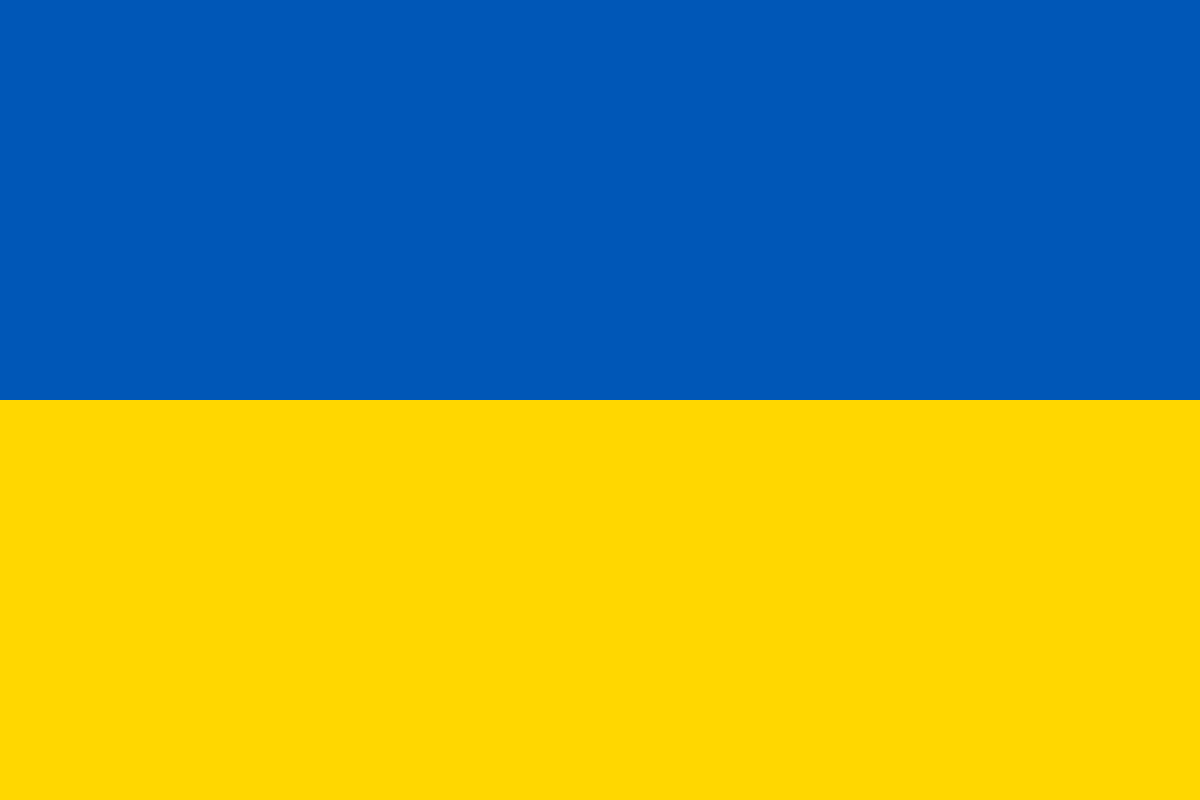

Ukraine in the World

Ukraine - Introduction 2016
top of pageBackground:
Ukraine was the center of the first eastern Slavic state Kyivan Rus which during the 10th and 11th centuries was the largest and most powerful state in Europe. Weakened by internecine quarrels and Mongol invasions Kyivan Rus was incorporated into the Grand Duchy of Lithuania and eventually into the Polish-Lithuanian Commonwealth. The cultural and religious legacy of Kyivan Rus laid the foundation for Ukrainian nationalism through subsequent centuries. A new Ukrainian state the Cossack Hetmanate was established during the mid-17th century after an uprising against the Poles. Despite continuous Muscovite pressure the Hetmanate managed to remain autonomous for well over 100 years. During the latter part of the 18th century most Ukrainian ethnographic territory was absorbed by the Russian Empire. Following the collapse of czarist Russia in 1917 Ukraine achieved a short-lived period of independence (1917-20) but was reconquered and endured a brutal Soviet rule that engineered two forced famines (1921-22 and 1932-33) in which over 8 million died. In World War II German and Soviet armies were responsible for 7 to 8 million more deaths. Although Ukraine achieved final independence in 1991 with the dissolution of the USSR democracy and prosperity remained elusive as the legacy of state control and endemic corruption stalled efforts at economic reform privatization and civil liberties.
A peaceful mass protest referred to as the 'Orange Revolution' in the closing months of 2004 forced the authorities to overturn a rigged presidential election and to allow a new internationally monitored vote that swept into power a reformist slate under Viktor YUSHCHENKO. Subsequent internal squabbles in the YUSHCHENKO camp allowed his rival Viktor YANUKOVYCH to stage a comeback in parliamentary (Rada) elections become prime minister in August 2006 and be elected president in February 2010. In October 2012 Ukraine held Rada elections widely criticized by Western observers as flawed due to use of government resources to favor ruling party candidates interference with media access and harassment of opposition candidates. President YANUKOVYCH's backtracking on a trade and cooperation agreement with the EU in November 2013 - in favor of closer economic ties with Russia - and subsequent use of force against civil society activists in favor of the agreement led to a three-month protest occupation of Kyiv's central square. The government's use of violence to break up the protest camp in February 2014 led to all out pitched battles scores of deaths international condemnation and the president's abrupt departure to Russia. New elections in the spring allowed pro-West president Petro POROSHENKO to assume office on 7 June 2014.
Shortly after YANUKOVYCH's departure in late February 2014 Russian President PUTIN ordered the invasion of Ukraine's Crimean Peninsula claiming the action was to protect ethnic Russians living there. Two weeks later a 'referendum' was held regarding the integration of Crimea into the Russian Federation. The 'referendum' was condemned as illegitimate by the Ukrainian Government the EU the US and the UN General Assembly (UNGA). Although Russia illegally annexed Crimea after the 'referendum' the Ukrainian Government backed by UNGA resolution 68/262 asserts that Crimea remains part of Ukraine and fully under Ukrainian sovereignty. Russia also continues to supply separatists in two of Ukraine's eastern provinces with manpower funding and materiel resulting in an armed conflict with the Ukrainian Government. Representatives from Ukraine Russia and the unrecognized separatist republics signed a ceasefire agreement in September 2014. However this ceasefire failed to stop the fighting. In a renewed attempt to alleviate ongoing clashes leaders of Ukraine Russia France and Germany negotiated a follow-on peace deal in February 2015 known as the Minsk Agreements. Representatives from Ukraine Russia and the Organization for Security and Cooperation in Europe also meet regularly to facilitate implementation of the peace deal. Scattered fighting between Ukrainian and Russian-backed separatist forces is still ongoing in eastern Ukraine.
Area
Total: 603,550 km²
Land: 579,330 km²
Water: 24,220 km²
Rank: 46
Comparative: almost four times the size of Georgia; slightly smaller than Texas
Land boundaries
Total: 5,618 km
Border countries: (7) Belarus 1111 km; Hungary 128 km; Moldova 1202 km; Poland 535 km; Romania 601 km; Russia 1944 km; Slovakia 97 km
Maritime claims
Territorial sea: 12 nm
Exclusive economic zone: 200 nm
Continental shelf: 200 m or to the depth of exploitation
Climate: temperate continental; Mediterranean only on the southern Crimean coast; precipitation disproportionately distributed highest in west and north lesser in east and southeast; winters vary from cool along the Black Sea to cold farther inland; warm summers across the greater part of the country hot in the south
Terrain: mostly fertile plains (steppes) and plateaus with mountains found only in the west (the Carpathians) or in the extreme south of the Crimean Peninsula
Elevation
Mean elevation: 175 m
Elevation extremes: lowest point: Black Sea 0 m: highest point: Hora Hoverla 2,061 m
Natural resources: iron ore coal manganese natural gas oil salt sulfur graphite titanium magnesium kaolin nickel mercury timber arable land
Land use
Agricultural land: 71.2%
arable land: 56.1%
permanent crops: 1.5%
permanent pasture: 13.6%
permanent crops: 1.5%
permanent pasture: 13.6%
Forest: 16.8%
Other: 12%
Geography
Note: strategic position at the crossroads between Europe and Asia; second-largest country in Europe after Russia
Ukraine - People 2016
top of pagePopulation
Distribution: densest settlement in the eastern (Donbas) and western regions; noteable concentrations in and around major urban areas of Kyiv Kharkiv Donets'k Dnipropetrovs'k and Odesa: 44,209,733 (July 2016 est.)
Rank: 32
Growth rate: -0.39% (2016 est.)
Growth rate rank: 223
Below poverty line: 24.1% (2010 est.)
Ethnic groups: Ukrainian 77.8% Russian 17.3% Belarusian 0.6% Moldovan 0.5% Crimean Tatar 0.5% Bulgarian 0.4% Hungarian 0.3% Romanian 0.3% Polish 0.3% Jewish 0.2% other 1.8% (2001 est.)
Languages: Ukrainian (official) 67.5% Russian (regional language) 29.6% other (includes small Crimean Tatar- Moldavian- and Hungarian-speaking minorities) 2.9% (2001 est.)
Note: 2012 legislation enables a language spoken by at least 10% of an oblast's population to be given the status of 'regional language' allowing for its use in courts schools and other government institutions; Ukrainian remains the country's only official nationwide language
Religions: Orthodox (includes Ukrainian Autocephalous Orthodox (UAOC) Ukrainian Orthodox - Kyiv Patriarchate (UOC-KP) Ukrainian Orthodox - Moscow Patriarchate (UOC-MP) Ukrainian Greek Catholic Roman Catholic Protestant Muslim Jewish
Note: Ukraine's population is overwhelmingly Christian; the vast majority - up to two-thirds - identify themselves as Orthodox but many do not specify a particular branch; the UOC-KP and the UOC-MP each represent less than a quarter of the country's population the Ukrainian Greek Catholic Church accounts for 8-10% and the UAOC accounts for 1-2%; Muslim and Jewish adherents each compose less than 1% of the total population
Age structure
0-14 years: 15.51%
15-24 years: 10.3%
25-54 years: 44.47%
55-64 years: 13.68%
65 years and over: 16.05% (2016 est.)
Dependency ratios
Total dependency ratio: 43.3%
Youth dependency ratio: 21.4%
Elderly dependency ratio: 21.9%
Potential support ratio: 4.6%
Population distribution: densest settlement in the eastern (Donbas) and western regions; noteable concentrations in and around major urban areas of Kyiv Kharkiv Donets'k Dnipropetrovs'k and Odesa
Urbanization
Urban population: 69.7% of total population
Rate of urbanization: -0.33% annual rate of change
Major urban areas
Population: KYIV (capital) 2.942 million; Kharkiv 1.441 million; Odesa 1.01 million; Dnipropetrovsk 957,000; Donetsk 934,000; Zaporizhzhya 753,000 (2015)
Environment
Current issues: inadequate supplies of potable water; air and water pollution; deforestation; radiation contamination in the northeast from 1986 accident at Chornobyl' Nuclear Power Plant
International agreements party to: Air Pollution Air Pollution-Nitrogen Oxides Air Pollution-Sulfur 85 Antarctic-Environmental Protocol Antarctic-Marine Living Resources Antarctic Treaty Biodiversity Climate Change Climate Change-Kyoto Protocol Desertification Endangered Species Environmental Modification Hazardous Wastes Law of the Sea Marine Dumping Ozone Layer Protection Ship Pollution Wetlands
International agreements signed but not ratified: Air Pollution-Persistent Organic Pollutants Air Pollution-Sulfur 94 Air Pollution-Volatile Organic Compounds
Sex ratio
At birth: 1.06 male/female
0-14 years: 1.06 male/female
15-24 years: 1.05 male/female
25-54 years: 0.96 male/female
55-64 years: 0.75 male/female
65 years and over: 0.5 male/female
Total population: 0.86 male/female
Infant mortality rate
Total: 8 deaths/1000 live births
Male: 8.9 deaths/1000 live births
Female: 7 deaths/1000 live births
Rank: 154
Drinking water source:
urban: 95.5% of population
rural: 97.8% of population
total: 96.2% of population
urban: 4.5% of population
rural: 2.2% of population
total: 3.8% of population (2015 est.)
rural: 97.8% of population
total: 96.2% of population
urban: 4.5% of population
rural: 2.2% of population
total: 3.8% of population (2015 est.)
Sanitation facility access:
urban: 97.4% of population
rural: 92.6% of population
total: 95.9% of population
urban: 2.6% of population
rural: 7.4% of population
total: 4.1% of population (2015 est.)
rural: 92.6% of population
total: 95.9% of population
urban: 2.6% of population
rural: 7.4% of population
total: 4.1% of population (2015 est.)
Hivaids
Adult prevalence rate: 0.86% (2015 est.)
Adult prevalence rate rank: 51
People living with hivaids: 219,000 (2015 est.)
People living with hivaids rank: 28
Deaths: 7,900 (2015 est.)
Deaths rank: 18
Literacy
Definition: age 15 and over can read and write
Total population: 99.8%
Male: 99.8%
Female: 99.7%
Ukraine - Government 2016
top of pageCountry name
Conventional long form: none
Conventional short form: Ukraine
Local long form: none
Local short form: Ukrayina
Former: Ukrainian National Republic Ukrainian State Ukrainian Soviet Socialist Republic
Etymology: name derives from the Old East Slavic word 'ukraina' meaning 'borderland or march '
Capital
Name: Kyiv
Note: pronounced KAY-yiv
Geographic coordinates: 50 26 N 30 31 E
Time difference: UTC+2
Daylight saving time: +1hr begins last Sunday in March; ends last Sunday in October
Administrative divisions: 24 provinces (oblasti singular - oblast') 1 autonomous republic* (avtonomna respublika) and 2 municipalities (mista singular - misto) with oblast status**; Cherkasy Chernihiv Chernivtsi Crimea or Avtonomna Respublika Krym* (Simferopol') Dnipropetrovs'k (Dnipro) Donets'k Ivano-Frankivs'k Kharkiv Kherson Khmel'nyts'kyy Kirovohrad (Kropyvnyts'kyy) Kyiv** Kyiv Luhans'k L'viv Mykolayiv Odesa Poltava Rivne Sevastopol'** Sumy Ternopil' Vinnytsya Volyn' (Luts'k) Zakarpattya (Uzhhorod) Zaporizhzhya Zhytomyr
Note 1: administrative divisions have the same names as their administrative centers ; plans include the eventual renaming of Dnipropetrovsk and Kirovohrad oblasts but because these names are mentioned in the Constitution of Ukraine the change will require a constitutional amendment
Note 2: the United States does not recognize Russia's annexation of Ukraine's Autonomous Republic of Crimea and the municipality of Sevastopol nor their redesignation as the Republic of Crimea and the Federal City of Sevastopol
Independence: 24 August 1991 (from the Soviet Union); notable earlier dates: ca. 982 (VOLODYMYR I consolidates Kyivan Rus) 1648 (establishment of the Cossack Hetmanate)
National holiday: Independence Day 24 August (1991); note - 22 January 1918 the day Ukraine first declared its independence (from Soviet Russia) and the day the short-lived Western and Greater (Eastern) Ukrainian republics united (1919) is now celebrated as Unity Day
Constitution: several previous; latest adopted and ratified 28 June 1996; amended 2004 2010 2015 (2016)
International law organization participation: has not submitted an ICJ jurisdiction declaration; non-party state to the ICCt
Citizenship
Citizenship by birth: no
Citizenship by descent only: at least one parent must be a citizen of Ukraine
Dual citizenship recognized: no
Residency requirement for naturalization: 5 years
Executive branch
Chief of state: President Petro POROSHENKO
Head of government: Prime Minister Volodymyr HROISMAN ; Deputy Prime Minister Vyacheslav KYRYLENKO (since 2 December 2014)
Cabinet: Cabinet of Ministers nominated by the prime minister approved by the Verkhovna Rada
Electionsappointments: president directly elected by absolute majority popular vote in 2 rounds if needed for a 5-year term ; election last held on 25 May 2014 (next to be held in 2019); prime minister nominated by the president confirmed by the Verkhovna Rada
Election results: Petro POROSHENKO elected president; percent of vote - Petro POROSHENKO 54.5% Yuliya TYMOSHENKO (Fatherland) 12.9% Oleh LYASHKO (Radical Party) 8.4% other 24.2%; Volodymyr HROISMAN elected prime minister; Verkhovna Rada vote 257-50
Note: there is also a National Security and Defense Council or NSDC originally created in 1992 as the National Security Council; the NSDC staff is tasked with developing national security policy on domestic and international matters and advising the president; a presidential administration helps draft presidential edicts and provides policy support to the president
Legislative branch
Description: unicameral Supreme Council or Verkhovna Rada ; note - because of the Russian annexation of Crimea and the partial occupation of two eastern provinces 27 of the 450 seats remain unfilled
Elections: last held on 26 October 2014
Election results: percent of vote by party - NF 22.1% BPP 21.8% Samopomich 11.0% OB 9.4% Radical 7.4% Batkivshchyna 5.7% Svoboda 4.7% CPU 3.9% other 13.9%; seats by party - BPP 132 NF 82 Samopomich 33 OB 29 Radical 22 Batkivshchyna 19 Svoboda 6 other 4 independent 96 vacant 27; note - voting not held in Crimea and parts of two Russian-occupied eastern oblasts leaving 27 seats vacant; seats as of December 2015 - BPP 139 NF 81 OB 43 Samopomich 26 Vidrozhennya 23 Radical 21 Batkivshchyna 19 VN 20 independent 50 vacant 28
Judicial branch
Highest court: Supreme Court of Ukraine or SCU ; Constitutional Court (consists of 18 justices)
Judge selection and term of office: Supreme Court judges proposed by the Supreme Council of Justice or SCJ and appointed by presidential decree; judges initially appointed for 5 years and if approved by the SCJ serve until mandatory retirement at age 65; Constitutional Court justices appointed - 6 each by the president by the SCU and by the Verkhovna Rada; justices appointed for 9-year non-renewable terms
Subordinate courts: specialized high courts; Courts of Cassation; Courts of Appeal; regional district city and town courts
Political parties and leaders:
Vidrozhennya ('Revival') [Vitaliy KHOMUTYNNIK] (parliamentary group)
Volya Naroda (“People's Will”) or VN (parliamentary group)
Volya Naroda (“People's Will”) or VN (parliamentary group)
International organization participation: Australia Group BSEC CBSS (observer) CD CE CEI CICA (observer) CIS (participating member has not signed the 1993 CIS charter) EAEC (observer) EAPC EBRD FAO GCTU GUAM IAEA IBRD ICAO ICC (national committees) ICRM IDA IFC IFRCS IHO ILO IMF IMO IMSO Interpol IOC IOM IPU ISO ITU ITUC (NGOs) LAIA (observer) MIGA MONUSCO NAM (observer) NSG OAS (observer) OIF (observer) OPCW OSCE PCA PFP SELEC (observer) UN UNCTAD UNESCO UNFICYP UNIDO UNISFA UNMIL UNMISS UNOCI UNWTO UPU WCO WFTU (NGOs) WHO WIPO WMO WTO ZC
Diplomatic representation
In the us chief of mission: Ambassador Valeriy CHALYY
In the us chancery: 3,350 M Street NW Washington DC 20,007
In the us telephone: [1] 349-2,920
In the us FAX: [1] 333-0817
In the us consulate general: Chicago New York San Francisco
From the us chief of mission: Ambassador Marie YOVANOVITCH
From the us embassy: 4 Igor Sikorsky Street 4,112 Kyiv
From the us mailing address: 5,850 Kyiv Place Washington DC 20,521-5,850
From the us telephone: [380] 521-5,000
From the us FAX: [380] 521-5,155
Flag description: two equal horizontal bands of azure (top) and golden yellow represent grain fields under a blue sky
National anthem
Name: 'Shche ne vmerla Ukraina'
Lyrics and music: Paul CHUBYNSKYI/Mikhail VERBYTSKYI
Note: music adopted 1991 lyrics adopted 2003; song first performed in 1864 at the Ukraine Theatre in Lviv; the lyrics originally written in 1862 were revised in 2003
Ukraine - Economy 2016
top of pageEconomy overview:
After Russia the Ukrainian republic was the most important economic component of the former Soviet Union producing about four times the output of the next-ranking republic. Its fertile black soil generated more than one-fourth of Soviet agricultural output and its farms provided substantial quantities of meat milk grain and vegetables to other republics. Likewise its diversified heavy industry supplied unique equipment such as large diameter pipes and vertical drilling apparatus and raw materials to industrial and mining sites in other regions of the former USSR.
Shortly after independence in August 1991 the Ukrainian Government liberalized most prices and erected a legal framework for privatization but widespread resistance to reform within the government and the legislature soon stalled reform efforts and led to some backtracking. Output by 1999 had fallen to less than 40% of the 1991 level. Outside institutions - particularly the IMF –encouraged Ukraine to quicken the pace and scope of reforms to foster economic growth. Ukrainian Government officials eliminated most tax and customs privileges in a March 2005 budget law bringing more economic activity out of Ukraine's large shadow economy. But more improvements are needed including fighting corruption developing capital markets and improving the legislative framework. From 2000 until mid-2008 Ukraine's economy was buoyant despite political turmoil between the prime minister and president.
Ukraine's dependence on Russia for energy supplies and the lack of significant structural reform have made the Ukrainian economy vulnerable to external shocks. Ukraine depends on imports to meet about three-fourths of its annual oil and natural gas requirements and 100% of its nuclear fuel needs. In January 2009 after a two-week dispute that saw gas supplies cut off to Europe Ukraine agreed to 10-year gas supply and transit contracts with Russia that brought gas prices to 'world' levels. The strict terms of the contracts further hobbled Ukraine's cash-strapped state gas company Naftohaz. The economy contracted nearly 15% in 2009 among the worst economic performances in the world. In April 2010 Ukraine negotiated a price discount on Russian gas imports in exchange for extending Russia's lease on its naval base in Crimea.
Ukraine’s oligarch-dominated economy grew slowly from 2010 to 2014. After former President YANUKOVYCH fled the country during the Revolution of Dignity the international community began efforts to stabilize the Ukrainian economy including a March 2014 IMF assistance package of $14-18 billion. Ukraine has made significant progress on reforms designed to make the country a prosperous democratic and transparent country.
Russia’s occupation of Crimea in March 2014 and on-going aggression in eastern Ukraine have hurt economic growth. With the loss of a major portion of Ukraine’s heavy industry in Donbas and ongoing violence Ukraine’s economy contracted by 6.8% in 2014 and by an estimated 10.5% in 2015. Ukraine and Russia have engaged in a trade war with sharply reduced trade between the countries by the end of 2015. The EU-Ukraine Deep and Comprehensive Free Trade Area finally started up on 1 January 2016 and is expected to help Ukraine integrate its economy with Europe by opening up markets and harmonizing regulations.
Real gdp purchasing power parity:
$339.5 billion (2015 est.)
$376.7 billion (2014 est.)
$403.1 billion (2013 est.)
$376.7 billion (2014 est.)
$403.1 billion (2013 est.)
Note: data are in 2015 US dollars
Rank: 50
Real gdp per capita:
$7,500 (2015 est.)
$8,300 (2014 est.)
$9,400 (2013 est.)
$8,300 (2014 est.)
$9,400 (2013 est.)
Note: data are in 2015 US dollars
Rank: 148
Gross national saving:
15.1% of GDP (2015 est.)
10% of GDP (2014 est.)
9.5% of GDP (2013 est.)
10% of GDP (2014 est.)
9.5% of GDP (2013 est.)
Rank: 121
Gdp composition by end use
Household consumption: 67.6%
Government consumption: 19%
Investment in fixed capital: 13.3%
Investment in inventories: 2%
Exports of goods and services: 52.8%
Imports of goods and services: -54.8%
Industries: coal electric power ferrous and nonferrous metals machinery and transport equipment chemicals food processing
Labor force: 18.1 million (2015 est.)
Rank: 33
By occupation agriculture: 5.8%
By occupation industry: 26.5%
By occupation services: 67.8%
Note: (2014)
Unemployment rate:
9.1% (2015 est.)
9.3% (2014 est.)
9.3% (2014 est.)
Note: officially registered workers; large number of unregistered or underemployed workers
Rank: 106
Budget
Revenues: $29.85 billion
Expenditures: $31.12 billion
Note: this is the planned consolidated budget
Surplus or deficit: -1.4% of GDP (2015 est.)
Surplus or deficit rank: 70
Public debt:
79.4% of GDP (2015 est.)
69.4% of GDP (2014 est.)
69.4% of GDP (2014 est.)
Note: the total public debt of $64.5 billion consists of: domestic public debt ; external public debt ($26.1 billion); and sovereign guarantees ($14.6 billion)
Rank: 31
Inflation rate consumer prices:
48.7% (2015 est.)
12.1% (2014 est.)
12.1% (2014 est.)
Note: Excluding the temporarily occupied territories of the Autonomous Republic of Crimea the city of Sevastopol and part of the anti-terrorist operation zone
Rank: 224
Commercial bank prime lending rate:
21.82% (31 December 2015 est.)
17.72% (31 December 2014 est.)
17.72% (31 December 2014 est.)
Rank: 13
Stock of narrow money:
$19.68 billion (31 December 2015 est.)
$27.62 billion (31 December 2014 est.)
$27.62 billion (31 December 2014 est.)
Rank: 66
Stock of broad money:
$78.02 billion (31 December 2014 est.)
$113.4 billion (31 December 2013 est.)
$113.4 billion (31 December 2013 est.)
Rank: 60
Stock of domestic credit:
$62.77 billion (31 December 2015 est.)
$95.93 billion (31 December 2014 est.)
$95.93 billion (31 December 2014 est.)
Rank: 60
Market value of publicly traded shares:
$20.71 billion (31 December 2012 est.)
$25.56 billion (31 December 2011 est.)
$39.46 billion (31 December 2010 est.)
$25.56 billion (31 December 2011 est.)
$39.46 billion (31 December 2010 est.)
Rank: 66
Exports:
$35.5 billion (2015 est.)
$50.76 billion (2014 est.)
$50.76 billion (2014 est.)
Rank: 58
Commodities: ferrous and nonferrous metals fuel and petroleum products chemicals machinery and transport equipment foodstuffs
Partners: Russia 12.7% Turkey 7.3% China 6.3% Egypt 5.5% Italy 5.2% Poland 5.2% (2015)
Imports:
$38.94 billion (2015 est.)
$58.24 billion (2014 est.)
$58.24 billion (2014 est.)
Rank: 56
Commodities: energy machinery and equipment chemicals
Partners: Russia 20% Germany 10.4% China 10.1% Belarus 6.5% Poland 6.2% Hungary 4.2% (2015)
Reserves of foreign exchange and gold:
$13.3 billion (31 December 2015 est.)
$7.53 billion (31 December 2014 est.)
$7.53 billion (31 December 2014 est.)
Rank: 71
Stock of direct foreign investment at home:
$60.95 billion (31 December 2015 est.)
$57.9 billion (31 December 2014 est.)
$57.9 billion (31 December 2014 est.)
Rank: 54
Stock of direct foreign investment abroad:
$7.183 billion (31 December 2015 est.)
$7.145 billion (31 December 2014 est.)
$7.145 billion (31 December 2014 est.)
Rank: 66
Exchange rates:
hryvnia (UAH) per US dollar -
21.8447 (2015 est.)
11.8867 (2014 est.)
11.8867 (2013 est.)
7.99 (2012 est.)
7.9676 (2011 est.)
21.8447 (2015 est.)
11.8867 (2014 est.)
11.8867 (2013 est.)
7.99 (2012 est.)
7.9676 (2011 est.)
Ukraine - Energy 2016
top of pageElectricity
Access electrification total population: 100%
Production: 171 billion kWh (2014 est.)
Production rank: 22
Consumption: 143 billion kWh (2014 est.)
Consumption rank: 23
Exports: 8.5 billion kWh (2014 est.)
Exports rank: 28
Imports: 89 million kWh (2014 est.)
Imports rank: 95
Installed generating capacity: 56 million kW (2014 est.)
Installed generating capacity rank: 19
Generation sources fossil fuels: 63.7% of total installed capacity (2012 est.)
Generation sources fossil fuels rank: 123
Generation sources nuclear: 23.7% of total installed capacity (2012 est.)
Generation sources nuclear rank: 9
Generation sources hydroelectricity: 9.9% of total installed capacity (2012 est.)
Generation sources hydroelectricity rank: 116
Generation sources other renewable sources: 1.1% of total installed capacity (2012 est.)
Generation sources other renewable sources rank: 94
Petroleum
Petroleum total petroleum production: 35,910 bbl/day (2015 est.)
Petroleum total petroleum production rank: 60
Crude oil exports: 668.1 bbl/day (2013 est.)
Crude oil exports rank: 83
Crude oil imports: 24,180 bbl/day (2013 est.)
Crude oil imports rank: 58
Crude oil proven reserves: 400 million bbl (1 January 2016 es)
Crude oil proven reserves rank: 54
Refined petroleum
Products production: 96,210 bbl/day (2013 est.)
Products production rank: 69
Products consumption: 257,000 bbl/day (2014 est.)
Products consumption rank: 47
Products exports: 19,250 bbl/day (2013 est.)
Products exports rank: 66
Products imports: 153,000 bbl/day (2013 est.)
Products imports rank: 32
Natural gas
Production: 19.9 billion m³ (2015)
Production rank: 33
Consumption: 33.8 billion m³ (2015 est.)
Consumption rank: 28
Exports: 0 m³ (2015 est.)
Exports rank: 201
Imports: 20 billion m³ (2014 est.)
Imports rank: 22
Proven reserves: 1.104 trillion m³ (1 January 2016 es)
Proven reserves rank: 25
Carbon dioxide emissions
From consumption of energy: 291 million Mt (2013 est.)
From consumption of energy rank: 23
Ukraine - Communication 2016
top of pageTelephones
Fixed lines total subscriptions: 9,113,061
Fixed lines subscriptions per 100 inhabitants: 21
Fixed lines rank: 20
Mobile cellular total: 60.72 million
Mobile cellular subscriptions per 100 inhabitants: 137
Mobile cellular rank: 25
Telephone system
General assessment: Ukraine's telecommunication development plan emphasizes improving domestic trunk lines international connections and the mobile-cellular system
Domestic: the country's former sole telephone provider Ukrtelekom was successfully privatized 2011 and independent foreign-invested private companies now provide substantial telecommunications services; the mobile-cellular telephone system's expansion has slowed largely due to saturation of the market that is now over 135 mobile phones per 100 persons
International: country code - 380; 2 new domestic trunk lines are a part of the fiber-optic Trans-Asia-Europe system and 3 Ukrainian links have been installed in the fiber-optic Trans-European Lines (TEL) project that connects 18 countries; additional international service is provided by the Italy-Turkey-Ukraine-Russia (ITUR) fiber-optic submarine cable and by an unknown number of earth stations in the Intelsat Inmarsat and Intersputnik satellite systems (2015)
Broadcast media: state-controlled nationwide TV broadcast channel (UT1) and a number of privately owned TV networks provide basic TV coverage; multi-channel cable and satellite TV services are available; Russian television broadcasts have a small audience nationwide but larger audiences in the eastern and southern regions; the radio broadcast market a mix of independent and state-owned networks is comprised of some 300 stations (2007)
Internet
Country code: .ua
Users total: 21.886 million
Users percent of population: 49.3%
Users rank: 32
Ukraine - Military 2016
top of pageMilitary expenditures:
3.8% of GDP (2016)
2.7% of GDP (2015)
1.77% of GDP (2014)
0.97% of GDP (2013)
2.7% of GDP (2015)
1.77% of GDP (2014)
0.97% of GDP (2013)
Rank: 26
Military service age and obligation: 20-27 years of age for compulsory military service; conscript service obligation is 18 months (2015)
Ukraine - Transportation 2016
top of pageNational air transport system
Number of registered air carriers: 17
Inventory of registered aircraft operated by air carriers: 92
Annual passenger traffic on registered air carriers: 4,613,224
Annual freight traffic on registered air carriers: 37,721,565 mt-km
Airports: 187 (2013)
Rank: 31
With paved runways total: 108
With paved runways over 3047 m: 13
With paved runways 2438 to 3047 m: 42
With paved runways 15-24 to 2437 m: 22
With paved runways 914 to 1523 m: 3
With paved runways under 914 m: 28
With unpaved runways total: 79
With unpaved runways 15-24 to 2437 m: 5
With unpaved runways 914 to 1523 m: 5
With unpaved runways under 914 m: 69
Railways
Total: 21,733 km
Broad gauge: 21,684 km 1.524-m gauge
Standard gauge: 49 km 1.435-m gauge (2014)
Rank: 13
Merchant marine
Total: 134
By type: bulk carrier 3 cargo 98 chemical tanker 1 passenger 6 passenger/cargo 5 petroleum tanker 8 refrigerated cargo 11 specialized tanker 2
Registered in other countries: 172 (2010)
Rank: 43
Ukraine - Transnational issues 2016
top of pageDisputes international: 1997 boundary delimitation treaty with Belarus remains unratified due to unresolved financial claims stalling demarcation and reducing border security; delimitation of land boundary with Russia is complete and demarcation began in 2012; the dispute over the boundary between Russia and Ukraine through the Kerch Strait and Sea of Azov is suspended due to the occupation of Crimea by Russia; Ukraine and Moldova signed an agreement officially delimiting their border in 1999 but the border has not been demarcated due to Moldova's difficulties with the break-away region of Transnistria; Moldova and Ukraine operate joint customs posts to monitor transit of people and commodities through Moldova's Transnistria Region which remains under the auspices of an Organization for Security and Cooperation in Europe-mandated peacekeeping mission comprised of Moldovan Transnistrian Russian and Ukrainian troops; the ICJ ruled largely in favor of Romania in its dispute submitted in 2004 over Ukrainian-administered Zmiyinyy/Serpilor (Snake) Island and Black Sea maritime boundary delimitation; Romania opposes Ukraine's reopening of a navigation canal from the Danube border through Ukraine to the Black Sea
Refugees and internally displaced persons
IDPs: 800,000 (2015); note - revised figure reflects updates to UN's IDP verification and registration processes
Stateless persons: 35,228 ; note - citizens of the former USSR who were permanently resident in Ukraine were granted citizenship upon Ukraine's independence in 1991 but some missed this window of opportunity; people arriving after 1991 Crimean Tatars ethnic Koreans people with expired Soviet passports and people with no documents have difficulty acquiring Ukrainian citizenship; following the fall of the Soviet Union in 1989 thousands of Crimean Tatars and their descendants deported from Ukraine under the STALIN regime returned to their homeland some being stateless and others holding the citizenship of Uzbekistan or other former Soviet republics; a 1998 bilateral agreement between Ukraine and Uzbekistan simplified the process of renouncing Uzbek citizenship and obtaining Ukrainian citizenship
Illicit drugs: limited cultivation of cannabis and opium poppy mostly for CIS consumption; some synthetic drug production for export to the West; limited government eradication program; used as transshipment point for opiates and other illicit drugs from Africa Latin America and Turkey to Europe and Russia; Ukraine has improved anti-money-laundering controls resulting in its removal from the Financial Action Task Force's (FATF's) Noncooperative Countries and Territories List in February 2004; Ukraine's anti-money-laundering regime continues to be monitored by FATF

🅶🅷🅴🅾🆂.🅲🅾🅼