Statistics Saint-Barthélemy 
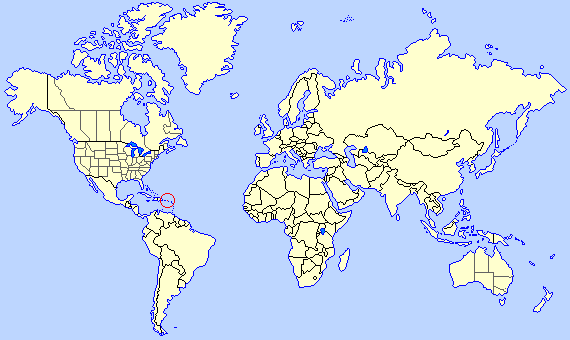
Saint-Barthélemy in the World

Saint-Barthélemy - Introduction 2024
top of pageBackground: In 1493, Christopher COLUMBUS named Saint Barthelemy for his brother Bartolomeo, but the island was first settled by the French in 1648. In 1784, France sold the island to Sweden, which renamed the largest town Gustavia after the Swedish King GUSTAV III and made it a free port; the island prospered as a trade and supply center during the colonial wars of the 18th century. France repurchased the island in 1877 and took control the following year, placing it under the administration of Guadeloupe. Saint Barthelemy retained its free port status along with various Swedish appellations such as Swedish street and town names, and the three-crown symbol on the coat of arms. In 2003, the islanders voted to secede from Guadeloupe, and in 2007, the island became a French overseas collectivity. In 2012, it became an overseas territory of the EU, allowing it to exert local control over the permanent and temporary immigration of foreign workers, including non-French European citizens. Hurricane Irma hit the island in 2017 and caused extensive damage.
Area
Total: 25 km²
Land: 25 km²
Water: negligible
Comparative: less than one-eighth the size of Washington, DC
Country comparison total: 0 km
Climate:
tropical, with practically no variation in temperature; has two seasons (dry and humid)ʒ
Guadeloupe: subtropical tempered by trade winds; moderately high humidity; rainy season (June to October); vulnerable to devastating cyclones (hurricanes) every eight years on average
Guadeloupe: subtropical tempered by trade winds; moderately high humidity; rainy season (June to October); vulnerable to devastating cyclones (hurricanes) every eight years on average
Terrain:
hilly, almost completely surrounded by shallow-water reefs, with plentiful beaches
Basse-Terre is volcanic in origin with interior mountains
Grande-Terre is low limestone formation; most of the seven other islands are volcanic in origin
Basse-Terre is volcanic in origin with interior mountains
Grande-Terre is low limestone formation; most of the seven other islands are volcanic in origin
Geography
Note: a 1,200-hectare marine nature reserve, the Reserve Naturelle, is made up of five zones around the island that form a network to protect the island's coral reefs, seagrass, and endangered marine species
Saint-Barthélemy - People 2024
top of pagePopulation
Distribution: most of the populace concentrated in and around the capital of Gustavia, but scattered settlements exist around the island periphery
Total: 7,086
Male: 3,737
Female: 3,349 (2024 est.)
Growth rate: -0.11% (2024 est.)
Languages: French (primary), English
Major-language samples: Gheos World Guide une source indispensable d'informations de base. (French); Gheos World Guide, the indispensable source for basic information.
Age structure
0-14 years: 13.9% (male 506/female 479)
15-64 years: 63.1% (male 2,413/female 2,057)
65 years and over: 23% (2024 est.) (male 818/female 813)
Dependency ratios
Total dependency ratio: 30.8
Youth dependency ratio: 17.5
Elderly dependency ratio: 13.3
Potential support ratio: 7.5 (2021)
Population distribution: most of the populace concentrated in and around the capital of Gustavia, but scattered settlements exist around the island periphery
Environment
Current issues: land-based pollution; urbanization; with no natural rivers or streams, fresh water is in short supply, especially in summer, and is provided by the desalination of sea water, the collection of rain water, or imported via water tanker; overfishing
Sex ratio
At birth: 1.06 male(s)/female
0-14 years: 1.06 male(s)/female
15-64 years: 1.17 male(s)/female
65 years and over: 1.01 male(s)/female
Total population: 1.12 male(s)/female (2024 est.)
Infant mortality rate
Total: 6.5 deaths/1,000 live births (2024 est.)
Male: 7.6 deaths/1,000 live births
Female: 5.3 deaths/1,000 live births
Drinking water source
Improved urban: 100% of population
Unimproved rural: NA
Unimproved total: 0% of population (2020)
Unimproved urban: 0% of population
Sanitation facility access
Improved urban: 100% of population
Improved rural: NA
Improved total: 100% of population
Unimproved urban: 0% of population
Unimproved rural: NA
Unimproved total: 0% of population (2020)
Saint-Barthélemy - Government 2024
top of pageCountry name
Conventional long form: Overseas Collectivity of Saint Barthelemy
Conventional short form: Saint Barthelemy
Local long form: Collectivité d'outre mer de Saint-Barthélemy
Local short form: Saint-Barthélemy; abbreviation: Saint-Barth (French)/ St. Barts or St. Barths (English)
Etymology: explorer Christopher COLUMBUS named the island in honor of his brother Bartolomeo's namesake saint in 1493
Capital
Name: Gustavia
Geographic coordinates: 17 53 N, 62 51 W
Time difference: UTC-4 (1 hour ahead of Washington, DC, during Standard Time)
Etymology: named in honor of King Gustav III (1746-1792) of Sweden during whose reign the island was obtained from France in 1784; the name was retained when in 1878 the island was sold back to France
National holiday: Fête de la Fédération, 14 July (1790)
Note: local holiday is St. Barthelemy Day, 24 August (1572)
Constitution
History: 4 October 1958 (French Constitution)
Amendments: amendment procedures of France's constitution apply
Executive branch
Chief of state: President Emmanuel MACRON (since 14 May 2017), represented by Prefect Vincent BERTON (since 28 March 2022)
Head of government: President of Territorial Council Xavier LEDEE (since 3 April 2022)
Cabinet: Executive Council elected by the Territorial Council
Note: there is also an advisory, economic, social, and cultural council
Elections/appointments: French president directly elected by absolute majority popular vote in 2 rounds if needed for a 5-year term (eligible for a second term); prefect appointed by the French president on the advice of French Ministry of Interior; president of Territorial Council indirectly elected by its members for a 5-year term; election last held on 27 March 2022 (next to be held in 2,027)
Election results: 2022: Xavier LEDEE (Saint Barth United) elected president; Territorial Council vote - 13 votes for, 6 blank votes; 2017: Bruno MAGRAS (Saint Barth First!) elected president; Territorial Council vote - 14 out of 19 votes
Legislative branch
Description: unicameral Territorial Council (19 seats; members elected by absolute majority vote in the first-round vote and proportional representation vote in the second round; members serve 5-year terms)
Elections: Territorial Council - first round held on 20 March 2022 and second round held on 27 March 2022 (next to be held in 2,027); French Senate - election last held on 24 September 2023 (next to be held on 30 September 2026); French National Assembly - election last held on 12 and 19 June 2022 (next to be held by June 2,027)
Elections results: Territorial Council - percent of vote by party in first round - SBA 46.2%, Saint Barth Action Equilibre 27.1%, Unis pour Saint Barthelemy 26.8%; percent of vote by party in second round - Saint Barth Action Equilibre and Unis pour Saint Barthelemy 50.9%, SBA 49.2%, seats by party - Saint Barth Action Equilibre and Unis pour Saint Barthelemy 13, SBA 6; composition - men NA, women NA, percentage women NA%; French Senate - percent of vote by party - NA; seats by party - UMP 1; French National Assembly - percent of vote by party NA; seats by party - UMP 1
Note: 1 senator is indirectly elected to the French Senate by an electoral college for a 6-year term, and 1 deputy (shared with Saint Martin) is directly elected to the French National Assembly for a five-year term
Political parties and leaders: All for Saint Barth (Tous pour Saint-Barth), Saint Barth Action Equilibre, Saint Barth First! (Saint-Barth d'Abord!) or SBA (affiliated with France's Republican party, Les Republicans), Saint Barth United (Unis pour Saint-Barthelemy)
Diplomatic representation
In the us: none (overseas collectivity of France)
From the us: embassy: none (overseas collectivity of France)
National anthem
Name: 'L'Hymne a St. Barthelemy' (Hymn to St. Barthelemy)
Lyrics/music: Isabelle Massart DERAVIN/Michael VALENTI
Note: local anthem in use since 1999; as a collectivity of France, 'La Marseillaise' is official (see France)
Saint-Barthélemy - Economy 2024
top of pageEconomy overview: high-income French Caribbean territorial economy; duty-free luxury commerce and tourism industries; import-dependent for food, water, energy, and manufacturing; large Brazilian and Portuguese labor supply; environmentally fragile
Exports
Partners: Nigeria 98%, Suriname 1%, France 0%, Switzerland 0%, Poland 0% (2022)
Partners note: top five export partners based on percentage share of exports
Commodities: refined petroleum, fruit juice, precious metal watches, beauty products, special pharmaceuticals (2022)
Commodities note: top five export commodities based on value in dollars
Imports
Partners: Switzerland 37%, Italy 14%, Portugal 11%, Suriname 9%, Brazil 5% (2022)
Partners note: top five import partners based on percentage share of imports
Commodities: precious metal watches, base metal watches, jewelry, refined petroleum, cars (2022)
Commodities note: top five import commodities based on value in dollars
Exchange rates:
euros (EUR) per US dollar - 0.925 (2023 est.)
0.95 (2022 est.)
0.845 (2021 est.)
0.876 (2020 est.)
0.893 (2019 est.)
0.95 (2022 est.)
0.845 (2021 est.)
0.876 (2020 est.)
0.893 (2019 est.)
Saint-Barthélemy - Energy 2024
top of pageSaint-Barthélemy - Communication 2024
top of pageSaint-Barthélemy - Military 2024
top of pageSaint-Barthélemy - Transportation 2024
top of pageSaint-Barthélemy - Transnational issues 2024
top of page
🅶🅷🅴🅾🆂.🅲🅾🅼