Statistical information Ecuador 1989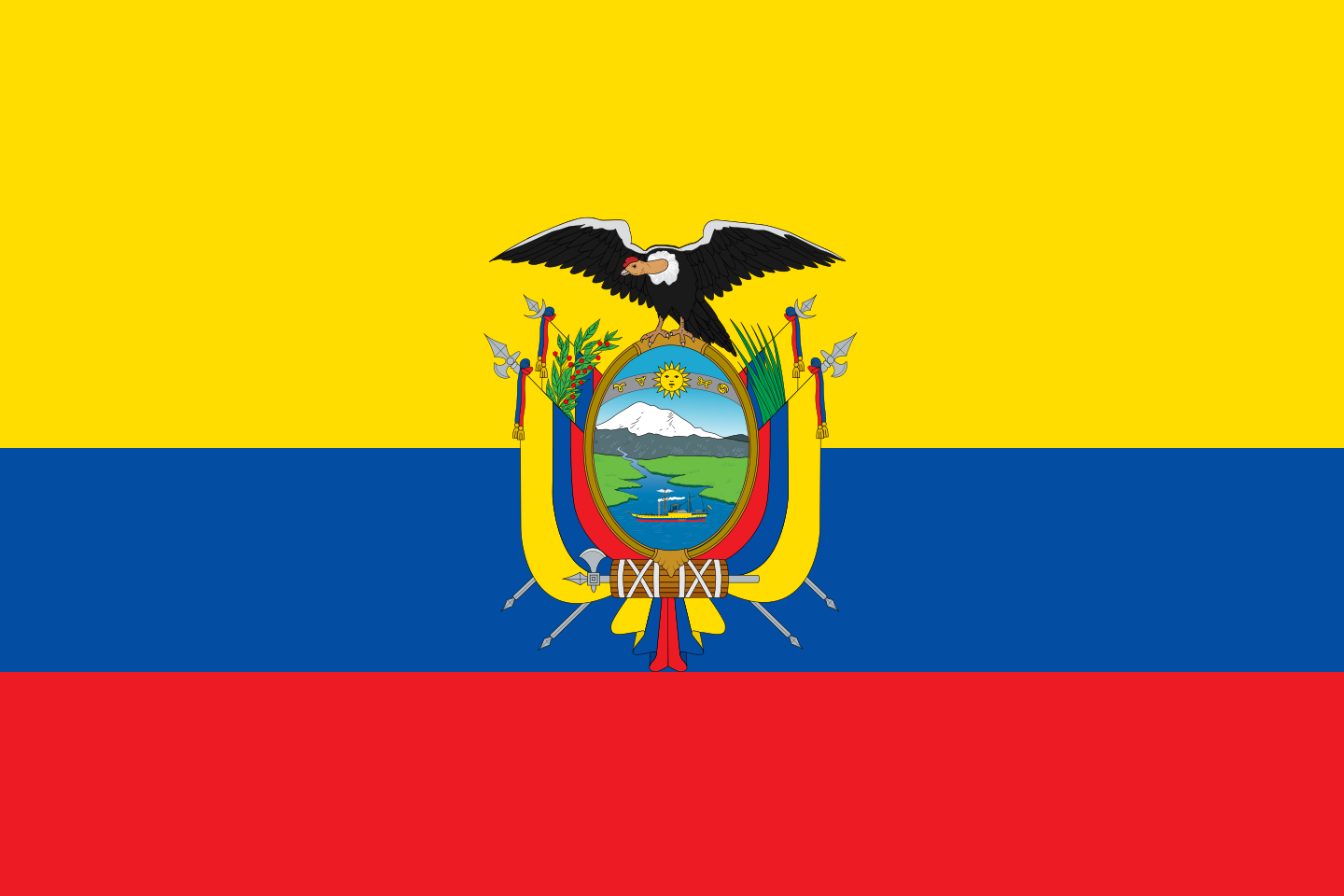

Ecuador in the World

Ecuador - Introduction 1989
top of pageBackground: The 'Republic of the Equator' was one of three countries that emerged from the collapse of Gran Colombia in 1830 (the others being Colombia and Venezuela). Between 1904 and 1942 Ecuador lost territories in a series of conflicts with its neighbors.
Ecuador - Geography 1989
top of pageLocation
Geographic coordinates
Map reference
Area
Land boundaries:
2,010 km total
Colombia 590 km, Peru 1,420 km
Colombia 590 km, Peru 1,420 km
Coastline: 2,237 km
Maritime claims: Continental shelf:200 m Territorial sea:200 nm
Climate: tropical along coast becoming cooler inland
Terrain: coastal plain (Costa), inter-Andean central highlands (Sierra), and flat to rolling eastern jungle (Oriente)
Elevation
Natural resources: petroleum, fish, timber
Land use
Land use: 6% arable land; 3% permanent crops; 17% meadows and pastures; 51% forest and woodland; 23% other; includes 2% irrigated
Irrigated land
Major rivers
Major watersheds area km²
Total water withdrawal
Total renewable water resources
Natural hazards
Geography
Note: Cotopaxi in Andes is highest active volcano in world
Ecuador - People 1989
top of pagePopulation: 10,262,271 (July 1989), growth rate 2.4% (1989)
Nationality: noun - Ecuadorian(s; adjective - Ecuadorian
Ethnic groups: 55% mestizo (mixed Indian and Spanish), 25% Indian, 10% Spanish, 10% black
Languages: Spanish (official; Indian languages, especially Quechua
Religions: 95% Roman Catholic
Demographic profile
Age structure
Age structure
Dependency ratios
Median age
Population growth rate
Birth rate: 31 births/1000 population (1989)
Death rate: 7 deaths/1000 population (1989)
Net migration rate: 0 migrants/1000 population (1989)
Population distribution
Urbanization
Major urban areas
Environment
Current issues: subject to frequent earthquakes, landslides, volcanic activity, tsunamis; deforestation; desertification; soil erosion
Air pollutants
Sex ratio
Mothers mean age at first birth
Maternal mortality ratio
Infant mortality rate: 63 deaths/1000 live births (1989)
Life expectancy at birth: 64 years male, 68 years female (1989)
Total fertility rate: 4.0 children born/woman (1989)
Contraceptive prevalence rate
Drinking water source
Current health expenditure
Physicians density
Hospital bed density
Sanitation facility access
Hiv/Aids
Major infectious diseases
Obesity adult prevalence rate
Alcohol consumption
Tobacco use
Children under the age of 5 years underweight
Education expenditures
Literacy: 85% (1981)
School life expectancy primary to tertiary education
Youth unemployment
Ecuador - Government 1989
top of pageCountry name: conventional long form: Republic of Ecuador
Government type: republic
Capital: Quito
Administrative divisions: 20 provinces (provincias, singular - provincia; Azuay, Bolivar, Canar, Carchi, Chimborazo, Cotopaxi, El Oro, Esmeraldas, Galapagos, Guayas, Imbabura, Loja, Los Rios, Manabi, Morona-Santiago, Napo, Pastaza, Pichincha, Tungurahua, Zamora-Chinchipe
Dependent areas
Independence: 24 May 1822 (from Spain; Battle of Pichincha)
National holiday: Independence Day, 10 August (1809, independence of Quito)
Constitution: 10 August 1979
Legal system: based on civil law system; has not accepted compulsory ICJ jurisdiction
International law organization participation
Citizenship
Suffrage: universal over age 18; compulsory for literate persons
Executive branch: Chief of State and Head of Government - President Rodrigo BORJA Cevallos (since 10 August 1988; Vice President Luis PARODI Valverde (since 10 August 1988)
Legislative branch: Ecuadorean Army (Ejercito Ecuatoriano), Ecuadorean Air Force (Fuerza Aerea Ecuatoriana), Ecuadorean Navy (Armada Ecuatoriana)
Judicial branch
Political parties and leaders
International organization participation: Andean Pact, ECOSOC, FAO, G-77, IADB, IAEA, IBRD, ICAO, ICO, IDA, IDB - Inter-American Development Bank, IFAD, IFC, IHO, ILO, IMF, IMO, INTELSAT, INTERPOL, IRC, ITU, LAIA, NAM, OAS, OPEC, PAHO, SELA, UN, UNESCO, UPEB, UPU, WFTU, WHO, WMO, WTO
Diplomatic representation
In the us: Ambassador Jaime MONCAYO; Chancery at 2,535 15th Street NW, Washington DC 20,009; telephone (202) 234-7,200; there are Ecuadorian Consulates General in Chicago, Houston, Los Angeles, Miami, New Orleans, New York, and San Francisco, and a Consulate in San Diego; US - Ambassador Richard N. HOLWILL; Embassy at Avenida Patria 120, on the corner of Avenida 12 de Octubre, Quito (mailing address is P. O. Box 538, Quito, or APO Miami 34,039; telephone Õ593å (2) 562-890; there is a US Consulate General in Guayaquil
Flag description: three horizontal bands of yellow (top, double width), blue, and red with the coat of arms superimposed at the center of the flag; similar to the flag of Colombia which is shorter and does not bear a coat of arms
National symbols
National anthem
National heritage
Ecuador - Economy 1989
top of pageEconomy overview: In March 1987 the economy was badly affected by an earthquake that destroyed 32 kilometers of oil pipeline, effectively cutting off oil exports for over six months and causing an estimated loss in revenue of $950 million. The cost of the earthquake is estimated at $1 billion, if infrastructure repairs and fuel imports are included. The destruction fell on an economy already hard hit by a sharp drop in oil prices in 1986. Ecuador continues to face large balance-of-payments difficulties despite a recovery in oil revenues and increased coffee production in 1988. The government has recently resumed talks with private creditor banks after having formally suspended interest payments in January 1987.
Real gdp purchasing power parity
Real gdp growth rate
Real gdp per capita
Gross national saving
Gdp composition by sector of origin
Gdp composition by end use
Gdp composition by sector of origin
Agriculture products: bananas, coffee, cocoa, sugarcane, corn, potatoes, rice; an illegal producer of coca for the international drug trade
Industries: food processing, textiles, chemicals, fishing, timber, petroleum
Industrial production growth rate: - 1.1% (manufacturing, 1987)
Labor force: 2,800,000; 52% agriculture, 13% manufacturing, 7% commerce, 4% construction, 4% public administration, 20% other services and activities (1983)
Labor force
Unemployment rate: 8.5% (1987)
Youth unemployment
Population below poverty line
Gini index
Household income or consumption by percentage share
Distribution of family income gini index
Budget: revenues $1.8 billion; expenditures $2.6 billion, including capital expenditures of $574 million (1987 est.)
Taxes and other revenues
Public debt
Revenue
Fiscal year: calendar year
Inflation rate consumer prices
Central bank discount rate
Commercial bank prime lending rate
Stock of narrow money
Stock of broad money
Stock of domestic credit
Market value of publicly traded shares
Current account balance
Exports: $2.4 billion (f.o.b., 1988)
Commodities: petroleum 44%, coffee, bananas, cocoa products, shrimp, fish products
Partners: US 58%, Latin America, Caribbean, EC countries
Imports: $1.7 billion (c.i.f., 1987)
Commodities: transport equipment, vehicles, machinery, chemical, petroleum
Partners: US 28%, Latin America, Caribbean, EC, Japan
Reserves of foreign exchange and gold
Debt external: $10.7 billion, medium and long-term (1988)
Stock of direct foreign investment at home
Stock of direct foreign investment abroad
Exchange rates: sucres (S/) per US$1 - 428.34 (December 1988), 301.61 (1988), 170.46 (1987), 122.78 (1986; 401.4 (commercial rate, December 1988)
Ecuador - Energy 1989
top of pageElectricity
Capacity: 1,834,000 kW capacity; 5,777 million kWh produced, 565 kWh per capita (1988)
Coal
Petroleum
Crude oil
Refined petroleum
Natural gas
Carbon dioxide emissions
Energy consumption per capita
Ecuador - Communication 1989
top of pageTelephones
Telephone system
Broadcast media
Internet
Broadband fixed subscriptions
Ecuador - Military 1989
top of pageMilitary expenditures
Dollar figure: NA
Military and security forces
Military service age and obligation
Space program
Terrorist groups
Ecuador - Transportation 1989
top of pageNational air transport system
Civil aircraft registration country code prefix
Airports: 179 total, 177 usable; 36 with permanent-surface runways; 1 with runways over 3,659 m; 6 with runways 2,440-3,659 m; 21 with runways 1,220-2,439 m
Heliports
Pipelines: crude oil, 800 km; refined products, 1,358 km
Railways
Roadways
Waterways: 1,500 km
Merchant marine: 49 ships (1,000 GRT or over) totaling 351,431 GRT/506,208 DWT; includes 1 short-sea passenger, 7 cargo, 18 refrigerated cargo, 2 container, 2 roll-on/roll-off cargo, 16 petroleum, oils, and lubricants (POL) tanker, 1 chemical tanker, 1 liquefied gas, 1 bulk
Ports and terminals
Ecuador - Transnational issues 1989
top of pageDisputes international: two short sections of the boundary with Peru are in dispute
Refugees and internally displaced persons
Illicit drugs

You found a piece of the puzzle
Please click here to complete it
Please click here to complete it
