Statistical information France 1993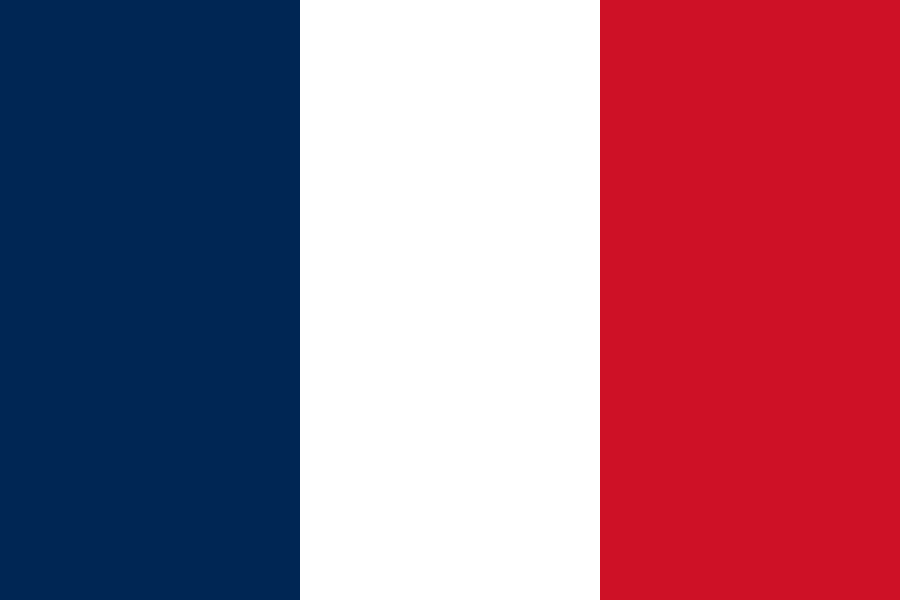

France in the World

France - Introduction 1993
top of pageBackground: Although ultimately a victor in World Wars I and II, France lost many men, much wealth, its extensive empire, and its rank as a dominant nation-state. France has struggled since 1958_arguably with success_to construct a presidential democracy resistant to the severe instabilities inherent in the parliamentary democracy of early 20th century France. In recent years, its reconciliation and cooperation with Germany have proved central to the economic integration of Europe.
France - Geography 1993
top of pageLocation: Western Europe, bordering the North Atlantic Ocean between Spain and Germany
Geographic coordinates
Map reference: Europe, Standard Time Zones of the World
Area
Total: 547,030 km²
Land: 545,630 km²
Land boundaries:
total 2,892.4 km, Andorra 60 km, Belgium 620 km, Germany 451 km, Italy 488 km, Luxembourg 73 km, Monaco 4.4 km, Spain 623 km,
Switzerland 573 km
Switzerland 573 km
Coastline: 3,427 km (mainland 2,783 km, Corsica 644 km)
Contiguous zone: 12-24 nm
Exclusive economic zone: 200 nm
Territorial sea: 12 nm
Maritime claims
Climate: generally cool winters and mild summers, but mild winters and hot summers along the Mediterranean
Terrain: mostly flat plains or gently rolling hills in north and west; remainder is mountainous, especially Pyrenees in south, Alps in east
Elevation
Natural resources: coal, iron ore, bauxite, fish, timber, zinc, potash
Land use
Land use
Arable land: 32%
Permanent crops: 2%
Forest and woodland: 27%
Other: 16%
Irrigated land: 11,600 km² (1989 est.)
Major rivers
Major watersheds area km²
Total water withdrawal
Total renewable water resources
Natural hazards
Geography
France - People 1993
top of pagePopulation: 57,566,091 (July 1993 est.)
Growth rate: 0.48% (1993 est.)
Nationality
Noun: Frenchman(men), Frenchwoman(women)
Adjective: French
Ethnic groups:
Celtic and Latin with Teutonic, Slavic, North African,
Indochinese, Basque minorities
Indochinese, Basque minorities
Languages: French 100%, rapidly declining regional dialects and languages (Provencal, Breton, Alsatian, Corsican, Catalan, Basque, Flemish)
Religions:
Roman Catholic 90%, Protestant 2%, Jewish 1%, Muslim (North
African workers) 1%, unaffiliated 6%
African workers) 1%, unaffiliated 6%
Demographic profile
Age structure
Age structure
Dependency ratios
Median age
Population growth rate: 0.48% (1993 est.)
Birth rate: 13.24 births/1000 population (1993 est.)
Death rate: 9.3 deaths/1000 population (1993 est.)
Net migration rate: 0.87 migrant(s)/1000 population (1993 est.)
Population distribution
Urbanization
Major urban areas
Environment
Current issues:
most of large urban areas and industrial centers in Rhone,
Garonne, Seine, or Loire River basins; occasional warm tropical wind known as mistral
Garonne, Seine, or Loire River basins; occasional warm tropical wind known as mistral
Current issues note: largest West European nation
Air pollutants
Sex ratio
Mothers mean age at first birth
Maternal mortality ratio
Infant mortality rate: 6.8 deaths/1000 live births (1993 est.)
Life expectancy at birth
Total population: 78 years
Male: 74.04 years
Female: 82.16 years (1993 est.)
Total fertility rate: 1.8 children born/woman (1993 est.)
Contraceptive prevalence rate
Drinking water source
Current health expenditure
Physicians density
Hospital bed density
Sanitation facility access
Hiv/Aids
Major infectious diseases
Obesity adult prevalence rate
Alcohol consumption
Tobacco use
Children under the age of 5 years underweight
Education expenditures
Literacy: age 15 and over can read and write (1980)
Total population: 99%
Male: NA%
Female: NA%
By occupation: services 61.5%, industry 31.3%, agriculture 7.2% (1987)
School life expectancy primary to tertiary education
Youth unemployment
France - Government 1993
top of pageCountry name
Conventional long form: French Republic
Conventional short form: France
Local long form: Republique Francaise
Local short form: France
Government type: republic
Capital: Paris
Administrative divisions:
22 regions (regions, singular - region); Alsace,
Aquitaine, Auvergne, Basse-Normandie, Bourgogne, Bretagne, Centre,
Champagne-Ardenne, Corse, Franche-Comte, Haute-Normandie, Ile-de-France,
Languedoc-Roussillon, Limousin, Lorraine, Midi-Pyrenees, Nord-Pas-de-Calais,
Pays de la Loire, Picardie, Poitou-Charentes, Provence-Alpes-Cote d'Azur,
Rhone-Alpes
Dependent areas:
Bassas da India, Clipperton Island, Europa Island, French
Polynesia, French Southern and Antarctic Lands, Glorioso Islands, Juan de Nova
Island, New Caledonia, Tromelin Island, Wallis and Futuna
the US does not recognize claims to Antarctica
Polynesia, French Southern and Antarctic Lands, Glorioso Islands, Juan de Nova
Island, New Caledonia, Tromelin Island, Wallis and Futuna
the US does not recognize claims to Antarctica
Independence: 486 (unified by Clovis)
National holiday: National Day, Taking of theBastille, 14 July (1789)
Constitution: 28 September 1958, amended concerning election of president in 1962, ammended to comply with provisions of EC Maastricht Treaty in 1992
Legal system: civil law system with indigenous concepts; review of administrative but not legislative acts
International law organization participation
Citizenship
Suffrage: 18 years of age; universal
Executive branch: president, prime minister, Council of Ministers (cabinet)
Legislative branch: bicameral Parliament (Parlement) consists of an upper house or Senate (Senat) and a lower house or National Assembly (Assemblee Nationale)
Judicial branch: Constitutional Court (Cour Constitutionnelle)
Political parties and leaders
International organization participation:
ACCT, AfDB, AG (observer), AsDB, Australia Group, BDEAC, BIS,
CCC, CDB (non-regional), CE, CERN, COCOM, CSCE, EBRD, EC, ECA (associate),
ECE, ECLAC, EIB, ESA, ESCAP, FAO, FZ, GATT, G-5, G-7, G-10, IADB, IAEA, IBRD,
ICAO, ICC, ICFTU, IDA, IFAD, IFC, ILO, IMF, IMO, INMARSAT, INTELSAT, INTERPOL,
IOC, IOM, ISO, ITU, LORCS, MINURSO, MTCR, NACC, NATO, NEA, NSG, OAS (observer), OECD, PCA, SPC, UN, UNCTAD, UNESCO, UNHCR, UNIDO, UNIFIL, UNIKOM,
UNPROFOR, UNRWA, UN Security Council, UNTAC, UN Trusteeship Council, UNTSO,
UPU, WCL, WEU, WFTU, WHO, WIPO, WMO, WTO, ZC
Diplomatic representation
In the us chief of mission: Ambassador Jacques ANDREANI
In the us chancery: 4,101 Reservoir Road NW, Washington, DC 20,007
In the us telephone: (202) 944-6,000
In the us consulates general:
Atlanta, Boston, Chicago, Honolulu, Houston, Los
Angeles, Miami, New Orleans, New York, San Francisco, and San Juan (Puerto
Rico)
Angeles, Miami, New Orleans, New York, San Francisco, and San Juan (Puerto
Rico)
From the us chief of mission: Ambassador Pamela HARRIMAN
From the us mailing address: APO AE 9,777
From the us telephone: 33 (1) 4,296-12-02 or 4,261-80-75
From the us fax: 33 (1) 4,266-9,783
From the us consulates general: Bordeaux, Marseille, Strasbourg
Flag description: three equal vertical bands of blue (hoist side), white, and red; known as the French Tricouleur (Tricolor; the design and colors have been the basis for a number of other flags, including those of Belgium, Chad, Ireland, Cote d'Ivoire, and Luxembourg; the official flag for all French dependent areas
National symbols
National anthem
National heritage
France - Economy 1993
top of pageEconomy overview: One of the world's most developed economies, France has substantial agricultural resources and a highly diversified modern industrial sector. Large tracts of fertile land, the application of modern technology, and subsidies have combined to make it the leading agricultural producer in Western Europe. France is largely self-sufficient in agricultural products and is a major exporter of wheat and dairy products. The industrial sector generates about one-quarter of GDP, and the growing services sector has become crucial to the economy. The French economy is entering its fourth consecutive year of sluggish growth after a strong expansion in the late 1980s. Growth averaged only 1.3% in 1990-92 and is expected to drop to between zero and -0.5% in 1993. The government budget deficit rose to 3.2% of GDP in 1992 and is expected to be far larger than planned in the 1993 budget. Paris remains committed to maintaining the franc-deutsch mark parity, which has kept French interest rates high despite France's low inflation. Although the pace of economic integration within the European Community has slowed down, integration presumably will remain a major force shaping the fortunes of the various economic sectors.
Real gdp purchasing power parity
Real gdp growth rate: 1.1% (1992)
Real gdp per capita: $18,900 (1992)
Gross national saving
Gdp composition by sector of origin
Gdp composition by end use
Gdp composition by sector of origin
Agriculture products: accounts for 4% of GDP (including fishing and forestry; one of the world's top five wheat producers; other principal products - beef, dairy products, cereals, sugar beets, potatoes, wine grapes; self-sufficient for most temperate-zone foods; shortages include fats and oils and tropical produce, but overall net exporter of farm products; fish catch of 850,000 metric tons ranks among world's top 20 countries and is all used domestically
Industries: steel, machinery, chemicals, automobiles, metallurgy, aircraft, electronics, mining, textiles, food processing, tourism
Industrial production growth rate: growth rate 0.2% (1992 est.)
Labor force
Labor force
Unemployment rate: 10.5% (end 1992)
Youth unemployment
Population below poverty line
Gini index
Household income or consumption by percentage share
Distribution of family income gini index
Budget: revenues $220.5 billion; expenditures $249.1 billion, including capital expenditures of $47 billion (1993 budget)
Taxes and other revenues
Public debt
Revenue
Fiscal year: calendar year
Inflation rate consumer prices
Central bank discount rate
Commercial bank prime lending rate
Stock of narrow money
Stock of broad money
Stock of domestic credit
Market value of publicly traded shares
Current account balance
Exports: $212.7 billion (f.o.b., 1991)
Commodoties: machinery and transportation equipment, chemicals, foodstuffs, agricultural products, iron and steel products, textiles and clothing
Partners: Germany 18.6%, Italy 11.0%, Spain 11.0%, Belgium-Luxembourg 9.1%, UK 8.8%, Netherlands 7.9%, US 6.4%, Japan 2.0%, former USSR 0.7% (1991 est.)
Imports: $230.3 billion (c.i.f., 1991) chemicals, iron and steel products
Partners: Germany 17.8%, Italy 10.9%, US 9.5%, Netherlands 8.9%, Spain 8.8%, Belgium-Luxembourg 8.5%, UK 7.5%, Japan 4.1%, former USSR 1.3% (1991 est.)
Reserves of foreign exchange and gold
Debt external
Stock of direct foreign investment at home
Stock of direct foreign investment abroad
Exchange rates: French francs (F) per US$1 - 5.4812 (January 1993), 5.2938 (1992), 5.6421 (1991), 5.4453 (1990), 6.3801 (1989), 5.9569 (1988)
France - Energy 1993
top of pageElectricity
Production: 110,000,000 kW capacity; 426,000 million kWh produced, 7,430 kWh per capita (1992)
Coal
Petroleum
Crude oil
Refined petroleum
Natural gas
Carbon dioxide emissions
Energy consumption per capita
France - Communication 1993
top of pageTelephones
Telephone system
Broadcast media
Internet
Broadband fixed subscriptions
France - Military 1993
top of pageMilitary expenditures
Percent of gdp:
exchange rate conversion - $36.6 billion, 3.1% of
GDP (1993 est.)
GDP (1993 est.)
Military and security forces
Military service age and obligation
Space program
Terrorist groups
France - Transportation 1993
top of pageNational air transport system
Civil aircraft registration country code prefix
Airports
Usable: 461
With permanentsurface runways: 256
With runways over 3659 m: 3
With runways 2440-3659 m: 37
With runways 1220-2439 m: 136
Heliports
Pipelines: crude oil 3,059 km; petroleum products 4,487 km; natural gas 24,746 km
Railways
Roadways
Waterways: 14,932 km; 6,969 km heavily traveled
Merchant marine:
130 ships (1,000 GRT or over) totaling 3,224,945
GRT/5,067,252 DWT; includes 7 short-sea passenger, 10 cargo, 20 container, 1 multifunction large-load carrier, 27 roll-on/roll-off, 36 oil tanker, 11 chemical tanker, 6 liquefied gas, 2 specialized tanker, 10 bulk; note - France also maintains a captive register for French-owned ships in the Kerguelen
Islands (French Southern and Antarctic Lands) and French Polynesia
Ports and terminals
France - Transnational issues 1993
top of pageDisputes international:
Madagascar claims Bassas da India, Europa Island,
Glorioso Islands, Juan de Nova Island, and Tromelin Island; Comoros claims
Mayotte; Mauritius claims Tromelin Island; Seychelles claims Tromelin Island;
Suriname claims part of French Guiana; Mexico claims Clipperton Island; territorial claim in Antarctica (Adelie Land); Saint Pierre and Miquelon is focus of maritime boundary dispute between Canada and France
Refugees and internally displaced persons
Illicit drugs

You found a piece of the puzzle
Please click here to complete it
Please click here to complete it
