Statistical information Pakistan 1999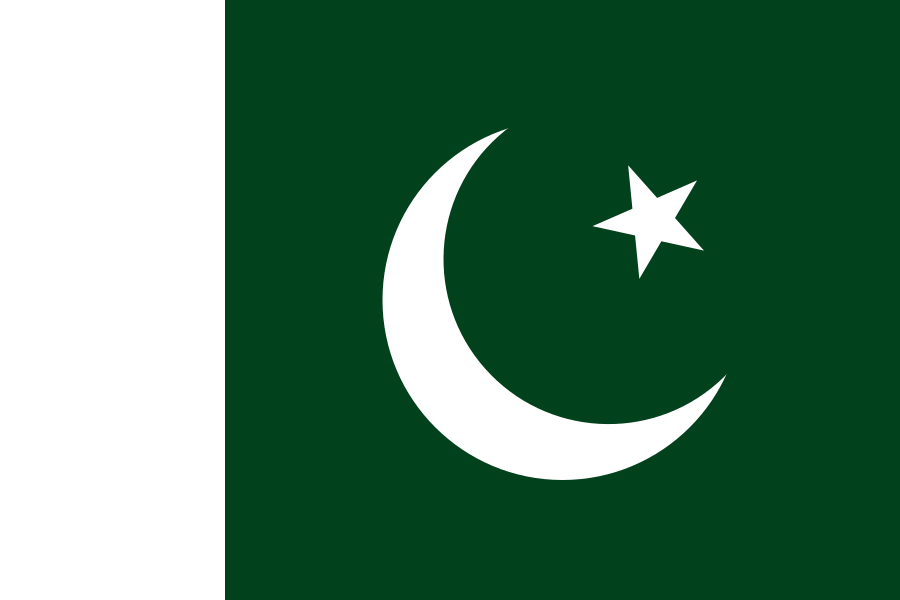

Pakistan in the World

Pakistan - Introduction 1999
top of pageBackground: The separation in 1947 of British India into the Muslim state of Pakistan (with two sections West and East) and largely Hindu India was never satisfactorily resolved. A third war between these countries in 1971 resulted in East Pakistan seceding and becoming the separate nation of Bangladesh. A dispute over the state of Kashmir is ongoing. In response to Indian nuclear weapons testing Pakistan conducted its own tests in 1998.
Pakistan - Geography 1999
top of pageLocation: Southern Asia, bordering the Arabian Sea, between India on the east and Iran and Afghanistan on the west and China in the north
Geographic coordinates: 30 00 N, 70 00 E
Map reference: Asia
Area
Total: 803,940 km²
Land: 778,720 km²
Water: 25,220 km²
Comparative: slightly less than twice the size of California
Land boundaries
Total: 6,774 km
Border countries: (4) Afghanistan 2,430 km; , China 523 km; , India 2,912 km; , Iran 909 km
Coastline: 1,046 km
Maritime claims
Contiguous zone: 24 nm
Continental shelf: 200 nm or to the edge of the continental margin
Exclusive economic zone: 200 nm
Territorial sea: 12 nm
Climate: mostly hot, dry desert; temperate in northwest; arctic in north
Terrain: flat Indus plain in east; mountains in north and northwest; Balochistan plateau in west
Elevation
Extremes lowest point: Indian Ocean 0 m
Extremes highest point: K2 (Mt. Godwin-Austen) 8,611 m
Natural resources: land, extensive natural gas reserves, limited petroleum, poor quality coal, iron ore, copper, salt, limestone
Land use
Land use
Arable land: 27%
Permanent crops: 1%
Permanent pastures: 6%
Forests and woodland: 5%
Other: 61% (1993 est.)
Irrigated land: 171,100 km² (1993 est.)
Major rivers
Major watersheds area km²
Total water withdrawal
Total renewable water resources
Natural hazards: frequent earthquakes, occasionally severe especially in north and west; flooding along the Indus after heavy rains (July and August)
Geography
Note: controls Khyber Pass and Bolan Pass, traditional invasion routes between Central Asia and the Indian Subcontinent
Pakistan - People 1999
top of pagePopulation: 138,123,359 (July 1999 est.)
Growth rate: 2.18% (1999 est.)
Below poverty line: 34% (1991 est.)
Nationality
Noun: Pakistani(s)
Adjective: Pakistani
Ethnic groups: Punjabi, Sindhi, Pashtun (Pathan), Baloch, Muhajir (immigrants from India and their descendants)
Languages: Punjabi 48%, Sindhi 12%, Siraiki (a Punjabi variant) 10%, Pashtu 8%, Urdu (official) 8%, Balochi 3%, Hindko 2%, Brahui 1%, English (official and lingua franca of Pakistani elite and most government ministries), Burushaski, and other 8%
Religions: Muslim 97% (Sunni 77%, Shi'a 20%), Christian, Hindu, and other 3%
Demographic profile
Age structure
Age structure
0-14 years: 41% (male 29,423,876; female 27,763,774)
15-64 years: 55% (male 38,533,918; female 36,804,592)
65 years and over: 4% (male 2,768,942; female 2,828,257) (1999 est.)
Dependency ratios
Median age
Population growth rate: 2.18% (1999 est.)
Birth rate: 33.51 births/1000 population (1999 est.)
Death rate: 10.45 deaths/1000 population (1999 est.)
Net migration rate: -1.3 migrant(s)/1000 population (1999 est.)
Population distribution
Urbanization
Major urban areas
Environment
Current issues: water pollution from raw sewage, industrial wastes, and agricultural runoff; limited natural fresh water resources; a majority of the population does not have access to potable water; deforestation; soil erosion; desertification
International agreements party to: Biodiversity, Climate Change, Desertification, Endangered Species, Environmental Modification, Hazardous Wastes, Law of the Sea, Nuclear Test Ban, Ozone Layer Protection, Ship Pollution, Wetlands
International agreements signed but not ratified: Marine Life Conservation
Air pollutants
Sex ratio
At birth: 1.05 male(s)/female
Under 15 years: 1.06 male(s)/female
15-64 years: 1.05 male(s)/female
65 years and over: 0.98 male(s)/female
Total population: 1.05 male(s)/female (1999 est.)
Mothers mean age at first birth
Maternal mortality ratio
Infant mortality rate: 91.86 deaths/1000 live births (1999 est.)
Life expectancy at birth
Total population: 59.38 years
Male: 58.49 years
Female: 60.3 years (1999 est.)
Total fertility rate: 4.73 children born/woman (1999 est.)
Contraceptive prevalence rate
Drinking water source
Current health expenditure
Physicians density
Hospital bed density
Sanitation facility access
Hiv/Aids
Major infectious diseases
Obesity adult prevalence rate
Alcohol consumption
Tobacco use
Children under the age of 5 years underweight
Education expenditures
Literacy
Definition: age 15 and over can read and write
Total population: 37.8%
Male: 50%
Female: 24.4% (1995 est.)
School life expectancy primary to tertiary education
Youth unemployment
Pakistan - Government 1999
top of pageCountry name
Conventional long form: Islamic Republic of Pakistan
Conventional short form: Pakistan
Former: West Pakistan
Government type: federal republic
Capital: Islamabad
Administrative divisions: 4 provinces, 1 territory*, and 1 capital territory**; Balochistan, Federally Administered Tribal Areas*, Islamabad Capital Territory**, North-West Frontier, Punjab, Sindh
Note: the Pakistani-administered portion of the disputed Jammu and Kashmir region includes Azad Kashmir and the Northern Areas
Dependent areas
Independence: 14 August 1947 (from UK)
National holiday: Pakistan Day, 23 March (1956) (proclamation of the republic)
Constitution: 10 April 1973, suspended 5 July 1977, restored with amendments 30 December 1985
Legal system: based on English common law with provisions to accommodate Pakistan's status as an Islamic state; accepts compulsory ICJ jurisdiction, with reservations
International law organization participation
Citizenship
Suffrage: 21 years of age; universal; separate electorates and reserved parliamentary seats for non-Muslims
Executive branch
Chief of state: President Mohammad Rafiq TARAR (since 31 December 1997)
Head of government: Prime Minister Mohammad Nawaz SHARIF (since 17 February 1997)
Cabinet: Cabinet appointed by the prime minister
Elections: president elected by Parliament for a five-year term; election last held 31 December 1997 (next to be held no later than 1 January 2003); following legislative elections, the leader of the majority party or leader of a majority coalition is usually elected prime minister by the National Assembly; election last held 3 February 1997 (next to be held NA February 2002)
Election results: Mohammad Rafiq TARAR elected president; percent of Parliament and provincial vote_NA; Mohammad Nawaz SHARIF elected prime minister; percent of National Assembly vote_NA
Legislative branch: bicameral Parliament or Majlis-e-Shoora consists of the Senate (87 seats; members indirectly elected by provincial assemblies to serve six-year terms; one-third of the members up for election every two years) and the National Assembly (217 seats_10 represent non-Muslims; members elected by popular vote to serve five-year terms)
Elections: Senate_last held 12 March 1997 (next to be held NA March 1999); National Assembly_last held 3 February 1997 (next to be held NA February 2002)
Election results: Senate_percent of vote by party_NA; seats by party_PML/N 30, PPP 17, ANP 7, MQM/A 6, JWP 5, BNP 4, JUI/F 2, PML/J 2, BNM/M 1, PKMAP 1, TJP 1, independents 6, vacant 5; National Assembly_percent of vote by party_NA; seats by party_PML/N 137, PPP 18, MQM/A 12, ANP 10, BNP 3, JWP 2, JUI/F 2, PPP/SB 1, NPP 1, independents 21, minorities 10
Judicial branch: Supreme Court, judicial chiefs are appointed by the president; Federal Islamic (Shari'a) Court
Political parties and leaders
International organization participation: AsDB, C, CCC, CP, ECO, ESCAP, FAO, G-19, G-24, G-77, IAEA, IBRD, ICAO, ICC, ICFTU, ICRM, IDA, IDB, IFAD, IFC, IFRCS, IHO, ILO, IMF, IMO, Inmarsat, Intelsat, Interpol, IOC, IOM, ISO, ITU, MINURSO, MONUA, NAM, OAS (observer), OIC, OPCW, PCA, SAARC, UN, UNCTAD, UNESCO, UNHCR, UNIDO, UNIKOM, UNITAR, UNMIBH, UNMOP, UNOMIG, UNOMIL, UNOMSIL, UNPREDEP, UPU, WCL, WFTU, WHO, WIPO, WMO, WToO, WTrO
Diplomatic representation
In the us chief of mission: Ambassador Riaz Hussain KHOKHAR
In the us chancery: 2,315 Massachusetts Avenue NW, Washington, DC 20,008
In the us telephone: [1] (202) 939-6,205
In the us FAX: [1] (202) 387-0484
In the us consulates general: Los Angeles and New York
From the us chief of mission: Ambassador William MILAM
From the us embassy: Diplomatic Enclave, Ramna 5, Islamabad
From the us mailing address: P. O. Box 1048, Unit 62,200, APO AE 9,812-2,200
From the us telephone: [92] (51) 826,161 through 826,179
From the us FAX: [92] (51) 276,427
From the us consulates general: Karachi
From the us consulates: Lahore, Peshawar
Flag description: green with a vertical white band (symbolizing the role of religious minorities) on the hoist side; a large white crescent and star are centered in the green field; the crescent, star, and color green are traditional symbols of Islam
National symbols
National anthem
National heritage
Pakistan - Economy 1999
top of pageEconomy overview: Pakistan continues to suffer through a damaging foreign exchange crisis_stemming from years of loose fiscal policies that have exacerbated inflation and allowed public debt to explode. After accruing more than $1.5 billion in debt arrears in the first six months of FY98/99, Pakistani officials approached multilateral creditors requesting balance-of-payments relief and structural support. In January 1999, Islamabad received more than $1 billion in loans along with $3 billion in debt relief following the Finance Minister DAR's pledge to implement an economic reform program to reduce the budget deficit, deepen the financial sector, and broaden the industrial base. Although the economy has shown signs of improvement following implementation of some corrective measures, Prime Minister SHARIF_historically_has failed to implement the tough structural reforms necessary for sustained, longer-term growth. The government must also cope with long-standing economic vulnerabilities_inadequate infrastructure and low levels of literacy.
Real gdp purchasing power parity
Real gdp growth rate: 5% (1998 est.)
Real gdp per capita: purchasing power parity: $2,000 (1998 est.)
Gross national saving
Gdp composition by sector of origin
Gdp composition by end use
Gdp composition by sector of origin
Agriculture: 24.2%
Industry: 26.4%
Services: 49.4% (1997)
Agriculture products: cotton, wheat, rice, sugarcane, fruits, vegetables; milk, beef, mutton, eggs
Industries: textiles, food processing, beverages, construction materials, clothing, paper products, shrimp
Industrial production growth rate: 2% (FY97/98)
Labor force: 37.8 million (1998)
Note: extensive export of labor, mostly to the Middle East, and use of child labor
By occupation agriculture: 47%
By occupation mining and manufacturing: 17%
By occupation services: 17%
By occupation other: 19%
Labor force
Unemployment rate: NA%
Youth unemployment
Population below poverty line: 34% (1991 est.)
Gini index
Household income or consumption by percentage share
Distribution of family income gini index
Budget
Revenues: $10.8 billion
Expenditures: $12 billion, including capital expenditures of $N/A (FY96/97)
Taxes and other revenues
Public debt
Revenue
Fiscal year: 1 July_30 June
Inflation rate consumer prices
Central bank discount rate
Commercial bank prime lending rate
Stock of narrow money
Stock of broad money
Stock of domestic credit
Market value of publicly traded shares
Current account balance
Exports: $8.5 billion (FY97/98)
Commodities: cotton, textiles, clothing, rice, leather, carpets
Partners: EU, US, Hong Kong, Japan
Imports: $10.1 billion (FY97/98)
Commodities: petroleum, petroleum products, machinery, transportation equipment, vegetable oils, animal fats, chemicals
Partners: EU, Japan, US, China
Reserves of foreign exchange and gold
Debt external: $34 billion (1998 est.)
Stock of direct foreign investment at home
Stock of direct foreign investment abroad
Exchange rates: Pakistani rupees (PRs) per US$1_46.000 (January 1999), 45.033 (1998), 41.086 (1997), 36.056 (1996), 31.623 (1995), 30.548 (1994; note_annual average of official rate; parallel market rate is higher
Pakistan - Energy 1999
top of pageElectricity
Production: 59.336 billion kWh (1996)
Production by source fossil fuel: 57.3%
Production by source hydro: 42.13%
Production by source nuclear: 0.57%
Production by source other: 0% (1997)
Consumption: 59.336 billion kWh (1996)
Exports: 0 kWh (1996)
Imports: 0 kWh (1996)
Coal
Petroleum
Crude oil
Refined petroleum
Natural gas
Carbon dioxide emissions
Energy consumption per capita
Pakistan - Communication 1999
top of pageTelephones: 2.828 million (1998)
Telephone system: the domestic system is mediocre, but improving; service is adequate for government and business use, in part because major businesses have established their own private systems; since 1988, the government has promoted investment in the national telecommunications system on a priority basis, significantly increasing network capacity; despite major improvements in trunk and urban systems, telecommunication services are still not readily available to the majority of the rural population
Domestic: microwave radio relay, coaxial cable, fiber-optic cable, cellular, and satellite
International: satellite earth stations_3 Intelsat (1 Atlantic Ocean and 2 Indian Ocean); 3 operational international gateway exchanges (1 at Karachi and 2 at Islamabad); microwave radio relay to neighboring countries
Broadcast media
Internet
Broadband fixed subscriptions
Pakistan - Military 1999
top of pageMilitary expenditures
Dollar figure: $2.48 billion (FY98/99)
Percent of gdp: 4.4% (FY98/99)
Military and security forces
Military service age and obligation
Space program
Terrorist groups
Pakistan - Transportation 1999
top of pageNational air transport system
Civil aircraft registration country code prefix
Airports: 116 (1998 est.)
With paved runways total: 80
With paved runways over 3047 m: 11
With paved runways 2438 to 3047 m: 20
With paved runways 15-24 to 2437 m: 31
With paved runways 914 to 1523 m: 15
With paved runways under 914 m: 3 (1998 est.)
With unpaved runways total: 36
With unpaved runways over 3047 m: 1
With unpaved runways 15-24 to 2437 m: 8
With unpaved runways 914 to 1523 m: 9
With unpaved runways under 914 m: 18 (1998 est.)
Heliports: 7 (1998 est.)
Pipelines: crude oil 250 km; petroleum products 885 km; natural gas 4,044 km (1987)
Railways
Total: 8,163 km
Broad gauge: 7,718 km 1.676-m gauge (293 km electrified; 1,037 km double track)
Narrow gauge: 445 km 1.000-m gauge (1996 est.)
Roadways
Waterways
Merchant marine
Total: 23 ships (1,000 GRT or over) totaling 384,304 GRT/619,668 DWT
Ships by type: bulk 4, cargo 15, container 3, oil tanker 1 (1998 est.)
Ports and terminals
Pakistan - Transnational issues 1999
top of pageDisputes international: status of Kashmir with India; water-sharing problems with India over the Indus River (Wular Barrage)
Refugees and internally displaced persons
Illicit drugs: producer of illicit opium and hashish for the international drug trade (poppy cultivation in 1998_3,030 hectares, a 26% drop from 1997 because of eradication and alternative development; limited center for processing Afghan heroin; key transit area for Southwest Asian heroin moving to Western markets; narcotics still move from Afghanistan into Baluchistan Province

You found a piece of the puzzle
Please click here to complete it
Please click here to complete it
