Statistical information Sudan 2001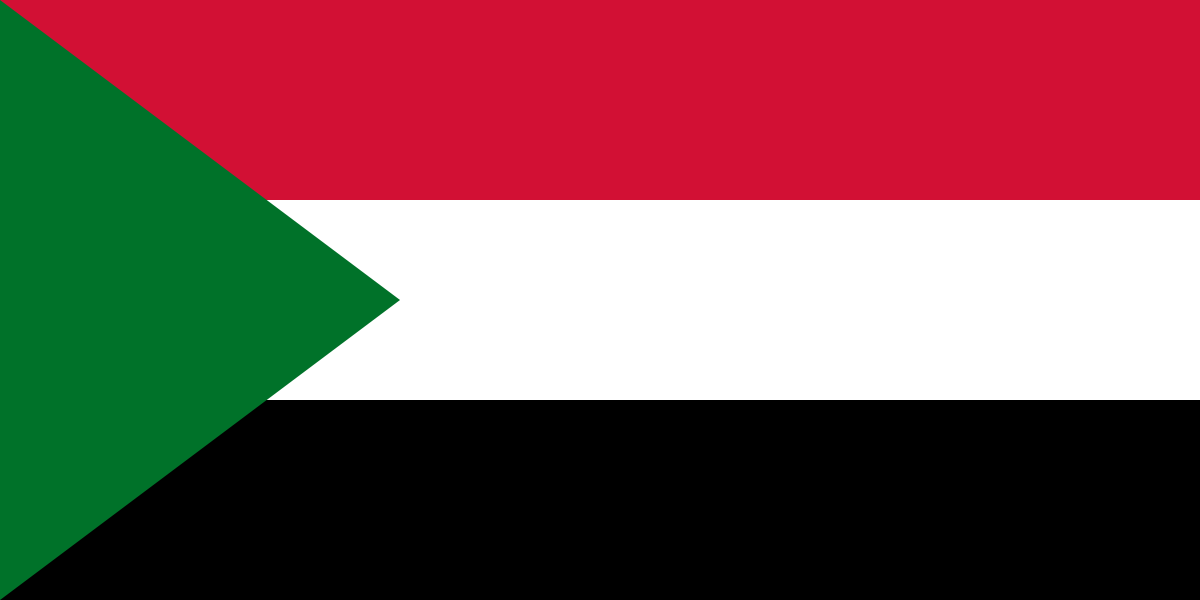

Sudan in the World

Sudan - Introduction 2001
top of pageBackground: Military dictatorships promulgating an Islamic government have mostly run the country since independence from the UK in 1956. Over the past two decades a civil war pitting black Christians and animists in the south against the Arab-Muslims of the north has cost at least 1.5 million lives in war- and famine-related deaths as well as the displacement of millions of others.
Sudan - Geography 2001
top of pageLocation: Northern Africa bordering the Red Sea between Egypt and Eritrea
Geographic coordinates: 15 00 N 30 00 E
Map reference: Africa
Area
Total: 2,505,810 km²
Land: 2.376 million km²
Water: 129,810 km²
Comparative: slightly more than one-quarter the size of the US
Land boundaries
Total: 7,687 km
Border countries: (9) Central African Republic 1,165 km; , Chad 1,360 km; , Democratic Republic of the Congo 628 km; , Egypt 1,273 km; , Eritrea 605 km; , Ethiopia 1,606 km; , Kenya 232 km; , Libya 383 km; , Uganda 435 km
Coastline: 853 km
Maritime claims
Contiguous zone: 18 NM
Continental shelf: 200-m depth or to the depth of exploitation
Territorial sea: 12 NM
Climate: tropical in south; arid desert in north; rainy season (April to October)
Terrain: generally flat featureless plain; mountains in east and west
Elevation
Extremes lowest point: Red Sea 0 m
Extremes highest point: Kinyeti 3,187 m
Natural resources: petroleum; small reserves of iron ore copper chromium ore zinc tungsten mica silver gold hydropower
Land use
Land use
Arable land: 5%
Permanent crops: 0%
Permanent pastures: 46%
Forests and woodland: 19%
Other: 30% (1993 est.)
Irrigated land: 19,460 km² (1993 est.)
Major rivers
Major watersheds area km²
Total water withdrawal
Total renewable water resources
Natural hazards: dust storms
Geography
Note: largest country in Africa; dominated by the Nile and its tributaries
Sudan - People 2001
top of pagePopulation: 36,080,373 (July 2001 est.)
Growth rate: 2.79% (2001 est.)
Below poverty line: NA%
Nationality
Noun: Sudanese (singular and plural)
Adjective: Sudanese
Ethnic groups: black 52% Arab 39% Beja 6% foreigners 2% other 1%
Languages
Note: program of 'Arabization' in process
Religions: Sunni Muslim 70% (in north) indigenous beliefs 25% Christian 5% (mostly in south and Khartoum)
Demographic profile
Age structure
Age structure
0-14 years: 44.62% (male 8,227,011; female 7,870,783)
15-64 years: 53.29% (male 9,619,218; female 9,608,469)
65 years and over: 2.09% (male 425,898; female 328,994) (2001 est.)
Dependency ratios
Median age
Population growth rate: 2.79% (2001 est.)
Birth rate: 37.89 births/1000 population (2001 est.)
Death rate: 10.04 deaths/1000 population (2001 est.)
Net migration rate: 0.04 migrant(s)/1000 population (2001 est.)
Population distribution
Urbanization
Major urban areas
Environment
Current issues: inadequate supplies of potable water; wildlife populations threatened by excessive hunting; soil erosion; desertification
International agreements party to: Biodiversity, Climate Change, Desertification, Endangered Species, Law of the Sea, Nuclear Test Ban, Ozone Layer Protection
International agreements signed but not ratified: none of the selected agreements
Air pollutants
Sex ratio
At birth: 1.05 male/female
Under 15 years: 1.05 male/female
15-64 years: 1 male/female
65 years and over: 1.29 male/female
Total population: 1.03 male/female (2001 est.)
Mothers mean age at first birth
Maternal mortality ratio
Infant mortality rate: 68.67 deaths/1000 live births (2001 est.)
Life expectancy at birth
Total population: 56.94 years
Male: 55.85 years
Female: 58.08 years (2001 est.)
Total fertility rate: 5.35 children born/woman (2001 est.)
Contraceptive prevalence rate
Drinking water source
Current health expenditure
Physicians density
Hospital bed density
Sanitation facility access
Hiv/Aids
Adult prevalence rate: 0.99% (1999 est.)
People living with hivaids: NA
Deaths: NA
Major infectious diseases
Obesity adult prevalence rate
Alcohol consumption
Tobacco use
Children under the age of 5 years underweight
Education expenditures
Literacy
Definition: age 15 and over can read and write
Total population: 46.1%
Male: 57.7%
Female: 34.6% (1995 est.)
School life expectancy primary to tertiary education
Youth unemployment
Sudan - Government 2001
top of pageCountry name
Conventional long form: Republic of the Sudan
Conventional short form: Sudan
Local long form: Jumhuriyat as-Sudan
Local short form: As-Sudan
Former: Anglo-Egyptian Sudan
Government type: transitional - ruling military junta took power in 1989; government is dominated by members of Sudan's National Islamic Front (NIF) a fundamentalist political organization which uses the National Congress Party (NCP) as its legal front
Capital: Khartoum
Administrative divisions: 26 states (wilayat singular - wilayah); A'ali an Nil Al Bahr al Ahmar Al Buhayrat Al Jazirah Al Khartum Al Qadarif Al Wahdah An Nil al Abyad An Nil al Azraq Ash Shamaliyah Bahr al Jabal Gharb al Istiwa'iyah Gharb Bahr al Ghazal Gharb Darfur Gharb Kurdufan Janub Darfur Janub Kurdufan Junqali Kassala Nahr an Nil Shamal Bahr al Ghazal Shamal Darfur Shamal Kurdufan Sharq al Istiwa'iyah Sinnar Warab
Dependent areas
Independence: 1 January 1956 (from Egypt and UK)
National holiday: Independence Day 1 January (1956)
Constitution: 12 April 1973 suspended following coup of 6 April 1985; interim constitution of 10 October 1985 suspended following coup of 30 June 1989; new constitution implemented on 30 June 1998 partially suspended 12 December 1999 by President BASHIR
Legal system: based on English common law and Islamic law; as of 20 January 1991 the now defunct Revolutionary Command Council imposed Islamic law in the northern states; Islamic law applies to all residents of the northern states regardless of their religion; some separate religious courts; accepts compulsory ICJ jurisdiction with reservations
International law organization participation
Citizenship
Suffrage: 17 years of age; universal but noncompulsory
Executive branch
Chief of state: President Lt. Gen. Umar Hasan Ahmad al-BASHIR (since 16 October 1993); First Vice President Ali Uthman Muhammad TAHA (since 17 February 1998), Second Vice President Moses MACHAR (since 12 February 2001); note - the president is both the chief of state and head of government
Head of government: President Lt. Gen. Umar Hasan Ahmad al-BASHIR (since 16 October 1993); First Vice President Ali Uthman Muhammad TAHA (since 17 February 1998), Second Vice President Moses MACHAR (since 12 February 2001); note - the president is both the chief of state and head of government
Cabinet: Council of Ministers appointed by the president; note - the National Congress Party (front for the National Islamic Front or NIF) dominates BASHIR's cabinet
Elections: president elected by popular vote for a five-year term; election last held 13-23 December 2000 (next to be held NA 2005)
Election results: Umar Hasan Ahmad al-BASHIR reelected president; percent of vote - Umar Hasan Ahmad al-BASHIR 86.5%, Ja'afar Muhammed NUMAYRI 9.6%, three other candidates received less than a combined 4% of the vote
Note: BASHIR assumed supreme executive power in 1989 and retained it through several transitional governments in the early and mid-90s before being popularly elected for the first time in March 1996
Legislative branch
Elections: last held 13-23 December 2000 (next to be held NA)
Election results: NA; few parties participated in the 2000 elections
Note: on 12 December 1999, BASHIR dismissed the National Assembly during an internal power struggle between the president and speaker of the National Assembly Hasan al-TURABI
Judicial branch: Supreme Court; Special Revolutionary Courts
Political parties and leaders: the government allows political 'associations' under a 1998 law revised in 2000; to obtain government approval parties must accept the constitution and refrain from advocating or using violence against the regime; approved parties include the National Congress Party or NCP [Ibrahim Ahmed UMAR] Popular National Congress [Hassan al-TURABI] and a handful of minor pro-government parties
International organization participation: ABEDA ACP AfDB AFESD AL AMF CAEU CCC ECA FAO G-77 IAEA IBRD ICAO ICRM IDA IDB IFAD IFC IFRCS IGAD ILO IMF IMO Intelsat Interpol IOC IOM ISO (correspondent) ITU NAM OAU OIC OPCW PCA UN UNCTAD UNESCO UNHCR UNIDO UNU UPU WFTU WHO WIPO WMO WToO WTrO (observer)
Diplomatic representation
In the us chief of mission: Ambassador Mahdi Ibrahim MAHAMMAD (recalled to Khartoum in August 1998)
In the us chancery: 2,210 Massachusetts Avenue NW, Washington, DC 20,008
In the us telephone: [1] (202) 338-8,565
In the us fax: [1] (202) 667-2,406
From the us: US officials at the US Embassy in Khartoum were moved for security reasons in February 1996 and have been relocated to the US Embassies in Nairobi Kenya and Cairo Egypt from where they make periodic visits to Khartoum; the US Embassy in Khartoum is located on Sharia Abdul Latif Avenue; mailing address - P. O. Box 699 Khartoum; APO AE 9,829; telephone - [249] (11) 774,611 or 774,700; FAX - [249] (11) 774,137; the US Embassy in Nairobi Kenya is located in the Interim Office Building on Mombasa Road Nairobi; mailing address - P. O. Box 30,137 Box 21A Unit 64,100 APO AE 9,831; telephone - [254] (2) 751,613; FAX - [254] (2) 743,204; the US Embassy in Cairo Egypt is located at (North Gate) 8 Kamel El-Din Salah Street Garden City Cairo; mailing address - Unit 64,900 APO AE 9,839-4,900; telephone - [20] (2) 3,557,371; FAX - [20] (2) 3,573,200
Flag description: three equal horizontal bands of red (top) white and black with a green isosceles triangle based on the hoist side
National symbols
National anthem
National heritage
Sudan - Economy 2001
top of pageEconomy overview: Sudan is buffeted by civil war chronic instability adverse weather weak world agricultural prices a drop in remittances from abroad and counterproductive economic policies. The private sector's main areas of activity are agriculture (which employs 80% of the work force) trading and light industry which is mostly processing of agricultural goods. Most of the 1990s were characterized by sluggish economic growth as the IMF suspended lending declared Sudan a non-cooperative state and threatened to expel Sudan from the IMF. Starting in 1997 Sudan began implementing IMF macroeconomic reforms which have successfully stabilized inflation at 10% or less. Sudan continues to have limited international credit resources as over 75% of Sudan's debt of $24.9 billion is in arrears and Khartoum's continued prosecution of the civil war works to isolate Sudan. In 1999 Sudan began exporting oil and in 1999-2000 had recorded its first trade surpluses. Current oil production stands at 185,000 barrels per day of which about 70% is exported and the rest refined for domestic consumption. Despite its many infrastructure problems Sudan's increased oil production the return of regular rainfall and recent investments in irrigation schemes should allow the country to achieve economic growth of 6% in 2001.
Real gdp purchasing power parity
Real gdp growth rate: 7% (2000 est.)
Real gdp per capita: purchasing power parity - $1000 (2000 est.)
Gross national saving
Gdp composition by sector of origin
Gdp composition by end use
Gdp composition by sector of origin
Agriculture: 39%
Industry: 17%
Services: 44% (1998 est.)
Agriculture products: cotton groundnuts (peanuts) sorghum millet wheat gum arabic sugarcane cassara mangos papaya bananas sweet potatoes sesame; sheep livestock
Industries: cotton ginning textiles cement edible oils sugar soap distilling shoes petroleum refining pharmaceuticals armaments
Industrial production growth rate: 5% (1996 est.)
Labor force: 11 million (1996 est.)
By occupation agriculture: 80%
By occupation industry and commerce: 10%
By occupation government: 6%
By occupation unemployed: 4% (1996 est.)
Labor force
Unemployment rate: 4% (1996 est.)
Youth unemployment
Population below poverty line: NA%
Gini index
Household income or consumption by percentage share
Lowest 10: NA%
Highest 10: NA%
Distribution of family income gini index
Budget
Revenues: $1.2 billion
Expenditures: $1.3 billion, including capital expenditures of $NA (2000 est.)
Taxes and other revenues
Public debt
Revenue
Fiscal year: calendar year
Inflation rate consumer prices: 10% (2000 est.)
Central bank discount rate
Commercial bank prime lending rate
Stock of narrow money
Stock of broad money
Stock of domestic credit
Market value of publicly traded shares
Current account balance
Exports: $1.7 billion (f.o.b. 2000 est.)
Commodities: oil and petroleum products cotton sesame livestock groundnuts gum arabic sugar
Partners: Saudi Arabia 16% Italy 10% Germany 5% France 3% Thailand 3% (1999)
Imports: $1.2 billion (f.o.b. 2000 est.)
Commodities: foodstuffs manufactured goods machinery and transport equipment medicines and chemicals textiles
Partners: China 14.7% Libya 14.7% Saudi Arabia 8.9% UK 8.7% France 6.7% (1999)
Reserves of foreign exchange and gold
Debt external: $24.9 billion (2000 est.)
Stock of direct foreign investment at home
Stock of direct foreign investment abroad
Exchange rates: Sudanese dinars per US dollar - 257.44 (January 2001) 257.12 (2000) 252.55 (1999) 200.80 (1998) 157.57 (1997) 125.08 (1996)
Sudan - Energy 2001
top of pageElectricity
Production: 1.76 billion kWh (1999)
Production by source fossil fuel: 42.05%
Production by source hydro: 57.95%
Production by source nuclear: 0%
Production by source other: 0% (1999)
Consumption: 1.637 billion kWh (1999)
Exports: 0 kWh (1999)
Imports: 0 kWh (1999)
Coal
Petroleum
Crude oil
Refined petroleum
Natural gas
Carbon dioxide emissions
Energy consumption per capita
Sudan - Communication 2001
top of pageTelephones
Main lines in use: 400,000 (2000)
Mobile cellular: 20,000 (2000)
Telephone system
General assessment: large, well-equipped system by regional standards and being upgraded; cellular communications started in 1996 and have expanded substantially
Domestic: consists of microwave radio relay, cable, radiotelephone communications, tropospheric scatter, and a domestic satellite system with 14 earth stations
International: satellite earth stations - 1 Intelsat (Atlantic Ocean) and 1 Arabsat (2000)
Broadcast media
Internet
Country code: .sd
Service providers isps: 1 (2000)
Users: 10,000 (2000)
Broadband fixed subscriptions
Sudan - Military 2001
top of pageMilitary expenditures
Dollar figure: $550 million (FY98)
Percent of gdp: NA%
Military and security forces
Military service age and obligation
Space program
Terrorist groups
Sudan - Transportation 2001
top of pageNational air transport system
Civil aircraft registration country code prefix
Airports: 61 (2000 est.)
With paved runways total: 12
With paved runways over 3047 m: 1
With paved runways 2438 to 3047 m: 8
With paved runways 15-24 to 2437 m: 3 (2000 est.)
With unpaved runways total: 49
With unpaved runways 15-24 to 2437 m: 15
With unpaved runways 914 to 1523 m: 25
With unpaved runways under 914 m: 9 (2000 est.)
Heliports: 1 (2000 est.)
Pipelines: refined products 815 km
Railways
Total: 5,311 km
Narrow gauge: 4,595 km 1.067-m gauge; 716 km 1.6096-m gauge plantation line
Note: the main line linking Khartoum to Port Sudan carries over two-thirds of Sudan's rail traffic
Roadways
Waterways: 5,310 km
Merchant marine
Total: 4 ships (1,000 GRT or over) totaling 38,093 GRT/49,727 DWT
Ships by type: cargo 2, roll on/roll off 2 (2000 est.)
Ports and terminals
Sudan - Transnational issues 2001
top of pageDisputes international
Refugees and internally displaced persons
Illicit drugs

You found a piece of the puzzle
Please click here to complete it
Please click here to complete it