Statistical information Ukraine 2012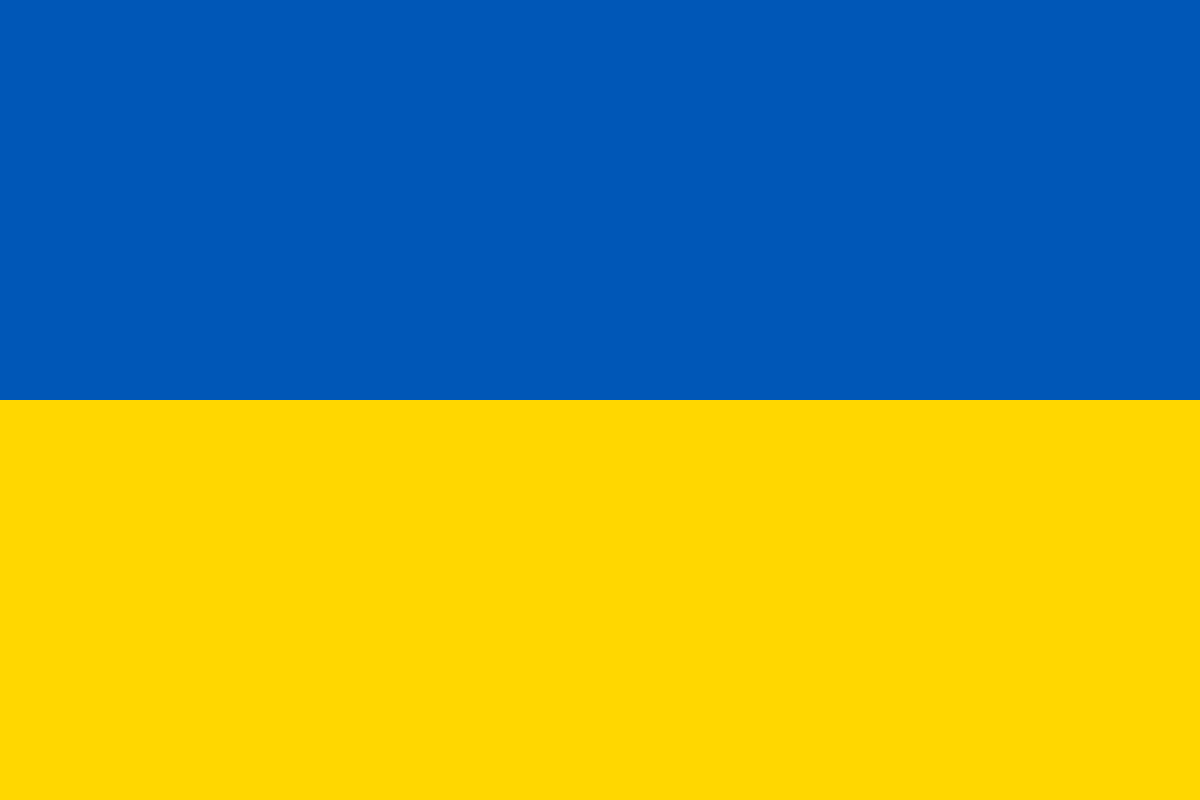

Ukraine in the World

Ukraine - Introduction 2012
top of pageBackground: Ukraine was the center of the first eastern Slavic state Kyivan Rus which during the 10th and 11th centuries was the largest and most powerful state in Europe. Weakened by internecine quarrels and Mongol invasions Kyivan Rus was incorporated into the Grand Duchy of Lithuania and eventually into the Polish-Lithuanian Commonwealth. The cultural and religious legacy of Kyivan Rus laid the foundation for Ukrainian nationalism through subsequent centuries. A new Ukrainian state the Cossack Hetmanate was established during the mid-17th century after an uprising against the Poles. Despite continuous Muscovite pressure the Hetmanate managed to remain autonomous for well over 100 years. During the latter part of the 18th century most Ukrainian ethnographic territory was absorbed by the Russian Empire. Following the collapse of czarist Russia in 1917 Ukraine was able to achieve a short-lived period of independence (1917-20) but was reconquered and forced to endure a brutal Soviet rule that engineered two forced famines (1921-22 and 1932-33) in which over 8 million died. In World War II German and Soviet armies were responsible for some 7 to 8 million more deaths. Although final independence for Ukraine was achieved in 1991 with the dissolution of the USSR democracy and prosperity remained elusive as the legacy of state control and endemic corruption stalled efforts at economic reform privatization and civil liberties. A peaceful mass protest 'Orange Revolution' in the closing months of 2004 forced the authorities to overturn a rigged presidential election and to allow a new internationally monitored vote that swept into power a reformist slate under Viktor YUSHCHENKO. Subsequent internal squabbles in the YUSHCHENKO camp allowed his rival Viktor YANUKOVYCH to stage a comeback in parliamentary elections and become prime minister in August of 2006. An early legislative election brought on by a political crisis in the spring of 2007 saw Yuliya TYMOSHENKO as head of an 'Orange' coalition installed as a new prime minister in December 2007. Viktor YANUKOVUYCH was elected president in a February 2010 run-off election that observers assessed as meeting most international standards. The following month Ukraine's parliament the Rada approved a vote of no-confidence prompting Yuliya TYMOSHENKO to resign from her post as prime minister. Ukraine held Rada elections widely condemned as fraudulent by Western observers in October 2012 returning a YANUKOVUYCH-aligned Party of Regions-led government back to power.
Ukraine - Geography 2012
top of pageLocation: Eastern Europe bordering the Black Sea between Poland Romania and Moldova in the west and Russia in the east
Geographic coordinates: 49 00 N 32 00 E
Map reference
Area
Rank: 46
Comparative: slightly smaller than Texas
Land boundaries
Coastline: 2,782 km
Maritime claims
Climate: temperate continental; Mediterranean only on the southern Crimean coast; precipitation disproportionately distributed highest in west and north lesser in east and southeast; winters vary from cool along the Black Sea to cold farther inland; summers are warm across the greater part of the country hot in the south
Terrain: most of Ukraine consists of fertile plains (steppes) and plateaus mountains being found only in the west (the Carpathians) and in the Crimean Peninsula in the extreme south
Elevation
Natural resources: iron ore coal manganese natural gas oil salt sulfur graphite titanium magnesium kaolin nickel mercury timber arable land
Land use
Land use
Irrigated land: 21,790 km² (2003)
Major rivers
Major watersheds area km²
Total water withdrawal
Total renewable water resources: 139.5 km³ (1997)
Natural hazards: NA
Geography
Note: strategic position at the crossroads between Europe and Asia; second-largest country in Europe
Ukraine - People 2012
top of pagePopulation: 44,854,065 (July 2012 est.)
Rank: 30
Growth rate: -0.625% (2012 est.)
Growth rate rank: 222
Below poverty line: 35% (2009)
Nationality
Ethnic groups: Ukrainian 77.8% Russian 17.3% Belarusian 0.6% Moldovan 0.5% Crimean Tatar 0.5% Bulgarian 0.4% Hungarian 0.3% Romanian 0.3% Polish 0.3% Jewish 0.2% other 1.8% (2001 census)
Languages: Ukrainian (official) 67% Russian 24% other (includes small Romanian- Polish- and Hungarian-speaking minorities) 9%
Religions: Ukrainian Orthodox - Kyiv Patriarchate 50.4% Ukrainian Orthodox - Moscow Patriarchate 26.1% Ukrainian Greek Catholic 8% Ukrainian Autocephalous Orthodox 7.2% Roman Catholic 2.2% Protestant 2.2% Jewish 0.6% other 3.2% (2006 est.)
Demographic profile
Age structure
Age structure
Dependency ratios
Median age
Population growth rate: -0.625% (2012 est.)
Rank: 222
Birth rate: 9.59 births/1000 population (2012 est.)
Rank: 199
Death rate: 15.76 deaths/1000 population (July 2012 est.)
Rank: 2
Net migration rate: -0.08 migrant(s)/1000 population (2012 est.)
Rank: 118
Population distribution
Urbanization
Major urban areas
Environment
Current issues: inadequate supplies of potable water; air and water pollution; deforestation; radiation contamination in the northeast from 1986 accident at Chornobyl' Nuclear Power Plant
Air pollutants
Sex ratio
Mothers mean age at first birth
Maternal mortality ratio
Infant mortality rate
Rank: 154
Life expectancy at birth
Rank: 154
Total fertility rate: 1.29 children born/woman (2012 est.)
Rank: 214
Contraceptive prevalence rate
Drinking water source
Current health expenditure
Physicians density: 3.125 physicians/1000 population (2006)
Hospital bed density: 8.73 beds/1000 population (2006)
Sanitation facility access:
urban: 97% of population
rural: 90% of population
total: 95% of population
rural: 90% of population
total: 95% of population
Unimproved:
urban: 3% of population
rural: 10% of population
total: 5% of population
rural: 10% of population
total: 5% of population
Hiv/Aids
Adult prevalence rate: 1.1% (2009 est.)
Adult prevalence rate rank: 45
People living with hivaids: 350,000 (2009 est.)
People living with hivaids rank: 17
Deaths: 24,000 (2009 est.)
Deaths rank: 15
Major infectious diseases
Obesity adult prevalence rate
Alcohol consumption
Tobacco use
Children under the age of 5 years underweight: 4.1% (2000)
Rank: 93
Education expenditures: 5.3% of GDP (2007)
Rank: 48
Literacy
School life expectancy primary to tertiary education
Youth unemployment
Ukraine - Government 2012
top of pageCountry name
Government type: republic
Capital
Administrative divisions: 24 provinces (oblasti singular - oblast') 1 autonomous republic* (avtonomna respublika) and 2 municipalities (mista singular - misto) with oblast status**; Cherkasy Chernihiv Chernivtsi Crimea or Avtonomna Respublika Krym* (Simferopol') Dnipropetrovs'k Donets'k Ivano-Frankivs'k Kharkiv Kherson Khmel'nyts'kyy Kirovohrad Kyiv** Kyiv Luhans'k L'viv Mykolayiv Odesa Poltava Rivne Sevastopol'** Sumy Ternopil' Vinnytsya Volyn' (Luts'k) Zakarpattya (Uzhhorod) Zaporizhzhya Zhytomyr
Dependent areas
Independence: 24 August 1991 (from the Soviet Union); notable earlier dates: ca. A.D. 982 (VOLODYMYR I consolidates Kyivan Rus) 1648 (establishment of Cossack Hetmanate)
National holiday: Independence Day 24 August (1991); note - 22 January 1918 the day Ukraine first declared its independence (from Soviet Russia) and the day the short-lived Western and Greater (Eastern) Ukrainian republics united (1919) is now celebrated as Unity Day
Constitution: adopted 28 June 1996
Legal system: civil law system; judicial review of legislative acts
International law organization participation: has not submitted an ICJ jurisdiction declaration; non-party state to the ICCt
Citizenship
Suffrage: 18 years of age; universal
Executive branch
Legislative branch: unicameral Supreme Council or Verkhovna Rada (450 seats; 50% of seats allocated on a proportional basis to those parties that gain 5% or more of the national electoral vote and 50% to members elected in single mandate districts; members serve five-year terms)
Judicial branch: Supreme Court; Constitutional Court
Political parties and leaders: Batkivshchyna [Yuliya TYMOSHENKO]; Communist Party of Ukraine or CPU [Petro SYMONENKO]; European Party of Ukraine [Mykola KATERYNCHUK]; Front of Change [Arseniy YATSENYUK]; Our Ukraine [Valentyn NALYVAICHENKO]; Party of Industrialists and Entrepreneurs [Anatoliy KINAKH]; Party of Regions [Mykola AZAROV chairman]; Party of the Defenders of the Fatherland [Yuriy KARMAZIN]; People's Movement of Ukraine (Rukh) [Borys TARASYUK]; People's Party [Volodymyr LYTVYN]; Peoples' Self-Defense Party [Oleh NOVIKOV]; Progressive Socialist Party [Natalya VITRENKO]; Radical Party [Oleh LYASHKO]; Reforms and Order Party [Viktor PYNZENYK]; Republican Party Sobor [Anatoliy MATVIYENKO]; Social Democratic Party [Yevhen KORNICHUK]; Social Democratic Party (United) or SDPU(o) [Yuriy ZAHORODNIY]; Socialist Party of Ukraine or SPU [Oleksandr MOROZ]; Svoboda [Oleh TYAHNYBOK]; Ukrainian Democratic Alliance for Reforms or UDAR [Vitaliy KLYCHKO]; Ukrainian People's Party [Yuriy KOSTENKO]; Union [Lev MIRIMSKY]; United Center [Viktor BALOHA]; Viche [Inna BOHOSLOVSKA]
International organization participation: Australia Group BSEC CBSS (observer) CD CE CEI CICA (observer) CIS (participating member has not signed the 1993 CIS charter although it participates in meetings) EAEC (observer) EAPC EBRD FAO GCTU GUAM IAEA IBRD ICAO ICC (national committees) ICRM IDA IFC IFRCS IHO ILO IMF IMO IMSO Interpol IOC IOM IPU ISO ITU ITUC (NGOs) LAIA (observer) MIGA MONUSCO NAM (observer) NSG OAS (observer) OIF (observer) OPCW OSCE PCA PFP SELEC (observer) UN UNCTAD UNESCO UNIDO UNMIL UNMISS UNWTO UPU WCO WFTU (NGOs) WHO WIPO WMO WTO ZC
Diplomatic representation
Flag description: two equal horizontal bands of azure (top) and golden yellow represent grain fields under a blue sky
National symbols: trident (tryzub)
National anthem
National heritage
Ukraine - Economy 2012
top of pageEconomy overview: After Russia the Ukrainian republic was the most important economic component of the former Soviet Union producing about four times the output of the next-ranking republic. Its fertile black soil generated more than one-fourth of Soviet agricultural output and its farms provided substantial quantities of meat milk grain and vegetables to other republics. Likewise its diversified heavy industry supplied the unique equipment (for example large diameter pipes) and raw materials to industrial and mining sites (vertical drilling apparatus) in other regions of the former USSR. Shortly after independence in August 1991 the Ukrainian Government liberalized most prices and erected a legal framework for privatization but widespread resistance to reform within the government and the legislature soon stalled reform efforts and led to some backtracking. Output by 1999 had fallen to less than 40% of the 1991 level. Ukraine's dependence on Russia for energy supplies and the lack of significant structural reform have made the Ukrainian economy vulnerable to external shocks. Ukraine depends on imports to meet about three-fourths of its annual oil and natural gas requirements and 100% of its nuclear fuel needs. After a two-week dispute that saw gas supplies cutoff to Europe Ukraine agreed to 10-year gas supply and transit contracts with Russia in January 2009 that brought gas prices to 'world' levels. The strict terms of the contracts have further hobbled Ukraine's cash-strapped state gas company Naftohaz. Outside institutions - particularly the IMF - have encouraged Ukraine to quicken the pace and scope of reforms. Ukrainian Government officials eliminated most tax and customs privileges in a March 2005 budget law bringing more economic activity out of Ukraine's large shadow economy but more improvements are needed including fighting corruption developing capital markets and improving the legislative framework. Ukraine's economy was buoyant despite political turmoil between the prime minister and president until mid-2008. Real GDP growth exceeded 7% in 2006-07 fueled by high global prices for steel - Ukraine's top export - and by strong domestic consumption spurred by rising pensions and wages. A drop in steel prices and Ukraine's exposure to the global financial crisis due to aggressive foreign borrowing lowered growth in 2008. Ukraine reached an agreement with the IMF for a $16.4 billion Stand-By Arrangement in November 2008 to deal with the economic crisis but the program quickly stalled due to the Ukrainian Government's lack of progress in implementing reforms. The economy contracted nearly 15% in 2009 among the worst economic performances in the world. In April 2010 Ukraine negotiated a price discount on Russian gas imports in exchange for extending Russia's lease on its naval base in Crimea. In August 2010 Ukraine under the YANUKOVYCH Administration reached a new agreement with the IMF for a $15.1 billion Stand-By Agreement. Economic growth resumed in 2010 and 2011 buoyed by exports but slowed in 2012. After initial disbursements the IMF program stalled in early 2011 due to the Ukrainian Government's lack of progress in implementing key gas sector reforms namely gas tariff increases.
Real gdp purchasing power parity:
$334.7 billion (2011 est.)
$318.3 billion (2010 est.)
$318.3 billion (2010 est.)
Rank: 39
Real gdp growth rate:
5.2% (2011 est.)
4.1% (2010 est.)
4.1% (2010 est.)
Rank: 108
Real gdp per capita:
$7,300 (2011 est.)
$7,000 (2010 est.)
$7,000 (2010 est.)
Rank: 133
Gross national saving
Gdp composition by sector of origin
Gdp composition by end use
Gdp composition by sector of origin
Agriculture products: grain sugar beets sunflower seeds vegetables; beef milk
Industries
Industrial production growth rate: 7.6% (2011 est.)
Rank: 32
Labor force: 22.19 million (2012 est.)
Rank: 30
Labor force
Unemployment rate: 7.9% (2011 est.)
Rank: 99
Youth unemployment
Population below poverty line: 35% (2009)
Gini index
Household income or consumption by percentage share
Distribution of family income gini index: 29 (1999)
Rank: 123
Budget
Surplus or deficit: -3.6% of GDP (2012 est.)
Surplus or deficit rank: 118
Taxes and other revenues: 29.5% of GDP (2012 est.)
Rank: 102
Public debt: 35.9% of GDP (2011 est.)
Rank: 93
Revenue
Fiscal year: calendar year
Inflation rate consumer prices: 8% (2011 est.)
Rank: 29
Central bank discount rate: 10.25% (31 December 2009 est.)
Rank: 24
Commercial bank prime lending rate: 15.95% (31 December 2011 est.)
Rank: 36
Stock of narrow money: $38.93 billion (31 December 2011 est.)
Rank: 53
Stock of broad money: $85.33 billion (31 December 2011 est.)
Rank: 57
Stock of domestic credit: $121 billion (31 December 2011 est.)
Rank: 51
Market value of publicly traded shares:
$39.46 billion (31 December 2010)
$16.79 billion (31 December 2009)
$16.79 billion (31 December 2009)
Rank: 53
Current account balance: -$10.25 billion (2011 est.)
Rank: 176
Exports: $69.42 billion (2011 est.)
Rank: 51
Commodities: ferrous and nonferrous metals fuel and petroleum products chemicals machinery and transport equipment food products
Partners: Russia 27% Turkey 5.8% Italy 4.6% (2011)
Imports: $85.67 billion (2011 est.)
Rank: 37
Commodities: energy machinery and equipment chemicals
Partners: Russia 30.5% Germany 9% China 8.9% Belarus 5.5% Poland 5.3% (2011)
Reserves of foreign exchange and gold: $31.79 billion (31 December 2011 est.)
Rank: 52
Debt external: $126.2 billion (31 December 2011 est.)
Rank: 40
Stock of direct foreign investment at home: $49.36 billion (31 December 2011 est.)
Rank: 53
Stock of direct foreign investment abroad: $6.898 billion (31 December 2011 est.)
Rank: 56
Exchange rates:
hryvnia (UAH) per US dollar -
8.076 (2012 est.)
7.9676 (2011 est.)
7.9356 (2010 est.)
7.7912 (2009)
4.9523 (2008)
8.076 (2012 est.)
7.9676 (2011 est.)
7.9356 (2010 est.)
7.7912 (2009)
4.9523 (2008)
Ukraine - Energy 2012
top of pageElectricity
Production: 164.5 billion kWh (2009 est.)
Production rank: 23
Consumption: 138.3 billion kWh (2009 est.)
Consumption rank: 23
Exports: 7.961 billion kWh (2009 est.)
Exports rank: 24
Imports: 1.894 billion kWh (2009 est.)
Imports rank: 50
Installed generating capacity: 54.38 million kW (2009 est.)
Installed generating capacity rank: 18
Generation sources fossil fuels: 64.4% of total installed capacity (2009 est.)
Generation sources fossil fuels rank: 131
Generation sources nuclear: 25.4% of total installed capacity (2009 est.)
Generation sources nuclear rank: 3
Generation sources hydroelectricity: 10% of total installed capacity (2009 est.)
Generation sources hydroelectricity rank: 115
Generation sources other renewable sources: 0.1% of total installed capacity (2009 est.)
Generation sources other renewable sources rank: 90
Coal
Petroleum
Petroleum total petroleum production: 73,180 bbl/day (2011 est.)
Petroleum total petroleum production rank: 52
Crude oil exports: 160 bbl/day (2009 est.)
Crude oil exports rank: 69
Crude oil imports: 143,600 bbl/day (2009 est.)
Crude oil imports rank: 41
Crude oil proven reserves: 395 million bbl (1 January 2012 est.)
Crude oil proven reserves rank: 55
Crude oil
Refined petroleum
Products production: 262,200 bbl/day (2008 est.)
Products production rank: 48
Products consumption: 320,600 bbl/day (2011 est.)
Products consumption rank: 40
Products exports: 76,140 bbl/day (2008 est.)
Products exports rank: 48
Products imports: 148,900 bbl/day (2008 est.)
Products imports rank: 39
Natural gas
Production: 19.36 billion m³ (2010 est.)
Production rank: 34
Consumption: 53.16 billion m³ (2010 est.)
Consumption rank: 16
Exports: 2.6 billion m³ (2010 est.)
Exports rank: 37
Imports: 36.4 billion m³ (2010 est.)
Imports rank: 12
Proven reserves: 1.104 trillion m³ (1 January 2012 est.)
Proven reserves rank: 26
Carbon dioxide emissions
From consumption of energy: 275.5 million Mt (2010 est.)
From consumption of energy rank: 24
Energy consumption per capita
Ukraine - Communication 2012
top of pageTelephones
Main lines in use: 12.681 million (2011)
Main lines in use rank: 19
Mobile cellular: 55.576 million (2011)
Mobile cellular rank: 23
Telephone system
Broadcast media: Ukraine's state-controlled nationwide TV broadcast channel (UT1) and a number of privately-owned TV networks provide basic TV coverage; multi-channel cable and satellite TV services are available; Russian television broadcasts have a small audience nationwide but larger audiences in the eastern and southern regions; Ukraine's radio broadcast market a mix of independent and state-owned networks is comprised of some 300 stations (2007)
Internet
Country code: .ua
Hosts: 2.173 million (2012)
Hosts rank: 37
Users: 7.77 million (2009)
Users rank: 38
Broadband fixed subscriptions
Ukraine - Military 2012
top of pageMilitary expenditures: 1.4% of GDP (2005 est.)
Rank: 105
Military and security forces
Military service age and obligation: 18-25 years of age for compulsory and voluntary military service; conscript service obligation - 12 months for Army and Air Force 18 months for Navy (2010)
Space program
Terrorist groups
Ukraine - Transportation 2012
top of pageNational air transport system
Civil aircraft registration country code prefix
Airports: 412 (2012)
Rank: 21
Heliports: 7 (2012)
Pipelines: gas 36,493 km; oil 4,514 km; refined products 4,211 km (2010)
Railways
Rank: 12
Roadways
Rank: 29
Waterways: 1672 km (most on Dnieper River) (2012)
Rank: 47
Merchant marine
Rank: 43
Ports and terminals: Feodosiya (Theodosia) Illichivsk Mariupol' Mykolayiv Odesa Yuzhnyy
Ukraine - Transnational issues 2012
top of pageDisputes international: 1997 boundary delimitation treaty with Belarus remains unratified due to unresolved financial claims stalling demarcation and reducing border security; delimitation of land boundary with Russia is complete with preparations for demarcation underway; the dispute over the boundary between Russia and Ukraine through the Kerch Strait and Sea of Azov remains unresolved despite a December 2003 framework agreement and ongoing expert-level discussions; Moldova and Ukraine operate joint customs posts to monitor transit of people and commodities through Moldova's break-away Transnistria Region which remains under the auspices of an Organization for Security and Cooperation in Europe-mandated peacekeeping mission comprised of Moldovan Transnistrian Russian and Ukrainian troops; the ICJ ruled largely in favor of Romania in its dispute submitted in 2004 over Ukrainian-administered Zmiyinyy/Serpilor (Snake) Island and Black Sea maritime boundary delimitation; Romania opposes Ukraine's reopening of a navigation canal from the Danube border through Ukraine to the Black Sea
Refugees and internally displaced persons
Illicit drugs: limited cultivation of cannabis and opium poppy mostly for CIS consumption; some synthetic drug production for export to the West; limited government eradication program; used as transshipment point for opiates and other illicit drugs from Africa Latin America and Turkey to Europe and Russia; Ukraine has improved anti-money-laundering controls resulting in its removal from the Financial Action Task Force's (FATF's) Noncooperative Countries and Territories List in February 2004; Ukraine's anti-money-laundering regime continues to be monitored by FATF

You found a piece of the puzzle
Please click here to complete it
Please click here to complete it
