Statistical information Ecuador 2013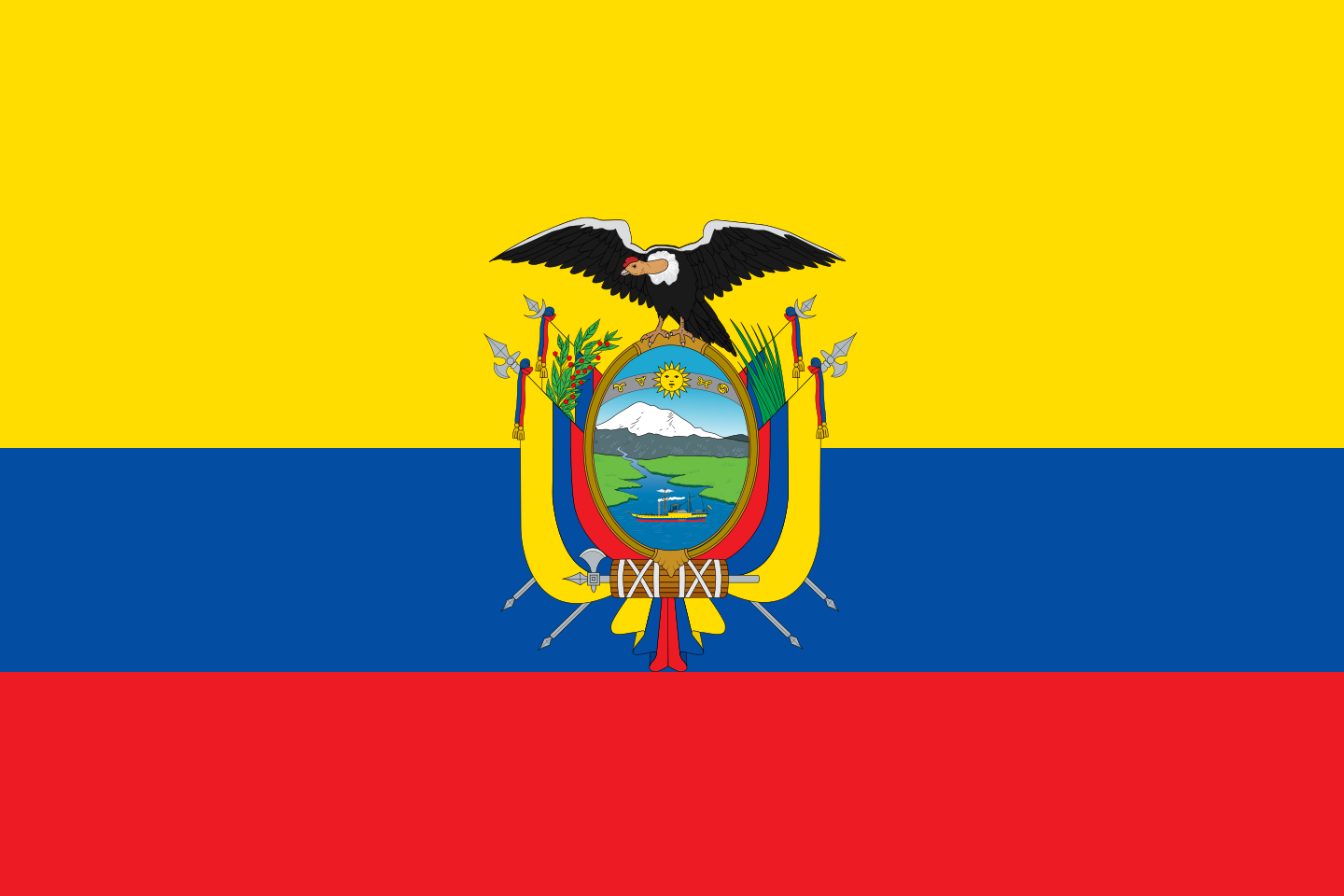

Ecuador in the World

Ecuador - Introduction 2013
top of pageBackground: What is now Ecuador formed part of the northern Inca Empire until the Spanish conquest in 1533. Quito became a seat of Spanish colonial government in 1563 and part of the Viceroyalty of New Granada in 1717. The territories of the Viceroyalty - New Granada (Colombia) Venezuela and Quito - gained their independence between 1819 and 1822 and formed a federation known as Gran Colombia. When Quito withdrew in 1830 the traditional name was changed in favor of the 'Republic of the Equator.' Between 1904 and 1942 Ecuador lost territories in a series of conflicts with its neighbors. A border war with Peru that flared in 1995 was resolved in 1999. Although Ecuador marked 30 years of civilian governance in 2004 the period was marred by political instability. Protests in Quito contributed to the mid-term ouster of three of Ecuador's last four democratically elected presidents. In late 2008 voters approved a new constitution Ecuador's 20th since gaining independence. General elections were held in February 2013 and voters re-elected President Rafael CORREA.
Ecuador - Geography 2013
top of pageLocation: Western South America bordering the Pacific Ocean at the Equator between Colombia and Peru
Geographic coordinates: 2 00 S 77 30 W
Map reference
Area
Rank: 74
Land: 276,841 km²
Water: 6,720 km²
Comparative: slightly smaller than Nevada
Land boundaries
Border countries: (2) Colombia 590 km; Peru 1420 km
Coastline: 2,237 km
Maritime claims
Continental shelf: 100 nm from 2,500-m isobath
Climate: tropical along coast becoming cooler inland at higher elevations; tropical in Amazonian jungle lowlands
Terrain: coastal plain (costa) inter-Andean central highlands (sierra) and flat to rolling eastern jungle (oriente)
Elevation
Extremes highest point: Chimborazo 6,267 m
Natural resources: petroleum fish timber hydropower
Land use
Land use
Permanent crops: 5.38%
Other: 90.11% (2011)
Irrigated land: 8,534 km² (2003)
Major rivers
Major watersheds area km²
Total water withdrawal
Total renewable water resources: 424.4 km³ (2011)
Natural hazards: frequent earthquakes; landslides; volcanic activity; floods; periodic droughts
Volcanism: volcanic activity concentrated along the Andes Mountains; Sangay (elev. 5,230 m) which erupted in 2010 is mainland Ecuador's most active volcano; other historically active volcanoes in the Andes include Antisana Cayambe Chacana Cotopaxi Guagua Pichincha Reventador Sumaco and Tungurahua; Fernandina (elev. 1476 m) a shield volcano that last erupted in 2009 is the most active of the many Galapagos volcanoes; other historically active Galapagos volcanoes include Wolf Sierra Negra Cerro Azul Pinta Marchena and Santiago
Geography
Note: Cotopaxi in Andes is highest active volcano in world
Ecuador - People 2013
top of pagePopulation: 15,439,429 (July 2013 est.)
Rank: 68
Growth rate: 1.4% (2013 est.)
Growth rate rank: 87
Below poverty line: 27.3% (December 2012 est)
Nationality
Adjective: Ecuadorian
Ethnic groups: mestizo (mixed Amerindian and white) 71.9% Montubio 7.4% Afroecuadorian 7.2% Amerindian 7% white 6.1% other 0.4% (2010 census)
Languages: Spanish (official) indigenous (Quechua Shuar)
Religions: Roman Catholic 95% other 5%
Demographic profile:
Ecuador's high poverty and income inequality most affect indigenous mixed race and rural populations. The government has increased its social spending to ameliorate these problems but critics question the efficiency and implementation of its national development plan. Nevertheless the conditional cash transfer program which requires participants' children to attend school and have medical check-ups has helped improve educational attainment and healthcare among poor children. Ecuador is stalled at above replacement level fertility and the population most likely will keep growing rather than stabilize.
An estimated 2 to 3 million Ecuadorians live abroad but increased unemployment in key receiving countries - Spain the United States and Italy - is slowing emigration and increasing the likelihood of returnees to Ecuador. The first large-scale emigration of Ecuadorians occurred between 1980 and 2000 when an economic crisis drove Ecuadorians from southern provinces to New York City where they had trade contacts. A second nationwide wave of emigration in the late 1990s was caused by another economic downturn political instability and a currency crisis. Spain was the logical destination because of its shared language and the wide availability of low-skilled informal jobs at a time when increased border surveillance made illegal migration to the US difficult. Ecuador has a small but growing immigrant population and is Latin America's top recipient of refugees; 98% are neighboring Colombians fleeing violence in their country.
An estimated 2 to 3 million Ecuadorians live abroad but increased unemployment in key receiving countries - Spain the United States and Italy - is slowing emigration and increasing the likelihood of returnees to Ecuador. The first large-scale emigration of Ecuadorians occurred between 1980 and 2000 when an economic crisis drove Ecuadorians from southern provinces to New York City where they had trade contacts. A second nationwide wave of emigration in the late 1990s was caused by another economic downturn political instability and a currency crisis. Spain was the logical destination because of its shared language and the wide availability of low-skilled informal jobs at a time when increased border surveillance made illegal migration to the US difficult. Ecuador has a small but growing immigrant population and is Latin America's top recipient of refugees; 98% are neighboring Colombians fleeing violence in their country.
Age structure
Age structure
15-24 years: 18.7% (male 1,462,025/female 1,427,181)
25-54 years: 38.7% (male 2,908,224/female 3,061,896)
55-64 years: 6.9% (male 524,574/female 540,074)
65 years and over: 6.7% (male 496,557/female 540,435) (2013 est.)
Dependency ratios
Youth dependency ratio: 47.2 %
Elderly dependency ratio: 10.3 %
Potential support ratio: 9.8 (2013)
Median age
Male: 25.7 years
Female: 26.9 years (2013 est.)
Population growth rate: 1.4% (2013 est.)
Rank: 87
Birth rate: 19.23 births/1000 population (2013 est.)
Rank: 92
Death rate: 5.03 deaths/1000 population (2013 est.)
Rank: 185
Net migration rate: -0.25 migrant(s)/1000 population (2013 est.)
Rank: 122
Population distribution
Urbanization
Rate of urbanization: 2% annual rate of change (2010-15 est.)
Major urban areas
Population: Guayaquil 2.634 million; QUITO (capital) 1.622 million (2011)
Environment
Current issues: deforestation; soil erosion; desertification; water pollution; pollution from oil production wastes in ecologically sensitive areas of the Amazon Basin and Galapagos Islands
International agreements signed but not ratified: none of the selected agreements
Air pollutants
Sex ratio
0-14 years: 1.04 male(s)/female
15-24 years: 1.02 male(s)/female
25-54 years: 0.95 male(s)/female
55-64 years: 0.98 male(s)/female
65 years and over: 0.92 male(s)/female
Total population: 0.99 male(s)/female (2013 est.)
Mothers mean age at first birth: 21.8 (2004 est.)
Maternal mortality ratio
Infant mortality rate
Rank: 98
Male: 21.73 deaths/1000 live births
Female: 15.07 deaths/1000 live births (2013 est.)
Life expectancy at birth
Rank: 84
Male: 73.2 years
Female: 79.25 years (2013 est.)
Total fertility rate: 2.33 children born/woman (2013 est.)
Rank: 95
Contraceptive prevalence rate: 72.7% (2004)
Drinking water source:
urban: 96% of population
rural: 89% of population
total: 94% of population
urban: 4% of population
rural: 11% of population
total: 6% of population (2010 est.)
rural: 89% of population
total: 94% of population
urban: 4% of population
rural: 11% of population
total: 6% of population (2010 est.)
Current health expenditure
Physicians density: 1.69 physicians/1000 population (2009)
Hospital bed density: 1.6 beds/1000 population (2010)
Sanitation facility access:
urban: 96% of population
rural: 84% of population
total: 92% of population
urban: 4% of population
rural: 16% of population
total: 8% of population (2010 est.)
rural: 84% of population
total: 92% of population
urban: 4% of population
rural: 16% of population
total: 8% of population (2010 est.)
Hiv/Aids
Adult prevalence rate: 0.4% (2009 est.)
Adult prevalence rate rank: 74
People living with hivaids: 37,000 (2009 est.)
People living with hivaids rank: 63
Deaths: 2,200 (2009 est.)
Deaths rank: 54
Major infectious diseases
Food or waterborne diseases: bacterial diarrhea hepatitis A and typhoid fever
Vectorborne diseases: dengue fever and malaria (2013)
Obesity adult prevalence rate: 21.4% (2008)
Rank: 86
Alcohol consumption
Tobacco use
Children under the age of 5 years underweight: 6.2% (2004)
Rank: 80
Education expenditures: 4.9% of GDP (2010)
Rank: 79
Literacy
Total population: 91.6%
Male: 93.1%
Female: 90.2% (2011 est.)
School life expectancy primary to tertiary education
Male: 13 years
Female: 14 years (2008)
Youth unemployment
Ecuador - Government 2013
top of pageCountry name
Conventional short form: Ecuador
Local long form: Republica del Ecuador
Local short form: Ecuador
Government type: republic
Capital
Geographic coordinates: 0 13 S 78 30 W
Time difference: UTC-5 (same time as Washington DC during Standard Time)
Administrative divisions: 24 provinces (provincias singular - provincia); Azuay Bolivar Canar Carchi Chimborazo Cotopaxi El Oro Esmeraldas Galapagos Guayas Imbabura Loja Los Rios Manabi Morona-Santiago Napo Orellana Pastaza Pichincha Santa Elena Santo Domingo de los Tsachilas Sucumbios Tungurahua Zamora-Chinchipe
Dependent areas
Independence: 24 May 1822 (from Spain)
National holiday: Independence Day (independence of Quito) 10 August (1809)
Constitution: many previous; latest approved 20 October 2008; amended 2011 (2011)
Legal system: civil law based on the Chilean civil code with modifications
International law organization participation: has not submitted an ICJ jurisdiction declaration; accepts ICCt jurisdiction
Citizenship
Suffrage: 18-65 years of age universal and compulsory; 16-18 over 65 and other eligible voters optional
Executive branch
Head of government: President Rafael CORREA Delgado (since 15 January 2007); Vice President Lenin MORENO Garces (since 15 January 2007)
Cabinet: Cabinet appointed by the president
Elections: the president and vice president elected on the same ticket by popular vote for a four-year term and can be re-elected for another consecutive term; election last held on 17 February 2013 (next to be held in 2017)
Election results: President Rafael CORREA Delgado reelected president; percent of vote - Rafael CORREA Delgado 57.2% Guillermo LASSO 22.7% Lucio GUTIERREZ 6.8% Mauricio RODAS 3.9% other 9.4%
Legislative branch: unicameral National Assembly or Asamblea Nacional (137 seats; members are elected through a party-list proportional representation system to serve four-year terms)
Elections: last held on 17 February 2013 (next to be held in 2017)
Election results: percent of vote by party - NA; seats by party - PAIS 100 CREO 11 PSC 6 AVANZA 5 MUPP 5 PSP 5 other 5; note - defections by members of National Assembly are commonplace resulting in frequent changes in the numbers of seats held by the various parties
Judicial branch
Judge selection and term of office: justices of National Court of Justice elected by the Judiciary Council a 9-member independent body of professionals; judges elected for 9-year non-renewable terms with one-third of the judges renewed every 3 years; Constitutional Court judges appointed by the National Assembly from candidates selected by the president Supreme Court and other government officials; judges appointed for 2-year terms
Subordinate courts: Fiscal Tribunal; Superior Court (one for each province); lower provincial and cantonal courts
Political parties and leaders:
Roldosist Party or PRE [Abdala BUCARAM Pulley director]
Social Christian Party or PSC [Pascual DEL CIOPPO]
Socialist Party
Society United for More Action or SUMA [Mauricio RODAS]
Warrior's Spirit Movement [Jaime NEBOT]
Social Christian Party or PSC [Pascual DEL CIOPPO]
Socialist Party
Society United for More Action or SUMA [Mauricio RODAS]
Warrior's Spirit Movement [Jaime NEBOT]
International organization participation: CAN CD CELAC FAO G-11 G-77 IADB IAEA IBRD ICAO ICC (national committees) ICRM IDA IFAD IFC IFRCS IHO ILO IMF IMO Interpol IOC IOM IPU ISO ITSO ITU ITUC (NGOs) LAES LAIA Mercosur (associate) MIGA MINUSTAH NAM OAS OPANAL OPCW OPEC PCA UN UNAMID UNASUR UNCTAD UNESCO UNHCR UNIDO Union Latina UNMIL UNMISS UNOCI UNWTO UPU WCO WFTU (NGOs) WHO WIPO WMO WTO
Diplomatic representation
In the us chancery: 1050 30th Street NW Washington DC 20,007
In the us telephone: [1] (202) 465-8,140
In the us FAX: [1] (202) 333-2,893
In the us consulate general: Atlanta Boston Chicago Houston Los Angeles Miami New Haven (CT) New Orleans New York Newark (NJ) Phoenix San Francisco San Juan (Puerto Rico)
From the us embassy: Avenida Avigiras E12-170 y Avenida Eloy Alfaro Quito
From the us mailing address: Avenida Guayacanes N52-205 y Avenida Avigiras
From the us telephone: [593] (2) 398-5,000
From the us FAX: [593] (2) 398-5,100
From the us consulate general: Guayaquil
Flag description: three horizontal bands of yellow (top double width) blue and red with the coat of arms superimposed at the center of the flag; the flag retains the three main colors of the banner of Gran Columbia the South American republic that broke up in 1830; the yellow color represents sunshine grain and mineral wealth blue the sky sea and rivers and red the blood of patriots spilled in the struggle for freedom and justice
National symbols: Andean condor
National anthem
Lyrics and music: Juan Leon MERA/Antonio NEUMANE
National heritage
Ecuador - Economy 2013
top of pageEconomy overview: Ecuador is substantially dependent on its petroleum resources which have accounted for more than half of the country's export earnings and approximately two-fifths of public sector revenues in recent years. In 1999/2000 Ecuador's economy suffered from a banking crisis with GDP contracting by 5.3% and poverty increasing significantly. In March 2000 the Congress approved a series of structural reforms that also provided for the adoption of the US dollar as legal tender. Dollarization stabilized the economy and positive growth returned in the years that followed helped by high oil prices remittances and increased non-traditional exports. From 2002-06 the economy grew an average of 4.3% per year the highest five-year average in 25 years. After moderate growth in 2007 the economy reached a growth rate of 6.4% in 2008 buoyed by high global petroleum prices and increased public sector investment. President Rafael CORREA who took office in January 2007 defaulted in December 2008 on Ecuador's sovereign debt which with a total face value of approximately US$3.2 billion represented about 30% of Ecuador's public external debt. In May 2009 Ecuador bought back 91% of its 'defaulted' bonds via an international reverse auction. Economic policies under the CORREA administration - for example an announcement in late 2009 of its intention to terminate 13 bilateral investment treaties including one with the United States - have generated economic uncertainty and discouraged private investment. The Ecuadorian economy slowed to 1% growth in 2009 due to the global financial crisis and to the sharp decline in world oil prices and remittance flows. Growth picked up to a 3.3% rate in 2010 and nearly 8% in 2011 before falling to 5% in 2012. China has become Ecuador's largest foreign lender since Quito defaulted in 2008 allowing the government to maintain a high rate of social spending; Ecuador contracted with the Chinese government for more than $9 billion in oil for cash and project loans as of December 2012.
Real gdp purchasing power parity:
$142.2 billion (2011 est.)
$131.9 billion (2010 est.)
$131.9 billion (2010 est.)
Rank: 62
Real gdp growth rate:
7.8% (2011 est.)
3% (2010 est.)
3% (2010 est.)
Rank: 67
Real gdp per capita:
$9,900 (2011 est.)
$9,300 (2010 est.)
$9,300 (2010 est.)
Rank: 117
Gross national saving:
27% of GDP (2011 est.)
25% of GDP (2010 est.)
25% of GDP (2010 est.)
Rank: 36
Gdp composition by sector of origin
Gdp composition by end use
Government consumption: 13.5%
Investment in fixed capital: 26.6%
Investment in inventories: 0.9%
Exports of goods and services: 31.2%
Imports of goods and services: -33.2%: (2012 est.)
Gdp composition by sector of origin
Industry: 35.2%
Services: 58.8% (2012 est.)
Agriculture products: bananas coffee cocoa rice potatoes manioc (tapioca) plantains sugarcane; cattle sheep pigs beef pork dairy products; fish shrimp; balsa wood
Industries: petroleum food processing textiles wood products chemicals
Industrial production growth rate: 5.6%
Rank: 48
Labor force: 4.769 million (2012 est.)
Rank: 81
By occupation industry: 18.8%
By occupation services: 53.6% (2010 est.)
Labor force
Unemployment rate: 6% (2011 est.)
Rank: 43
Youth unemployment
Population below poverty line: 27.3% (December 2012 est)
Gini index
Household income or consumption by percentage share
Highest 10: 38.3%
Distribution of family income gini index: 50.5 (2006)
Rank: 27
Budget
Expenditures: $35.48 billion (2012 est.)
Surplus or deficit: -1.1% of GDP (2012 est.)
Surplus or deficit rank: 65
Taxes and other revenues: 41.7% of GDP (2012 est.)
Rank: 36
Public debt: 17.8% of GDP (2011 est.)
Rank: 129
Revenue
Fiscal year: calendar year
Inflation rate consumer prices: 4.5% (2011 est.)
Rank: 146
Central bank discount rate: 8.68% (31 December 2010)
Rank: 30
Commercial bank prime lending rate: 8.35% (31 December 2011 est.)
Rank: 112
Stock of narrow money: $6.943 billion (31 December 2011 est.)
Rank: 86
Stock of broad money: $22.18 billion (31 December 2010 est.)
Rank: 78
Stock of domestic credit: $20.05 billion (31 December 2011 est.)
Rank: 74
Market value of publicly traded shares:
$5.263 billion (31 December 2010)
$4.248 billion (31 December 2009)
$4.248 billion (31 December 2009)
Rank: 83
Current account balance: $-225 million (2011 est.)
Rank: 78
Exports: $23.08 billion (2011 est.)
Rank: 72
Commodities: petroleum bananas cut flowers shrimp cacao coffee wood fish
Partners: US 37.3% Chile 8.1% Peru 6.5% Japan 4.5% Russia 4.5% Colombia 4% (2012)
Imports: $23.24 billion (2011 est.)
Rank: 70
Commodities: industrial materials fuels and lubricants nondurable consumer goods
Partners: US 28.4% China 11.3% Colombia 8.8% Peru 4.5% (2012)
Reserves of foreign exchange and gold: $2.958 billion (31 December 2011 est.)
Rank: 117
Debt external: $16.5 billion (31 December 2011 est.)
Rank: 81
Stock of direct foreign investment at home: $16.71 billion (31 December 2011 est.)
Rank: 73
Stock of direct foreign investment abroad: $6.33 billion (31 December 2011 est.)
Rank: 62
Exchange rates: the US dollar became Ecuador's currency in 2001
Ecuador - Energy 2013
top of pageElectricity
Production: 21.84 billion kWh (2011 est.)
Production rank: 70
Consumption: 14.92 billion kWh (2010 est.)
Consumption rank: 76
Exports: 14.1 million kWh (2010 est.)
Exports rank: 88
Imports: 1.3 billion kWh (2010 est.)
Imports rank: 60
Installed generating capacity: 5.243 million kW (2010 est.)
Installed generating capacity rank: 75
Generation sources fossil fuels: 55.3% of total installed capacity (2010 est.)
Generation sources fossil fuels rank: 142
Generation sources nuclear: 0% of total installed capacity (2010 est.)
Generation sources nuclear rank: 78
Generation sources hydroelectricity: 42.8% of total installed capacity (2010 est.)
Generation sources hydroelectricity rank: 57
Generation sources other renewable sources: 2% of total installed capacity (2010 est.)
Generation sources other renewable sources rank: 65
Coal
Petroleum
Petroleum total petroleum production: 504,500 bbl/day (2012 est.)
Petroleum total petroleum production rank: 31
Crude oil exports: 366,000 bbl/day (2012 est.)
Crude oil exports rank: 22
Crude oil imports: 154,000 bbl/day (2012 est.)
Crude oil imports rank: 39
Crude oil proven reserves: 8.24 billion bbl (1 January 2013 es)
Crude oil proven reserves rank: 19
Crude oil
Refined petroleum
Products production: 198,700 bbl/day (2012 est.)
Products production rank: 55
Products consumption: 280,000 bbl/day (2012 est.)
Products consumption rank: 45
Products exports: 28,000 bbl/day (2012 est.)
Products exports rank: 70
Products imports: 111,000 bbl/day (2012 est.)
Products imports rank: 49
Natural gas
Production: 240 million m³ (2011 est.)
Production rank: 76
Consumption: 330 million m³ (2010 est.)
Consumption rank: 99
Exports: 0 m³ (2011 est.)
Exports rank: 92
Imports: 25,000 m³ (2012 est.)
Imports rank: 77
Proven reserves: 6.994 billion m³ (1 January 2013 es)
Proven reserves rank: 86
Carbon dioxide emissions
From consumption of energy: 29.13 million Mt (2011 est.)
From consumption of energy rank: 76
Energy consumption per capita
Ecuador - Communication 2013
top of pageTelephones
Main lines in use: 2.31 million (2012)
Main lines in use rank: 54
Mobile cellular: 16.457 million (2012)
Mobile cellular rank: 56
Telephone system
Domestic: fixed-line services provided by multiple telecommunications operators; fixed-line teledensity stands at about 15 per 100 persons; mobile-cellular use has surged and subscribership has reached 100 per 100 persons
International: country code - 593; landing points for the PAN-AM and South America-1 submarine cables that provide links to the west coast of South America Panama Colombia Venezuela and extending onward to Aruba and the US Virgin Islands in the Caribbean; satellite earth station - 1 Intelsat (Atlantic Ocean) (2011)
Broadcast media: Ecuador has multiple TV networks and many local channels as well as more than 300 radio stations; many TV and radio stations are privately owned; the government owns or controls 5 national TV stations and multiple radio stations; broadcast media required by law to give the government free air time to broadcast programs produced by the state (2007)
Internet
Country code: .ec
Hosts: 170,538 (2012)
Hosts rank: 76
Users: 3.352 million (2009)
Users rank: 64
Broadband fixed subscriptions
Ecuador - Military 2013
top of pageMilitary expenditures: 2.3% of GDP (2012)
Rank: 60
Military and security forces
Military service age and obligation: 18 years of age for selective conscript military service; conscription has been suspended; 18 years of age for voluntary military service; Air Force 18-22 years of age Ecadorian birth requirement; 1-year service obligation (2012)
Space program
Terrorist groups
Ecuador - Transportation 2013
top of pageNational air transport system
Civil aircraft registration country code prefix
Airports: 432 (2013)
Rank: 20
With paved runways over 3047 m: 4
With paved runways 2438 to 3047 m: 5
With paved runways 15-24 to 2437 m: 18
With paved runways 914 to 1523 m: 26
With paved runways under 914 m: 51 (2013)
With unpaved runways 914 to 1523 m: 37
With unpaved runways: 291 (2013)
Heliports: 2 (2013)
Pipelines: extra heavy crude 527 km; gas 71 km; oil 2,131 km; refined products 1526 km (2013)
Railways
Rank: 90
Narrow gauge: 965 km 1.067-m gauge (2008)
Roadways
Rank: 84
Paved: 6,472 km
Unpaved: 37,198 km (2007)
Waterways: 1500 km (most inaccessible) (2012)
Rank: 53
Merchant marine
Rank: 72
By type: cargo 1 chemical tanker 4 liquefied gas 1 passenger 9 petroleum tanker 28 refrigerated cargo 1
Registered in other countries: 4 (Panama 3 Peru 1) (2010)
Ports and terminals
River port: Guayaquil (Guayas)
Ecuador - Transnational issues 2013
top of pageDisputes international: organized illegal narcotics operations in Colombia penetrate across Ecuador's shared border which thousands of Colombians also cross to escape the violence in their home country
Refugees and internally displaced persons
Illicit drugs: significant transit country for cocaine originating in Colombia and Peru with much of the US-bound cocaine passing through Ecuadorian Pacific waters; importer of precursor chemicals used in production of illicit narcotics; attractive location for cash-placement by drug traffickers laundering money because of dollarization and weak anti-money-laundering regime; increased activity on the northern frontier by traffick

You found a piece of the puzzle
Please click here to complete it
Please click here to complete it
