Statistical information Algeria 2017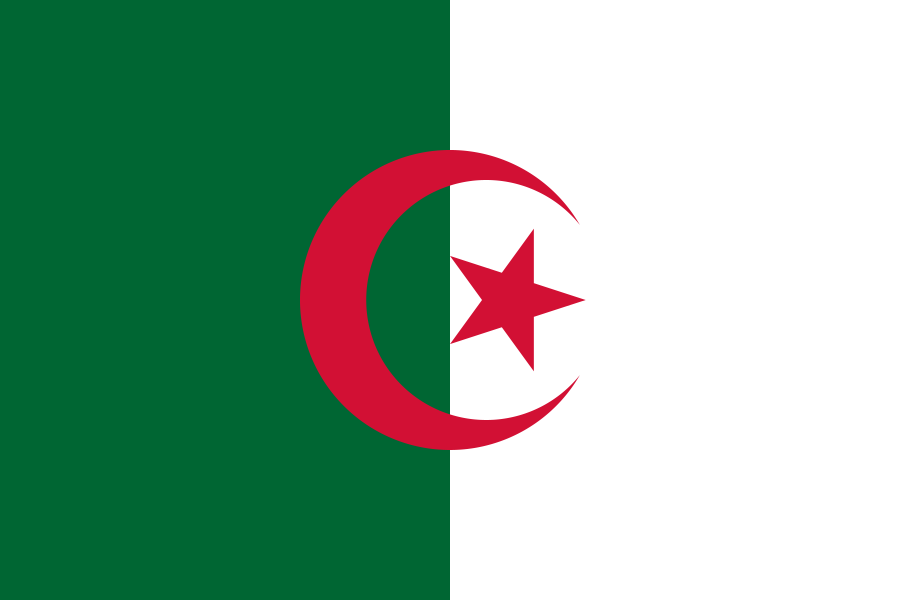

Algeria in the World

Algeria - Introduction 2017
top of pageBackground:
After more than a century of rule by France Algerians fought through much of the 1950s to achieve independence in 1962. Algeria's primary political party the National Liberation Front (FLN) was established in 1954 as part of the struggle for independence and has since largely dominated politics. The Government of Algeria in 1988 instituted a multi-party system in response to public unrest but the surprising first round success of the Islamic Salvation Front (FIS) in the December 1991 balloting led the Algerian army to intervene and postpone the second round of elections to prevent what the secular elite feared would be an extremist-led government from assuming power. The army began a crackdown on the FIS that spurred FIS supporters to begin attacking government targets. Fighting escalated into an insurgency which saw intense violence from 1992-98 resulting in over 100,000 deaths - many attributed to indiscriminate massacres of villagers by extremists. The government gained the upper hand by the late-1990s and FIS's armed wing the Islamic Salvation Army disbanded in January 2000.
Abdelaziz BOUTEFLIKA with the backing of the military won the presidency in 1999 in an election widely viewed as fraudulent and won subsequent elections in 2004 2009 and 2014. The government in 2011 introduced some political reforms in response to the Arab Spring including lifting the 19-year-old state of emergency restrictions and increasing women's quotas for elected assemblies while also increasing subsidies to the populace. Since 2014 Algeria’s reliance on hydrocarbon revenues to fund the government and finance the large subsidies for the population has fallen under stress because of declining oil prices.
Abdelaziz BOUTEFLIKA with the backing of the military won the presidency in 1999 in an election widely viewed as fraudulent and won subsequent elections in 2004 2009 and 2014. The government in 2011 introduced some political reforms in response to the Arab Spring including lifting the 19-year-old state of emergency restrictions and increasing women's quotas for elected assemblies while also increasing subsidies to the populace. Since 2014 Algeria’s reliance on hydrocarbon revenues to fund the government and finance the large subsidies for the population has fallen under stress because of declining oil prices.
Algeria - Geography 2017
top of pageLocation: Northern Africa bordering the Mediterranean Sea between Morocco and Tunisia
Geographic coordinates: 28 00 N 3 00 E
Map reference: Africa
Area
Total: 2,381,741 km²
Land: 2,381,741 km²
Water: 0 km²
Rank: 11
Comparative: slightly less than 3.5 times the size of Texas
Land boundaries
Total: 6,734 km
Border countries: (7) Libya 989 km; Mali 1359 km; Mauritania 460 km; Morocco 1900 km; Niger 951 km; Tunisia 1034 km; Western Sahara 41 km
Coastline: 998 km
Maritime claims
Territorial sea: 12 nm
Exclusive fishing zone: 32-52 nm
Climate: arid to semiarid; mild wet winters with hot dry summers along coast; drier with cold winters and hot summers on high plateau; sirocco is a hot dust/sand-laden wind especially common in summer
Terrain: mostly high plateau and desert; some mountains; narrow discontinuous coastal plain
Elevation
Mean elevation: 800 m
Elevation extremes: lowest point: Chott Melrhir -40 m: highest point: Tahat 2,908 m
Natural resources: petroleum natural gas iron ore phosphates uranium lead zinc
Land use
Land use
Agricultural land: 17.4%
arable land: 18.02%
permanent crops: 2.34%
permanent pasture: 79.63%
permanent crops: 2.34%
permanent pasture: 79.63%
Forest: 0.82%
Other: 81.8%
Irrigated land: 13,600 km² (2014)
Major rivers
Major watersheds area km²
Total water withdrawal
Total renewable water resources
Natural hazards: mountainous areas subject to severe earthquakes; mudslides and floods in rainy season; droughts
Geography
Note: largest country in Africa
Algeria - People 2017
top of pagePopulation
Distribution: the vast majority of the populace is found in the extreme northern part of the country along the Mediterranean Coast: 40,969,443 (July 2017 est.)
Rank: 33
Growth rate: 1.7% (2017 est.)
Growth rate rank: 62
Below poverty line: 23% (2006 est.)
Nationality
Noun: Algerian
Adjective: Algerian
Ethnic groups: Arab-Berber 99% European less than 1%
Note: although almost all Algerians are Berber in origin only a minority identify themselves as Berber about 15% of the total population; these people live mostly in the mountainous region of Kabylie east of Algiers; the Berbers are also Muslim but identify with their Berber rather than Arab cultural heritage; Berbers have long agitated sometimes violently for autonomy; the government is unlikely to grant autonomy but has offered to begin sponsoring teaching Berber language in schools
Languages: Arabic (official) French (lingua franca) Berber or Tamazight (official); dialects include Kabyle Berber (Taqbaylit) Shawiya Berber (Tacawit) Mzab Berber Tuareg Berber (Tamahaq)
Religions: Muslim (official; predominantly Sunni) 99% other (includes Christian and Jewish) 1% (2012 est.)
Demographic profile:
For the first two-thirds of the 20th century Algeria’s high fertility rate caused its population to grow rapidly. However about a decade after independence from France in 1962 the total fertility rate fell dramatically from 7 children per woman in the 1970s to about 2.4 in 2000 slowing Algeria’s population growth rate by the late 1980s. The lower fertility rate was mainly the result of women’s rising age at first marriage (virtually all Algerian children being born in wedlock) and to a lesser extent the wider use of contraceptives. Later marriages and a preference for smaller families are attributed to increases in women’s education and participation in the labor market; higher unemployment; and a shortage of housing forcing multiple generations to live together. The average woman’s age at first marriage increased from about 19 in the mid-1950s to 24 in the mid-1970s to 30.5 in the late 1990s.
Algeria’s fertility rate experienced an unexpected upturn in the early 2000s as the average woman’s age at first marriage dropped slightly. The reversal in fertility could represent a temporary fluctuation in marriage age or less likely a decrease in the steady rate of contraceptive use.
Thousands of Algerian peasants – mainly Berber men from the Kabylia region – faced with land dispossession and economic hardship under French rule migrated temporarily to France to work in manufacturing and mining during the first half of the 20th century. This movement accelerated during World War I when Algerians filled in for French factory workers or served as soldiers. In the years following independence low-skilled Algerian workers and Algerians who had supported the French (harkis) emigrated en masse to France. Tighter French immigration rules and Algiers’ decision to cease managing labor migration to France in the 1970s limited legal emigration largely to family reunification.
Not until Algeria’s civil war in the 1990s did the country again experience substantial outmigration. Many Algerians legally entered Tunisia without visas claiming to be tourists and then stayed as workers. Other Algerians headed to Europe seeking asylum although France imposed restrictions. Sub-Saharan African migrants came to Algeria after its civil war to work in agriculture and mining. In the 2000s a wave of educated Algerians went abroad seeking skilled jobs in a wider range of destinations increasing their presence in North America and Spain. At the same time legal foreign workers principally from China and Egypt came to work in Algeria’s construction and oil sectors. Illegal migrants from sub-Saharan Africa particularly Malians Nigeriens and Gambians continue to come to Algeria in search of work or to use it as a stepping stone to Libya and Europe.
Since 1975 Algeria also has been the main recipient of Sahrawi refugees from the ongoing conflict in Western Sahara. An estimated 90,000 Sahrawis live in five refugee camps in southwestern Algeria near Tindouf.
Age structure
Age structure
0-14 years: 29.31%
15-24 years: 15.3%
25-54 years: 42.93%
55-64 years: 6.81%
65 years and over: 5.65% (2017 est.)
Dependency ratios
Total dependency ratio: 52.7
Youth dependency ratio: 43.8
Elderly dependency ratio: 9
Potential support ratio: 11.2
Median age
Total: 28.1 years
Male: 27.8 years
Female: 28.4 years
Rank: 137
Population growth rate: 1.7% (2017 est.)
Rank: 62
Birth rate: 22.2 births/1000 population (2017 est.)
Rank: 69
Death rate: 4.3 deaths/1000 population (2017 est.)
Rank: 206
Net migration rate: -0.9 migrant(s)/1000 population (2017 est.)
Rank: 138
Population distribution: the vast majority of the populace is found in the extreme northern part of the country along the Mediterranean Coast
Urbanization
Urban population: 71.9% of total population
Rate of urbanization: 2.26% annual rate of change
Major urban areas
Population: ALGIERS (capital) 2.594 million; Oran 858,000 (2015)
Environment
Current issues: soil erosion from overgrazing and other poor farming practices; desertification; dumping of raw sewage petroleum refining wastes and other industrial effluents is leading to the pollution of rivers and coastal waters; Mediterranean Sea in particular becoming polluted from oil wastes soil erosion and fertilizer runoff; inadequate supplies of potable water
International agreements party to: Biodiversity Climate Change Climate Change-Kyoto Protocol Desertification Endangered Species Environmental Modification Hazardous Wastes Law of the Sea Ozone Layer Protection Ship Pollution Wetlands
International agreements signed but not ratified: none of the selected agreements
Air pollutants
Sex ratio
At birth: 1.05 male/female
0-14 years: 1.05 male/female
15-24 years: 1.05 male/female
25-54 years: 1.02 male/female
55-64 years: 1.03 male/female
65 years and over: 0.86 male/female
Total population: 1.03 male/female
Mothers mean age at first birth
Maternal mortality ratio
Infant mortality rate
Total: 19.6 deaths/1000 live births
Male: 21.2 deaths/1000 live births
Female: 17.9 deaths/1000 live births
Rank: 81
Life expectancy at birth
Total population: 77 years
Male: 75.6 years
Female: 78.4 years
Rank: 78
Total fertility rate: 2.7 children born/woman (2017 est.)
Rank: 66
Contraceptive prevalence rate: 57.1% (2012/13)
Drinking water source:
urban: 84.3% of population
rural: 81.8% of population
total: 83.6% of population
urban: 15.7% of population
rural: 18.2% of population
total: 16.4% of population (2015 est.)
rural: 81.8% of population
total: 83.6% of population
urban: 15.7% of population
rural: 18.2% of population
total: 16.4% of population (2015 est.)
Current health expenditure
Physicians density: 1.19 physicians/1000 population (2007)
Hospital bed density
Sanitation facility access:
urban: 89.8% of population
rural: 82.2% of population
total: 87.6% of population
urban: 10.2% of population
rural: 17.8% of population
total: 12.4% of population (2015 est.)
rural: 82.2% of population
total: 87.6% of population
urban: 10.2% of population
rural: 17.8% of population
total: 12.4% of population (2015 est.)
Hiv/Aids
Adult prevalence rate: .01% (2016 est.)
People living with hivaids: 13,000 (2016 est.)
People living with hivaids rank: 85
Deaths: 200 (2016 est.)
Major infectious diseases
Obesity adult prevalence rate: 27.4% (2016)
Rank: 38
Alcohol consumption
Tobacco use
Children under the age of 5 years underweight: 3% (2012)
Rank: 102
Education expenditures: 4.3% of GDP (2008)
Rank: 97
Literacy
Definition: age 15 and over can read and write
Total population: 80.2%
Male: 87.2%
Female: 73.1%
School life expectancy primary to tertiary education
Total: 14 years
Male: 14 years
Female: 15 years
Youth unemployment
Algeria - Government 2017
top of pageCountry name
Conventional long form: People's Democratic Republic of Algeria
Conventional short form: Algeria
Local long form: Al Jumhuriyah al Jaza'iriyah ad Dimuqratiyah ash Sha'biyah
Local short form: Al Jaza'ir
Etymology: the country name derives from the capital city of Algiers
Government type: presidential republic
Capital
Name: Algiers
Geographic coordinates: 36 45 N 3 03 E
Time difference: UTC+1
Administrative divisions: 48 provinces (wilayas singular - wilaya); Adrar Ain Defla Ain Temouchent Alger Annaba Batna Bechar Bejaia Biskra Blida Bordj Bou Arreridj Bouira Boumerdes Chlef Constantine Djelfa El Bayadh El Oued El Tarf Ghardaia Guelma Illizi Jijel Khenchela Laghouat Mascara Medea Mila Mostaganem M'Sila Naama Oran Ouargla Oum el Bouaghi Relizane Saida Setif Sidi Bel Abbes Skikda Souk Ahras Tamanrasset Tebessa Tiaret Tindouf Tipaza Tissemsilt Tizi Ouzou Tlemcen
Dependent areas
Independence: 5 July 1962 (from France)
National holiday: Revolution Day 1 November (1954)
Constitution
History: several previous; latest approved by referendum 23 February 1989
Amendments: proposed by the president of the republic or through the president with the support of three-fourths of the members of both houses of Parliament in joint session; passage requires approval by both houses approval by referendum and promulgation by the president; the president can forego a referendum if the Constitutional Council determines the proposed amendment does not conflict with basic constitutional principles; articles including the republican form of government the integrity and unity of the country and fundamental citizens’ liberties and rights cannot be amended; amended several times last in 2016
Legal system: mixed legal system of French civil law and Islamic law; judicial review of legislative acts in ad hoc Constitutional Council composed of various public officials including several Supreme Court justices
International law organization participation: has not submitted an ICJ jurisdiction declaration; non-party state to the ICCt
Citizenship
Citizenship by birth: no
Citizenship by descent only: the mother must be a citizen of Algeria
Dual citizenship recognized: no
Residency requirement for naturalization: 7 years
Suffrage: 18 years of age; universal
Executive branch
Chief of state: President Abdelaziz BOUTEFLIKA
Head of government: Prime Minister Ahmed OUYAHIA
Cabinet: Cabinet of Ministers appointed by the president
Electionsappointments: president directly elected by absolute majority popular vote in two rounds if needed for a 5-year term ; election last held on 17 April 2014 (next to be held in April 2019); prime minister nominated by the president from the majority party in Parliament
Election results: Abdelaziz BOUTEFLIKA reelected president for a fourth term; percent of vote - Abdelaziz BOUTEFLIKA 81.5% Ali BENFLIS (FLN) 12.2% Abdelaziz BELAID (Future Front) 3.4% other 2.9%
Legislative branch
Description: bicameral Parliament consists of the Council of the Nation and the National People's Assembly (lower house with 462 seats including 8 seats for Algerians living abroad); members directly elected in multi-seat constituencies by proportional representation vote to serve 5-year terms)
Elections: Council of the Nation - last held on 29 December 2015 ; National People's Assembly - last held on 4 May 2017 (next to be held in 2022)
Election results: Council of the Nation - percent of vote by party - NA; seats by party - NA; National People's Assembly - percent of vote by party - NA; seats by party - FLN 164 RND 97 MSP-FC 33 TAJ 19 Ennahda-FJD 15 FFS 14 El Mostakbel 14 MPA 13 PT 11 RCD 9 ANR 8 MEN 4 other 33 independent 28
Judicial branch
Highest court: Supreme Court or Cour Supreme ; note - Algeria's judicial system does not include sharia courts
Judge selection and term of office: Supreme Court judges appointed by the High Council of Magistracy an administrative body presided over by the president of the republic and includes the republic vice-president and several members; judges appointed for life; Constitutional Council members - 4 appointed by the president of the republic 2 each by the 2 houses of Parliament 2 by the Supreme Court and 2 by the Council of State; Council president and members appointed for single 6-year terms with half the membership renewed every 3 years
Subordinate courts: appellate or wilaya courts; first instance or daira tribunals
Political parties and leaders:
Party of Justice and Liberty [Mohammed SAID]
Rally for Culture and Democracy or RCD [Mohcine BELABBAS]
Rally for Hope in Algeria or TAJ
Socialist Forces Front or FFS [Mustafa BOUCHACHI]
Union of Democratic and Social Forces or UFDS [Noureddine BAHBOUH]
Vanguard of Freedoms [Ali BENFLIS]
Youth Party or PJ [Hamana BOUCHARMA]
Workers Party or PT [Louisa HANOUNE]
Note: a law banning political parties based on religion was enacted in March 1997
International organization participation: ABEDA AfDB AFESD AMF AMU AU BIS CAEU CD FAO G-15 G-24 G-77 IAEA IBRD ICAO ICC (national committees) ICRM IDA IDB IFAD IFC IFRCS IHO ILO IMF IMO IMSO Interpol IOC IOM IPU ISO ITSO ITU ITUC (NGOs) LAS MIGA MONUSCO NAM OAPEC OAS (observer) OIC OPCW OPEC OSCE (partner) UN UNCTAD UNESCO UNHCR UNIDO UNITAR UNWTO UPU WCO WHO WIPO WMO WTO (observer)
Diplomatic representation
In the us chief of mission: Ambassador Madjid BOUGUERRA
In the us chancery: 2,118 Kalorama Road NW Washington DC 20,008
In the us telephone: [1] 265-2,800
In the us FAX: [1] 986-5,906
In the us consulate general: New York
From the us chief of mission: Ambassador John P. DESROCHER
From the us embassy: 05 Chemin Cheikh Bachir El Ibrahimi El-Biar 16,030 Algieria
From the us mailing address: B. P. 408 Alger-Gare 16,030 Algiers
From the us telephone: [213] 770-08-2000
From the us FAX: [213] 770-08-2,064
Flag description: two equal vertical bands of green (hoist side) and white; a red 5-pointed star within a red crescent centered over the two-color boundary; the colors represent Islam (green) purity and peace (white) and liberty (red); the crescent and star are also Islamic symbols but the crescent is more closed than those of other Muslim countries because Algerians believe the long crescent horns bring happiness
National symbols: star and crescent fennec fox; national colors: green white red
National anthem
Name: 'Kassaman'
Lyrics and music: Mufdi ZAKARIAH/Mohamed FAWZI
Note: adopted 1962; ZAKARIAH wrote 'Kassaman' as a poem while imprisoned in Algiers by French colonial forces
National heritage
Algeria - Economy 2017
top of pageEconomy overview:
Algeria's economy remains dominated by the state a legacy of the country's socialist post-independence development model. In recent years the Algerian Government has halted the privatization of state-owned industries and imposed restrictions on imports and foreign involvement in its economy.
Hydrocarbons have long been the backbone of the economy accounting for roughly 30% of GDP 60% of budget revenues and nearly 95% of export earnings. Algeria has the 10th-largest reserves of natural gas in the world and is the sixth-largest gas exporter. It ranks 16th in oil reserves. Hydrocarbon exports enabled Algeria to maintain macroeconomic stability and amass large foreign currency reserves while oil prices were high. In addition Algeria's external debt is extremely low at about 2% of GDP. However Algeria has struggled to develop non-hydrocarbon industries because of heavy regulation and an emphasis on state-driven growth. Declining oil prices since 2014 have reduced the government’s ability to use state-driven growth to distribute rents and fund generous public subsidies. Algeria’s foreign exchange reserves have declined by more than 40% since late 2013 and its oil stabilization fund has decreased from about $75 billion at the end of 2013 to about $7 billion in 2017 which is the statutory minimum.
Algiers has strengthened protectionist measures since 2015 to limit its import bill and encourage domestic production of non-oil and gas industries. Since 2015 the government has imposed additional regulatory requirements on access to foreign exchange for imports and import quotas for specific products such as cars to limit their importation. Meanwhile Algeria has not increased non-hydrocarbon exports and hydrocarbon exports have declined because of field depletion and increased domestic demand.
With declining revenues caused by falling oil prices the government has been under pressure to reduce spending. A wave of economic protests in February and March 2011 prompted Algiers to offer more than $23 billion in public grants and retroactive salary and benefit increases moves which continue to weigh on public finances. In 2016 the government increased taxes on electricity and fuel resulting in a modest increase in gasoline prices and in 2017 raised by 2% the value-added tax on nearly all products but has refrained from directly reducing subsidies particularly for education healthcare and housing programs.
Long-term economic challenges include diversifying the economy away from its reliance on hydrocarbon exports bolstering the private sector attracting foreign investment and providing adequate jobs for younger Algerians.
Real gdp purchasing power parity:
$609.6 billion (2016 est.)
$582.7 billion (2015 est.)
$555.9 billion (2014 est.)
$582.7 billion (2015 est.)
$555.9 billion (2014 est.)
Note: data are in 2016 dollars
Rank: 36
Real gdp growth rate:
3.3% (2016 est.)
3.7% (2015 est.)
3.8% (2014 est.)
3.7% (2015 est.)
3.8% (2014 est.)
Rank: 55
Real gdp per capita:
$15,000 (2016 est.)
$14,800 (2015 est.)
$14,500 (2014 est.)
$14,800 (2015 est.)
$14,500 (2014 est.)
Note: data are in 2016 dollars
Rank: 108
Gross national saving:
37.2% of GDP (2016 est.)
36.3% of GDP (2015 est.)
43.1% of GDP (2014 est.)
36.3% of GDP (2015 est.)
43.1% of GDP (2014 est.)
Rank: 15
Gdp composition by sector of origin
Gdp composition by end use
Household consumption: 42.9%
Government consumption: 22.2%
Investment in fixed capital: 44.8%
Investment in inventories: 8%
Exports of goods and services: 21.3%
Imports of goods and services: -39.2%
Gdp composition by sector of origin
Agriculture: 12.9%
Industry: 36.2%
Services: 50.9%
Agriculture products: wheat barley oats grapes olives citrus fruits; sheep cattle
Industries: petroleum natural gas light industries mining electrical petrochemical food processing
Industrial production growth rate: 5.8% (2016 est.)
Rank: 39
Labor force: 12.12 million (2016 est.)
Rank: 47
By occupation agriculture: 10.8%
By occupation industry: 30.9%
By occupation services: 58.4% (2011 est.)
Labor force
Unemployment rate:
10.5% (2016 est.)
11.2% (2015 est.)
11.2% (2015 est.)
Rank: 135
Youth unemployment
Population below poverty line: 23% (2006 est.)
Gini index
Household income or consumption by percentage share
Lowest 10: 2.8%
Highest 10: 26.8%
Distribution of family income gini index: 35.3 (1995)
Rank: 92
Budget
Revenues: $45.37 billion
Expenditures: $67.48 billion
Surplus or deficit: -13.8% of GDP (2016 est.)
Surplus or deficit rank: 209
Taxes and other revenues: 28.2% of GDP (2016 est.)
Rank: 93
Public debt:
18% of GDP (2016 est.)
8.8% of GDP (2015 est.)
8.8% of GDP (2015 est.)
Note: data cover central government debt as well as debt issued by subnational entities and intra-governmental debt
Rank: 187
Revenue
Fiscal year: calendar year
Inflation rate consumer prices:
6.4% (2016 est.)
4.8% (2015 est.)
4.8% (2015 est.)
Rank: 181
Central bank discount rate:
4% (31 December 2010)
4% (31 December 2009)
4% (31 December 2009)
Rank: 97
Commercial bank prime lending rate:
8% (31 December 2016 est.)
8% (31 December 2015 est.)
8% (31 December 2015 est.)
Rank: 105
Stock of narrow money:
$85.11 billion (31 December 2016 est.)
$86.45 billion (31 December 2015 est.)
$86.45 billion (31 December 2015 est.)
Rank: 40
Stock of broad money:
$125 billion (31 December 2016 est.)
$127.9 billion (31 December 2015 est.)
$127.9 billion (31 December 2015 est.)
Rank: 53
Stock of domestic credit:
$86.53 billion (31 December 2016 est.)
$62.35 billion (31 December 2015 est.)
$62.35 billion (31 December 2015 est.)
Rank: 58
Market value of publicly traded shares: $N/A
Current account balance:
$-26.31 billion (2016 est.)
$-27.28 billion (2015 est.)
$-27.28 billion (2015 est.)
Rank: 194
Exports:
$29.06 billion (2016 est.)
$34.57 billion (2015 est.)
$34.57 billion (2015 est.)
Rank: 59
Commodities: petroleum natural gas and petroleum products 97% (2009 est.)
Partners: Italy 17.4% Spain 12.9% US 12.9% France 11.4% Brazil 5.4% Netherlands 4.9% Turkey 4.5% Canada 4.3% (2016)
Imports:
$49.43 billion (2016 est.)
$52.65 billion (2015 est.)
$52.65 billion (2015 est.)
Rank: 49
Commodities: capital goods foodstuffs consumer goods
Partners: China 17.8% France 10.1% Italy 9.8% Spain 7.6% Germany 6.4% US 4.9% Turkey 4.1% (2016)
Reserves of foreign exchange and gold:
$114.7 billion (31 December 2016 est.)
$144.9 billion (31 December 2015 est.)
$144.9 billion (31 December 2015 est.)
Rank: 22
Debt external:
$5.088 billion (31 December 2016 est.)
$4.677 billion (31 December 2015 est.)
$4.677 billion (31 December 2015 est.)
Rank: 132
Stock of direct foreign investment at home:
$25.74 billion (31 December 2016 est.)
$25.89 billion (31 December 2015 est.)
$25.89 billion (31 December 2015 est.)
Rank: 72
Stock of direct foreign investment abroad:
$2.025 billion (31 December 2016 est.)
$1.95 billion (31 December 2015 est.)
$1.95 billion (31 December 2015 est.)
Rank: 82
Exchange rates:
Algerian dinars (DZD) per US dollar -
110.1 (2016 est.)
100.69 (2015 est.)
100.69 (2014 est.)
80.58 (2013 est.)
77.54 (2012 est.)
110.1 (2016 est.)
100.69 (2015 est.)
100.69 (2014 est.)
80.58 (2013 est.)
77.54 (2012 est.)
Algeria - Energy 2017
top of pageElectricity
Access population without electricity: 400,000
Access electrification total population: 99%
Access electrification urban areas: 100%
Access electrification rural areas: 97%
Production: 64.67 billion kWh (2015 est.)
Production rank: 44
Consumption: 53.44 billion kWh (2015 est.)
Consumption rank: 47
Exports: 641 million kWh (2015 est.)
Exports rank: 63
Imports: 610 million kWh (2015 est.)
Imports rank: 77
Installed generating capacity: 17.12 million kW (2015 est.)
Installed generating capacity rank: 48
Generation sources fossil fuels: 97.9% of total installed capacity (2015 est.)
Generation sources fossil fuels rank: 39
Generation sources nuclear: 0% of total installed capacity (2015 est.)
Generation sources nuclear rank: 37
Generation sources hydroelectricity: 1.6% of total installed capacity (2015 est.)
Generation sources hydroelectricity rank: 143
Generation sources other renewable sources: 1.5% of total installed capacity (2015 est.)
Generation sources other renewable sources rank: 131
Coal
Petroleum
Petroleum total petroleum production: 1.348 million bbl/day (2016 est.)
Petroleum total petroleum production rank: 19
Crude oil exports: 798,900 bbl/day (2014 est.)
Crude oil exports rank: 16
Crude oil imports: 5,880 bbl/day (2014 est.)
Crude oil imports rank: 79
Crude oil proven reserves: 12.2 billion bbl (1 January 2017 es)
Crude oil proven reserves rank: 16
Crude oil
Refined petroleum
Products production: 657,600 bbl/day (2014 est.)
Products production rank: 27
Products consumption: 428,000 bbl/day (2015 est.)
Products consumption rank: 36
Products exports: 575,800 bbl/day (2014 est.)
Products exports rank: 13
Products imports: 62,480 bbl/day (2014 est.)
Products imports rank: 73
Natural gas
Production: 83.04 billion m³ (2015 est.)
Production rank: 11
Consumption: 44.32 billion m³ (2015 est.)
Consumption rank: 25
Exports: 43.42 billion m³ (2015 est.)
Exports rank: 8
Imports: 0 m³ (2013 est.)
Imports rank: 82
Proven reserves: 4.504 trillion m³ (1 January 2017 es)
Proven reserves rank: 11
Carbon dioxide emissions
From consumption of energy: 128 million Mt (2013 est.)
From consumption of energy rank: 36
Energy consumption per capita
Algeria - Communication 2017
top of pageTelephones
Fixed lines total subscriptions: 3,404,709
Fixed lines subscriptions per 100 inhabitants: 8
Fixed lines rank: 46
Mobile cellular total: 48,348,505
Mobile cellular subscriptions per 100 inhabitants: 120
Mobile cellular rank: 33
Telephone system
General assessment: privatization of Algeria's telecommunications sector began in 2000; three mobile cellular licenses have been issued and in 2005 a consortium led by Egypt's Orascom Telecom won a 15-year license to build and operate a fixed-line network in Algeria
Domestic: a limited network of fixed lines with a teledensity of less than 10 telephones per 100 persons has been offset by the rapid increase in mobile-cellular subscribership; in 2016 mobile-cellular teledensity was roughly 120 telephones per 100 persons
International: country code - 213; landing point for the SEA-ME-WE-4 fiber-optic submarine cable system that provides links to Europe the Middle East and Asia; microwave radio relay to Italy France Spain Morocco and Tunisia; coaxial cable to Morocco and Tunisia
Broadcast media: state-run Radio-Television Algerienne operates the broadcast media and carries programming in Arabic Berber dialects and French; use of satellite dishes is widespread providing easy access to European and Arab satellite stations; state-run radio operates several national networks and roughly 40 regional radio stations (2009)
Internet
Country code: .dz
Users total: 17,291,463
Users percent of population: 42.9%
Users rank: 55
Broadband fixed subscriptions
Algeria - Military 2017
top of pageMilitary expenditures:
6.55% of GDP (2016)
6.32% of GDP (2015)
5.54% of GDP (2014)
4.84% of GDP (2013)
4.46% of GDP (2012)
6.32% of GDP (2015)
5.54% of GDP (2014)
4.84% of GDP (2013)
4.46% of GDP (2012)
Rank: 8
Military and security forces
Military service age and obligation: 17 is the legal minimum age for voluntary military service; 19-30 years of age for compulsory service; conscript service obligation is 18 months (6 months basic training 12 months civil projects) (2012)
Space program
Terrorist groups
Algeria - Transportation 2017
top of pageNational air transport system
Number of registered air carriers: 4
Inventory of registered aircraft operated by air carriers: 74
Annual passenger traffic on registered air carriers: 5,910,835
Annual freight traffic on registered air carriers: 24,723,377 mt-km
Civil aircraft registration country code prefix: 7T (2016)
Airports: 157 (2016)
Rank: 36
With paved runways total: 64
With paved runways over 3047 m: 12
With paved runways 2438 to 3047 m: 29
With paved runways 15-24 to 2437 m: 17
With paved runways 914 to 1523 m: 5
With paved runways under 914 m: 1
With unpaved runways total: 93
With unpaved runways 2438 to 3047 m: 2
With unpaved runways 15-24 to 2437 m: 18
With unpaved runways 914 to 1523 m: 39
With unpaved runways under 914 m: 34
Heliports: 3 (2013)
Pipelines: condensate 2,600 km; gas 16,415 km; liquid petroleum gas 3,447 km; oil 7,036 km; refined products 144 km (2013)
Railways
Total: 3,973 km
Standard gauge: 2,888 km 1.432-m gauge
Narrow gauge: 1085 km 1.055-m gauge
Rank: 45
Roadways
Total: 113,655 km
Paved: 87,605 km
Unpaved: 26,050 km
Rank: 43
Waterways
Merchant marine
Total: 38
By type: bulk carrier 6 cargo 8 chemical tanker 3 liquefied gas 11 passenger/cargo 3 petroleum tanker 4 roll on/roll off 3
Foreign owned: 15 (2010)
Rank: 79
Ports and terminals
Major seaport: Algiers Annaba Arzew Bejaia Djendjene Jijel Mostaganem Oran Skikda
LNG terminal: Arzew Bethioua Skikda
Algeria - Transnational issues 2017
top of pageDisputes international: Algeria and many other states reject Moroccan administration of Western Sahara; the Polisario Front exiled in Algeria represents the Sahrawi Arab Democratic Republic; Algeria's border with Morocco remains an irritant to bilateral relations each nation accusing the other of harboring militants and arms smuggling; dormant disputes include Libyan claims of about 32,000 km² still reflected on its maps of southeastern Algeria and the National Liberation Front's (FLN) assertions of a claim to Chirac Pastures in southeastern Morocco
Refugees and internally displaced persons
Refugees: 90,000 (Western Saharan Sahrawi mostly living in Algerian-sponsored camps in the southwestern Algerian town of Tindouf) (2016)
Illicit drugs

You found a piece of the puzzle
Please click here to complete it
Please click here to complete it
