Statistical information Curaçao 2023
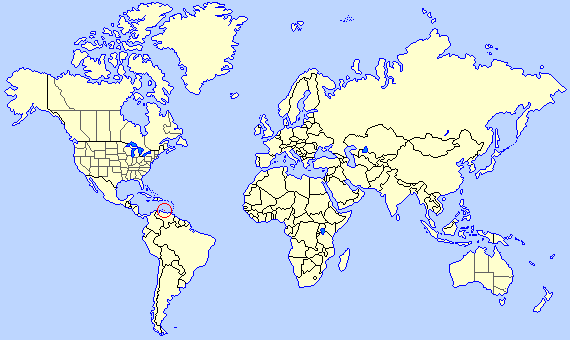
Curaçao in the World

Curaçao - Introduction 2023
top of pageBackground: The original Arawak Indian settlers who arrived on the island from South America in about A.D. 1000, were largely enslaved by the Spanish early in the 16th century and forcibly relocated to other colonies where labor was needed. Curaçao was seized by the Dutch from the Spanish in 1634. Once the center of the Caribbean slave trade, Curaçao was hard hit economically by the Dutch abolition of slavery in 1863. Its prosperity (and that of neighboring Aruba) was restored in the early 20th century with the construction of the Isla Refineria to service the newly discovered Venezuelan oilfields. In 1954, Curaçao and several other Dutch Caribbean colonies were reorganized as the Netherlands Antilles, part of the Kingdom of the Netherlands. In referenda in 2005 and 2009, the citizens of Curaçao voted to become a self-governing country within the Kingdom of the Netherlands. The change in status became effective in October 2010 with the dissolution of the Netherlands Antilles.
Curaçao - Geography 2023
top of pageLocation: Caribbean, an island in the Caribbean Sea, 55 km off the coast of Venezuela
Geographic coordinates: 12 10 N, 69 00 W
Map reference: Central America and the Caribbean
Area
Total: 444 km²
Land: 444 km²
Water: 0 km²
Comparative: more than twice the size of Washington, DC
Land boundaries: 0
Coastline: 364 km
Maritime claims
Territorial sea: 12 nm
Exclusive economic zone: 200 nm
Climate: tropical marine climate, ameliorated by northeast trade winds, results in mild temperatures; semiarid with average rainfall of 60 cm/year
Terrain: generally low, hilly terrain
Elevation
Highest point: Mt. Christoffel 372 m
Lowest point: Caribbean Sea 0 m
Natural resources: calcium phosphates, protected harbors, hot springs
Land use
Land use
Agricultural land: 10% (2018 est.)
Agricultural land arable land: 10% (2018)
Other: 90% (2018 est.)
Irrigated land: NA
Major rivers
Major watersheds area km²
Total water withdrawal
Total renewable water resources: NA
Natural hazards: Curaçao is south of the Caribbean hurricane belt and is rarely threatened
Geography
Note: Curaçao is a part of the Windward Islands (southern) group in the Lesser Antilles
Curaçao - People 2023
top of pagePopulation
Distribution: largest concentration on the island is Willemstad; smaller settlements near the coast can be found throughout the island, particularly in the northwest: 152,849 (2023 est.)
Growth rate: 0.3% (2023 est.)
Nationality
Noun: Curaçaoan
Adjective: Curaçaoan; Dutch
Ethnic groups: Curaçaoan 75.4%, Dutch 6%, Dominican 3.6%, Colombian 3%, Bonairean, Sint Eustatian, Saban 1.5%, Haitian 1.2%, Surinamese 1.2%, Venezuelan 1.1%, Aruban 1.1%, other 5%, unspecified 0.9% (2011 est.)
Languages: Papiamento (official) (a creole language that is a mixture of Portuguese, Spanish, Dutch, English, and, to a lesser extent, French, as well as elements of African languages and the language of the Arawak) 80%, Dutch (official) 8.8%, Spanish 5.6%, English (official) 3.1%, other 2.3%, unspecified 0.3% (2011 est.)
Note: data represent most spoken language in household
Religions: Roman Catholic 72.8%, Pentecostal 6.6%, Protestant 3.2%, Adventist 3%, Jehovah's Witness 2%, Evangelical 1.9%, other 3.8%, none 6%, unspecified 0.6% (2011 est.)
Demographic profile
Age structure
Age structure
0-14 years: 19.3% (male 15,107/female 14,390)
15-64 years: 62.7% (male 47,299/female 48,538)
65 years and over: 18% (2023 est.) (male 11,096/female 16,419)
Dependency ratios
Total dependency ratio: 47
Youth dependency ratio: 25.6
Elderly dependency ratio: 21.4
Potential support ratio: 4.7 (2021 est.)
Median age
Total: 37.5 years (2023 est.)
Male: 35.3 years
Female: 40 years
Population growth rate: 0.3% (2023 est.)
Birth rate: 13.1 births/1,000 population (2023 est.)
Death rate: 8.8 deaths/1,000 population (2023 est.)
Net migration rate: -1.3 migrant(s)/1,000 population (2023 est.)
Population distribution: largest concentration on the island is Willemstad; smaller settlements near the coast can be found throughout the island, particularly in the northwest
Urbanization
Urban population: 89% of total population (2023)
Rate of urbanization: 0.57% annual rate of change (2020-25 est.)
Major urban areas
Population: 144,000 WILLEMSTAD (capital) (2018)
Environment
Current issues: problems in waste management that threaten environmental sustainability on the island include pollution of marine areas from domestic sewage, inadequate sewage treatment facilities, industrial effluents and agricultural runoff, the mismanagement of toxic substances, and ineffective regulations; the refinery in Sint Anna Bay, at the eastern edge of Willemstad’s large natural harbor, processes heavy crude oil from Venezuela; it has caused significant environmental damage to the surrounding area because of neglect and a lack of strict environmental controls; the release of noxious fumes and potentially hazardous particles causes schools downwind to regularly close
Air pollutants
Carbon dioxide emissions: 5.39 megatons (2016 est.)
Sex ratio
At birth: 1.05 male(s)/female
0-14 years: 1.06 male(s)/female
15-64 years: 1.01 male(s)/female
65 years and over: 0.83 male(s)/female
Total population: 0.93 male(s)/female (2023 est.)
Mothers mean age at first birth
Maternal mortality ratio
Infant mortality rate
Total: 7.7 deaths/1,000 live births (2023 est.)
Male: 8.5 deaths/1,000 live births
Female: 6.9 deaths/1,000 live births
Life expectancy at birth
Total population: 79.7 years (2023 est.)
Male: 77.3 years
Female: 82.1 years
Total fertility rate: 1.97 children born/woman (2023 est.)
Contraceptive prevalence rate: NA
Drinking water source
Improved: total: 100% of population
Unimproved: total: 0% of population (2017)
Current health expenditure: NA
Physicians density: NA
Hospital bed density
Sanitation facility access
Improved: total: 100% of population
Unimproved: total: 0% of population (2017)
Hiv/Aids
Major infectious diseases
Obesity adult prevalence rate
Alcohol consumption
Tobacco use
Children under the age of 5 years underweight: NA
Education expenditures: 7.4% of GDP (2020 est.)
Literacy
School life expectancy primary to tertiary education
Total: 17 years
Male: 18 years
Female: 18 years (2013)
Youth unemployment
Rate ages 15 24 total: 42.2% (2020 est.)
Rate ages 15 24 male: 38.1%
Rate ages 15 24 female: 47.1%
Curaçao - Government 2023
top of pageCountry name
Conventional long form: Country of Curaçao
Conventional short form: Curaçao
Local long form: Land Curaçao (Dutch)/ Pais Korsou (Papiamento)
Local short form: Curaçao (Dutch)/ Korsou (Papiamento)
Former: Netherlands Antilles; Curaçao and Dependencies
Etymology: the most plausible name derivation is that the island was designated Isla de la Curacion (Spanish meaning "Island of the Cure" or "Island of Healing") or Ilha da Curaçao (Portuguese meaning the same) to reflect the locale's function as a recovery stop for sick crewmen
Government type: parliamentary democracy
Capital
Name: Willemstad
Geographic coordinates: 12 06 N, 68 55 W
Time difference: UTC-4 (1 hour ahead of Washington, DC, during Standard Time)
Etymology: named after Prince WILLIAM II of Orange (1626-1650), who served as stadtholder (Dutch head of state) from 1647 to 1650, shortly after the the Dutch captured Curaçao from the Spanish in 1634
Administrative divisions: none (part of the Kingdom of the Netherlands)
Dependent areas
Independence: none (part of the Kingdom of the Netherlands)
National holiday: King's Day (birthday of King WILLEM-ALEXANDER), 27 April (1967); note - King's or Queen's Day are observed on the ruling monarch's birthday; celebrated on 26 April if 27 April is a Sunday
Constitution
History: previous 1947, 1955; latest adopted 5 September 2010, entered into force 10 October 2010 (regulates governance of Curaçao but is subordinate to the Charter for the Kingdom of the Netherlands); note - in October 2010, with the dissolution of the Netherlands Antilles, Curaçao became a semi-autonomous entity within the Kingdom of the Netherlands
Legal system: based on Dutch civil law
International law organization participation
Citizenship: see the Netherlands
Suffrage: 18 years of age; universal
Executive branch
Chief of state: King WILLEM-ALEXANDER of the Netherlands (since 30 April 2013); represented by Governor Lucille A. GEORGE-WOUT (since 4 November 2013)
Head of government: Prime Minister Gilmar PISAS (since 14 June 2021)
Cabinet: Cabinet sworn-in by the governor
Elections/appointments: the monarch is hereditary; governor appointed by the monarch; following legislative elections, the leader of the majority party usually elected prime minister by the Parliament of Curaçao; last election held on 19 March 2021 (next to be held in 2025)
Legislative branch
Description: unicameral Parliament of Curaçao (21 seats; members directly elected by party-list proportional representation vote to serve 4-year terms)
Elections: last held on 19 March 2021 (next to be held in 2025)
Election results: percent of vote by party - MFK 28.1%, PAR 14.1%, PNP 12.6%, MAN 6.5%, KEM 5.4%, TPK 5.3%; seats by party - MFK 9, PAR 4, PNP 4, MAN 2, KEM 1, TPK 1; composition - NA
Judicial branch
Highest courts: Joint Court of Justice of Aruba, Curaçao, Sint Maarten, and of Bonaire, Sint Eustatius and Saba or "Joint Court of Justice" (sits as a 3-judge panel); final appeals heard by the Supreme Court, in The Hague, Netherlands
Judge selection and term of office: Joint Court judges appointed by the monarch for life
Subordinate courts: first instance courts, appeals court; specialized courts
Political parties and leaders:
Korsou di Nos Tur or KdnT [Amparo dos SANTOS]
Korsou Esun Miho or KEM [Michelangelo MARTINES]
Movementu Futuro Korsou or MFK [Gilmar PISAS]
Movementu Progresivo or MP [Marylin MOSES]
Movishon Antia Nobo or MAN [Hensley KOEIMAN]
Partido Antia Restruktura or PAR [Eugene RHUGGENAATH]
Partido Inovashon Nashonal or PIN [Suzanne CAMELIA-ROMER]
Partido Nashonal di Pueblo or PNP [Ruthmilda LARMONIE-CECILIA]
Pueblo Soberano or PS [Ben WHITEMAN]
Trabou pa Kòrsou or TPK [Rennox CALMES]
Un Korsou Hustu [Omayra LEEFLANG]
International organization participation: Caricom (observer), FATF, ILO, ITU, UNESCO (associate), UPU
Diplomatic representation
In the us: none (represented by the Kingdom of the Netherlands)
From the us chief of mission: Consul General Margy BOND (since 20 January 2022); note - also accredited to Aruba and Sint Maarten
From the us embassy: P.O. Box 158, J.B. Gorsiraweg 1
From the us mailing address: 3,160 Curaçao Place, Washington DC 20,521-3,160
From the us telephone: [599] (9) 461-3,066
From the us FAX: [599] (9) 461-6,489
From the us email address and website:
Flag description: on a blue field a horizontal yellow band somewhat below the center divides the flag into proportions of 5:1:2; two five-pointed white stars - the smaller above and to the left of the larger - appear in the canton; the blue of the upper and lower sections symbolizes the sky and sea respectively; yellow represents the sun; the stars symbolize Curaçao and its uninhabited smaller sister island of Klein Curaçao; the five star points signify the five continents from which Curaçao's people derive
National symbols: laraha (citrus tree); national colors: blue, yellow, white
National anthem
Name: "Himmo di Korsou" (Anthem of Curaçao)
Lyrics/music: Guillermo ROSARIO, Mae HENRIQUEZ, Enrique MULLER, Betty DORAN/Frater Candidus NOWENS, Errol "El Toro" COLINA
Note: adapted 1978; the lyrics, originally written in 1899, were rewritten in 1978 to make them less colonial in nature
National heritage
Total World Heritage Sites: 1 (cultural); note - excerpted from the Netherlands entry
Selected World Heritage Site locales:
Curaçao - Economy 2023
top of pageEconomy overview: high-income island economy; developed infrastructure; tourism and financial services-based economy; investing in information technology incentives; oil refineries service Venezuela and China; unique COVID-19 stimulus support applied to government debts rather than household support
Real gdp purchasing power parity:
$3.167 billion (2021 est.) note: data are in 2017 dollars
$3.038 billion (2020 est.) note: data are in 2017 dollars
$3.725 billion (2019 est.)
$3.038 billion (2020 est.) note: data are in 2017 dollars
$3.725 billion (2019 est.)
Real gdp growth rate:
4.23% (2021 est.)
-18.44% (2020 est.)
-3.37% (2019 est.)
-18.44% (2020 est.)
-3.37% (2019 est.)
Real gdp per capita:
$20,800 (2021 est.) note: data are in 2017 dollars
$19,600 (2020 est.) note: data are in 2017 dollars
$23,700 (2019 est.)
$19,600 (2020 est.) note: data are in 2017 dollars
$23,700 (2019 est.)
Gross national saving
Gdp composition by sector of origin
Gdp composition by end use
Household consumption: 66.9% (2016 est.)
Government consumption: 33.6% (2016 est.)
Investment in fixed capital: 19.4% (2016 est.)
Investment in inventories: 0% (2016 est.)
Exports of goods and services: 17.5% (2016 est.)
Imports of goods and services: -37.5% (2016 est.)
Gdp composition by sector of origin
Agriculture: 0.7% (2012 est.)
Industry: 15.5% (2012 est.)
Services: 83.8% (2012 est.)
Agriculture products: aloe, sorghum, peanuts, vegetables, tropical fruit
Industries: tourism, petroleum refining, petroleum transshipment, light manufacturing, financial and business services
Industrial production growth rate: NA
Labor force: 73,010 (2013)
Labor force
Unemployment rate:
13% (2013 est.)
9.8% (2011 est.)
9.8% (2011 est.)
Youth unemployment
Rate ages 15 24 total: 42.2% (2020 est.)
Rate ages 15 24 male: 38.1%
Rate ages 15 24 female: 47.1%
Population below poverty line
Gini index
Household income or consumption by percentage share
Distribution of family income gini index
Budget
Surplus or deficit: -0.4% (of GDP) (2012 est.)
Taxes and other revenues: 16.6% (of GDP) (2012 est.)
Public debt:
33.2% of GDP (2012 est.)
40.6% of GDP (2011 est.)
40.6% of GDP (2011 est.)
Revenue
From forest resources: 0% of GDP (2018 est.)
From coal: 0% of GDP (2018 est.)
Fiscal year
Inflation rate consumer prices:
2.62% (2019 est.)
2.58% (2018 est.)
1.59% (2017 est.)
2.58% (2018 est.)
1.59% (2017 est.)
Central bank discount rate
Commercial bank prime lending rate
Stock of narrow money
Stock of broad money
Stock of domestic credit
Market value of publicly traded shares
Current account balance:
-$596.437 million (2021 est.)
-$688.805 million (2020 est.)
-$540.731 million (2019 est.)
-$688.805 million (2020 est.)
-$540.731 million (2019 est.)
Exports:
$1.28 billion (2021 est.)
$1.014 billion (2020 est.)
$1.775 billion (2019 est.)
$1.014 billion (2020 est.)
$1.775 billion (2019 est.)
Note: Data are in current year dollars and do not include illicit exports or re-exports.
Partners: Switzerland 27%, United States 17%, Spain 14%, Ecuador 7%, India 7%, Antigua and Barbuda 5% (2019)
Commodities: refined petroleum, crude petroleum, petroleum coke, frozen fish, fishing ships (2021)
Imports:
$1.915 billion (2021 est.) note: data are in current year dollars
$1.709 billion (2020 est.) note: data are in current year dollars
$2.331 billion (2019 est.)
$1.709 billion (2020 est.) note: data are in current year dollars
$2.331 billion (2019 est.)
Partners: United States 35%, Netherlands 24%, China 5% (2019)
Commodities: refined petroleum, cars, crude petroleum, packaged medicines, perfumes (2019)
Reserves of foreign exchange and gold: $0 (31 December 2017 est.)
Debt external
Stock of direct foreign investment at home
Stock of direct foreign investment abroad
Exchange rates:
Netherlands Antillean guilders (ANG) per US dollar - 1.79 (2021 est.)
1.79 (2020 est.)
1.79 (2019 est.)
1.79 (2018 est.)
1.79 (2017 est.)
1.79 (2020 est.)
1.79 (2019 est.)
1.79 (2018 est.)
1.79 (2017 est.)
Curaçao - Energy 2023
top of pageElectricity
Access electrification-total population: 100% (2020)
Coal
Petroleum
Crude oil
Refined petroleum
Products production: 189,800 bbl/day (2015 est.)
Products exports: 167,500 bbl/day (2015 est.)
Products imports: 45,800 bbl/day (2015 est.)
Natural gas
Carbon dioxide emissions
Energy consumption per capita
Curaçao - Communication 2023
top of pageTelephones
Fixed lines total subscriptions: 53,095 (2021 est.)
Fixed lines subscriptions per 100 inhabitants: 28 (2021 est.)
Mobile cellular total subscriptions: 170,000 (2021 est.)
Mobile cellular subscriptions per 100 inhabitants: 88 (2021 est.)
Telephone system
Broadcast media: government-run TeleCuraçao operates a TV station and a radio station; 2 other privately owned TV stations and several privately owned radio stations (2019)
Internet
Country code: .cw
Users total: 111,956 (2021 est.)
Users percent of population: 68.1% (2021 est.)
Broadband fixed subscriptions
Total: 55,000 (2020 est.)
Subscriptions per 100 inhabitants: 34 (2020 est.)
Curaçao - Military 2023
top of pageMilitary expenditures
Military and security forces: no regular military forces; Curaçao - Transportation 2023
National air transport system
Number of registered air carriers: 2 (2020)
Inventory of registered aircraft operated by air carriers: 11
Civil aircraft registration country code prefix: PJ
Airports: 1 (2021)
With paved runways: 1
With paved runways note: paved runways have a concrete or asphalt surface but not all have facilities for refueling, maintenance, or air traffic control; the length of a runway required for aircraft to safely operate depends on a number of factors including the type of aircraft, the takeoff weight (including passengers, cargo, and fuel), engine types, flap settings, landing speed, elevation of the airport, and average maximum daily air temperature; paved runways can reach a length of 5,000 m (16,000 ft.), but the “typical” length of a commercial airline runway is between 2,500-4,000 m (8,000-13,000 ft.)
Heliports
Pipelines
Railways
Roadways
Total: 550 km
Waterways
Merchant marine
Total: 59 (2022)
By type: general cargo 5, oil tanker 1, other 53
Ports and terminals
Major seaports: Willemstad
Oil terminals: Bullen Baai (Curaçao Terminal)
Cruise ports: Willemstad
Bulk cargo ports: Fuik Bay (phosphate rock)
Curaçao - Transnational issues 2023
top of pageDisputes international
Refugees and internally displaced persons
Refugees country of origin: 14,200 (Venezuela) (2021)
Illicit drugs: northbound transshipment points for cocaine from Colombia and Venezuela; cocaine is transported to the United States, other Caribbean islands, Africa, and Europe

You found a piece of the puzzle
Please click here to complete it
Please click here to complete it
